


Most of the cost in a custom metal part is decided before anyone quotes it — at the moment the process is chosen. Pick the wrong route for your volume and tolerance and no amount of negotiation recovers the difference. This page collects the comparisons that actually decide a specification, in the order a project tends to meet them.
Each section links to the full comparison. Where two routes are genuinely close for your part, send the drawing and ask us to price both — the equipment to run either sits in the same plant, so the comparison is arithmetic rather than an opinion.
1. Laser cutting or stamping?
The single most expensive decision on most parts, and the one buyers get wrong most often. Laser cutting has no tool cost and a roughly flat price per piece; stamping has a tool cost and a very low unit price. At low volume the laser wins because the tool cost has not been spread across enough parts; as volume rises, stamping overtakes it.
Where the crossover sits depends on part size and complexity, not on a rule of thumb. Read: Laser cutting vs stamping.
2. Laser cutting or waterjet?
Both cut flat profiles without tooling, which is why they are compared so often. Laser is faster and cheaper on thin sheet. Waterjet is the better answer on very thick material, on heat-sensitive alloys, and wherever a completely cold cut edge with no heat-affected zone is required.
Read: Waterjet cutting vs laser cutting.
3. Welding, riveting or adhesive bonding?
Three ways to hold parts together, each with a different failure mode and a different effect on the material around the joint. Welding is strongest and distorts most; riveting is predictable and reversible; adhesive bonding avoids heat entirely but needs joint design and surface preparation. If your assembly has to stay flat after joining, this comparison is the one that decides it.
Read: Riveting vs adhesive bonding vs welding.
4. Which material grade — and what does it cost you?
Machinability and formability vary enormously between grades, and the difference shows up twice: once in the material line and again in the processing time. Stainless work-hardens, so tooling clearance, bend radius and lubrication all differ from carbon steel. Aluminium machines far faster than stainless but marks easily.
- Machinability: stainless steel vs aluminium vs carbon steel
- The most economical metals for CNC machining
- Sheet metal fabrication materials guide — grades, properties and thicknesses
- Materials we work with — what we hold in stock
5. Cutting, forming or drawing — which fabrication route?
“Metal fabrication” is an umbrella, not a process. Knowing which of the basic routes applies to your part is what turns a vague enquiry into a quotable job.
- Different types of metal fabrication processes
- The three basic types of sheet metal fabrication
- Is metal fabrication the same as welding?
- What separates good bent parts from acceptable ones
6. How price is actually built
Two quotations for the same part are rarely comparable line for line. Material, process route, volume, tolerance, finish and order structure each move the number, and the tooling-versus-unit-price trade-off sits across all of them.
- How metal fabrication prices are calculated
- How to reduce metal stamping costs
- Standard sheet metal thicknesses chart — thickness against cost and formability
7. Sourcing country and supplier selection
The comparison most buyers make last, and sometimes the most consequential. These pages are written to be useful whether or not you buy from us — including where a Chinese supplier is genuinely the wrong answer.
- Why choose a Chinese metal processing provider
- Low-cost, high-quality Chinese manufacturers — what to check
- Top sheet metal fabrication manufacturers in China
- North American metal fabrication services selection guide
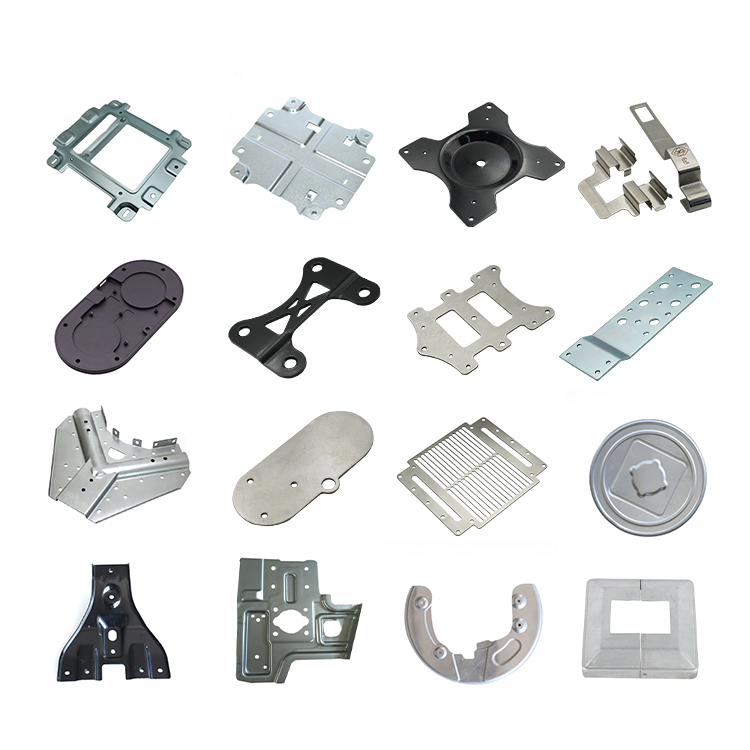
The comparisons, at a glance
| Decision | Choose the first when… | Choose the second when… |
|---|---|---|
| Laser cutting vs stamping | Low to medium volume, or the design is not frozen — no tool cost | Tens of thousands per year — tool cost is amortised and unit price drops sharply |
| Laser cutting vs waterjet | Thin sheet, speed and cost matter | Very thick material, or a cold cut edge with no heat-affected zone is required |
| Welding vs riveting vs bonding | Maximum joint strength is the priority | The assembly must stay flat, or the joint must be reversible |
| Turning vs milling | The part is round — shafts, bushings, collars | The part is prismatic — pockets, profiles, plates |
| Fabrication vs machining | The part is a flat or formed profile | The part has bores, threads or a tight flatness callout |
| Prototype vs production | The design is not frozen and volume is unconfirmed | Annual volume and drawing are both settled |
Still not sure which applies to your part?
Send the drawing with the material, the quantity and the annual volume if you know it. The DFM review that comes back will tell you which route we would run and why — and if two routes are close, you will get both prices rather than our preference.
Send it through request a quote, or check the machine list first on our equipment and capacity page. For the evidence behind these claims, the case studies section publishes ten verified five-star buyer reviews from seven countries, in the buyers’ own words.
Related pages
- Equipment and capacity — what runs in the plant
- Metal fabrication prices — how the number is built
- Fabrication solutions — all twelve processes
- Quality and inspection — how parts are verified
- Verified customer reviews — ten reviews, seven countries
- Knowledge base — the full article index