


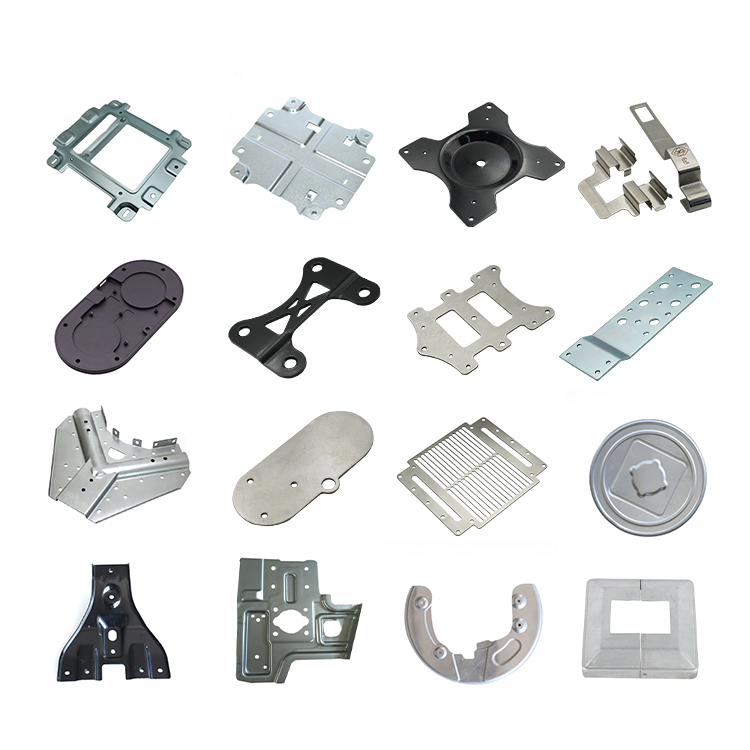
Short answer: laser cutting has no tooling, so it wins for prototypes, low volume and parts whose design is still moving. Stamping has tooling, so it wins from roughly 2,000 pieces upward — and it also changes what is possible, because a die can pierce, form and coin features in one cycle that laser cutting cannot produce at all.
The two are often presented as competing ways to cut the same part. They are not equivalent, and understanding where they differ prevents the most common tooling mistake in sheet metal sourcing.
The comparison table
| Dimension | Laser cutting (+ forming) | Stamping (die) |
|---|---|---|
| Tooling required | None | Die — compound or progressive |
| Tooling cost | Zero | Significant, quoted per part |
| Tooling lead time | None | Weeks, including tryout and correction |
| Economic quantity | 1 – ~2,000 | ~2,000 – 1,000,000+ |
| Unit cost, low volume | Lowest | High — tooling dominates |
| Unit cost, high volume | High — cutting time per part | Lowest |
| Tolerance | Positional accuracy in the low tens of microns | ±0.05 mm typical on critical features |
| Edge condition | Clean cut edge with a small heat-affected zone | Sheared edge; burr depends on die clearance |
| Design change | Edit the file, re-cut | Die modification |
| 3D forming in the same operation | No — needs a separate forming step | Yes — pierce, form and coin in one cycle |
| Features a die can make that a laser cannot | — | Coined forms, embossed ribs, countersinks, extruded holes, tapped pilots, tight nest-and-form features |
| Material waste | Moderate — nesting is less efficient than a strip progression | Low — progressive strip nesting |
| Surface finish as cut | Mill finish; edge may need deburring for handling | Mill finish of the coil |
| Setup per order | Minutes | Die change plus tryout verification |
| Best for | Prototypes, bridge tooling, low and mid volume, design iteration | Flat and formed parts at volume |
The four questions that decide it
1. How many do you need, and is that number final? Under 2,000 pieces, tooling rarely pays back. Above it, stamping's unit cost drops sharply. If the design is not frozen, laser cutting is not just cheaper — it is the only route that does not turn every change into a die modification.
2. Does the part need formed features a die can produce in one cycle? This is the question people miss. A die can coin a rib, emboss a stiffener, extrude a hole for a thread and pierce in a single stroke. With laser cutting you cut the flat blank and then form it in separate operations — which is fine for a bent bracket, and impractical for a part whose function depends on coined detail.
3. Is the quantity uncertain, or does it ramp? A common and sensible pattern: laser cut for the pilot and first production run, then move to a die once volume and design are proven. Bridge tooling exists for exactly this. It costs more per part than the final die route and less than a premature die investment.
4. What is the edge requirement? Laser-cut edges are clean with a small heat-affected zone and generally need deburring only for handling. Stamped edges are sheared, and burr height depends on die clearance and tool wear — so a stamped part on a worn die can develop a burr that a laser-cut part would not have.
The crossover, in practice
| Quantity | Recommended | Note |
|---|---|---|
| 1 – 50 | Laser cut + formed | No tooling; design can still change |
| 50 – 500 | Laser cut + formed | Usually still below die amortisation |
| 500 – 2,000 | Get both routes priced | Depends on part size, features and finish |
| 2,000 – 20,000 | Compound die stamping | Tooling amortises; includes formed features |
| 20,000+ | Progressive die stamping | Lowest unit cost; strip nesting; highest tooling |
We price both routes on your actual part rather than quoting a table, because the die cost, the cutting time and the part size all move the crossover.
Where each route fails
Laser cutting fails when:
- Volume is high and geometry is simple — you pay cutting time on every part
- The part needs coined or embossed features a die produces in-stroke
- Very thick material, where the heat-affected zone and edge condition become the limiting factor
- Quantity is high enough that a die would have paid back several times over
Stamping fails when:
- The quantity is low — the tooling never amortises
- The design is still moving — this is the most expensive failure mode, because a die modified three times costs more than the wrong process choice
- The part is a one-off
- The tooling budget is not approved alongside the unit price, which is how "cheap" quotes turn out to have a five-figure tooling charge attached
Tooling ownership — the thing to settle first
Whatever route you choose, if tooling is involved, decide who owns it before you place the tooling order:
| Question | Answer that protects you |
|---|---|
| Who owns the die after I pay for it? | You do |
| Can I move it to another supplier? | Yes, on written request |
| What is the tooling transfer fee? | A stated figure, agreed in advance |
| Do I get the die drawings? | Yes |
| Where is the die stored between runs? | A named location |
A supplier that owns your die has a permanent commercial hold on your part. This has nothing to do with process choice and everything to do with how the relationship works in year three.
When we would tell you not to use us
- Your volume needs a die size or press tonnage we do not have — 25 to 400 ton capacity covers most sheet metal work, and we will say when it does not
- Your part needs a certification we do not hold — we hold ISO 9001:2015 (reg. 34025Q30296R0S) and do not hold IATF 16949, ISO 13485, AS9100 or UL
- A local supplier can laser cut faster and cheaper for a simple low-volume part — freight and lead time can outweigh the unit price
- Your tolerance requirement is tighter than either process can hold on a formed feature; that is a geometry or design change, not a supplier change
What to send us
- Drawing or 3D model with the revision marked — DXF, DWG, STEP, IGES, X_T or PDF
- Material, grade and thickness, with the acceptable thickness tolerance
- Quantity, plus expected annual volume
- Which formed features are functional, and which tolerances are critical
- Finish, including which surfaces and any masking
- Target date and destination
You will get a DFM review with both the laser and the die route priced side by side, within 24 hours on working days — so you can see the crossover on your own part instead of estimating it.
Send your DXF or drawing for a dual-route quotation →
In-house laser cutting on a 12,000 W fiber cell, CNC press brake with a 3,200 mm bed, and presses from 25 to 400 ton with an in-house die workshop that designs, machines, tries out and corrects its own tooling. ISO 9001:2015 (reg. 34025Q30296R0S). No minimum order quantity.
Frequently asked questions
Is laser cutting or stamping better for sheet metal parts?
Below roughly 2,000 pieces laser cutting plus forming is normally cheaper because there is no tooling to amortise, and it keeps the design editable. From about 2,000 pieces upward stamping wins, because the die cost is spread across the run and progressive strip nesting reduces material waste. Between 500 and 2,000 pieces the decision depends on part size, features and finish, so both routes should be priced on the actual part.
What can a stamping die do that laser cutting cannot?
A die can pierce, form and coin features in a single stroke — including coined ribs, embossed stiffeners, countersinks, extruded holes for threads and tapped pilots. Laser cutting cuts the flat blank and then requires separate forming operations, which is fine for a bent bracket but impractical where a part's function depends on coined detail. This is a capability difference, not just a cost difference.
Can I start with laser cutting and move to a die later?
Yes, and it is a common and sensible pattern. Laser cut the pilot and first production run to prove volume and freeze the design, then invest in a die once both are settled. This bridge approach costs more per part than the final die route and less than a premature die investment that has to be modified when the design moves.
How much does stamping tooling cost?
Tooling cost is quoted per part because it depends on part size, the number of stations, tolerance requirements, the material and the number of tryout cycles needed. A simple compound die for a small bracket is a different investment from a multi-station progressive die for a complex part. Tooling is quoted separately from the unit price so the total is visible, and ownership terms should be agreed in writing before the tooling order is placed.
Does laser cutting leave a heat-affected zone?
Yes. Laser cutting is a thermal process, so the cut edge has a small heat-affected zone. In practice the edge is clean and generally needs deburring only for handling safety, and for most sheet metal work the affected zone has no functional consequence. It becomes a limiting factor on very thick material or where the edge condition is functional, which is reviewed during DFM against the drawing rather than assumed.
Who owns the stamping die after I pay for it?
It should be you, and this should be agreed in writing before the tooling purchase order is placed. The terms to settle are ownership, the right to move the die to another supplier on written request, the tooling transfer fee as a stated figure, access to the die drawings, and the storage location between production runs. A supplier that owns your die has a permanent commercial hold on your part regardless of how good the unit price looks.
Standards referenced
Related reading
- Metal laser cutting service
- Metal stamping parts
- Sheet metal bending services
- Tolerances we can achieve
- How tooling affects part cost
- Get a fabrication quote