


Metal welding services in the same plant that cuts and forms the parts, which is the point: a welded assembly is where tolerance usually gets lost, because two suppliers are each working to their own datum. Here the formed components, the fixture and the weld all come from one work order. MIG, TIG, spot and laser welding, plus riveting and hardware insertion. ISO 9001:2015, registration 34025Q30296R0S. No minimum order quantity.
| MIG / TIG / spot / laser | welding processes available |
| In-house fixtures | welding in the same plant as forming |
| 301 / 304 / 316L | stainless grades welded |
| 15,000 m² | plant, 6 production lines |
| ISO 9001:2015 | reg. 34025Q30296R0S |
| No MOQ | from 1 piece |
Why choose us for metal welding
Welding is not a separate supplier here. The parts that get welded are the parts we cut and formed, on the same site, held in fixtures we made. That removes the most common cause of a welded assembly being out of tolerance: one supplier forming to a nominal dimension and a second supplier welding to a different one.
Post-weld distortion is planned for, not discovered. Welding puts heat into a part, and heat moves metal. On frames and enclosures that means flatness and squareness are the real requirements — not the weld itself. We sequence the welds, balance them across the part and specify stress relief where the drawing needs it.
The right process for the joint, not the one that is convenient. TIG for stainless and visible cosmetic joints, MIG for speed on heavier carbon steel, spot and laser for thin-gauge production where distortion and finish matter more than penetration. Which one you get is decided by the material, thickness, appearance requirement and volume.
Finishing after welding. Weld dressing, passivation on stainless and coating after welding all run in the same order, so the part arrives finished rather than needing a third stop.
What is metal welding?
Welding joins two pieces of metal by melting and fusing the material at the joint, with or without a filler that matches the parent metal. Unlike mechanical fastening, the joint becomes continuous with the parts: there is no gap to open, no fastener to loosen and no interface to seal. It is the process that turns flat formed components into a rigid three-dimensional structure — a frame, an enclosure, a chassis or a reservoir.
Common welding processes
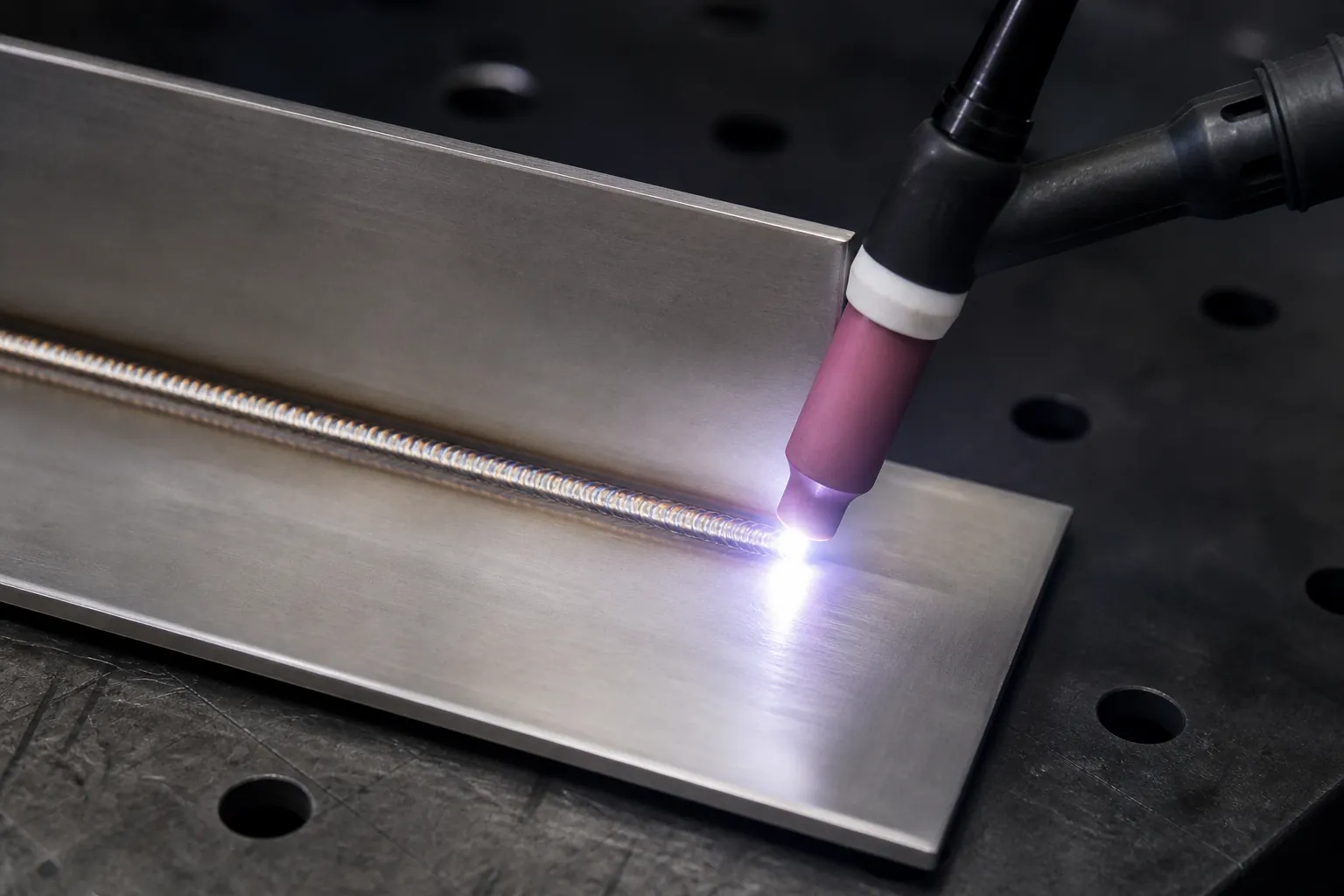
TIG (GTAW) — A tungsten electrode establishes an arc under a shielding gas, with filler added separately. Slower than MIG, but it gives the most control and the cleanest finish, which is why it is the default for stainless, for thin material and for any joint that will be visible. On stainless it also produces the neat, evenly-stacked bead that tells an inspector the weld was made with controlled travel and current.
MIG (GMAW) — A continuously fed wire is both the electrode and the filler, which makes it fast and easy to run over long seams. The standard choice for heavier carbon steel, for frames and for structural brackets where penetration and speed matter more than cosmetics.
Spot welding — Two electrodes clamp the sheets and pass current through the interface, producing a local weld nugget without filler or gas. The fastest way to join overlapping thin-gauge sheets, and the standard on enclosures and panels where many small joints are needed and heat distortion has to stay minimal.
Laser welding — A focused beam produces a narrow, deep weld with a very small heat-affected zone, so distortion is minimal and the seam is nearly cosmetic without dressing. Best on thin material, close-tolerance joints and production work where the fixture holds the joint precisely enough for a narrow beam to find it.
Riveting and hardware insertion — Not welding, but it belongs in the same conversation: where a joint has to be demountable, or where a fastener, standoff or threaded insert has to be set into sheet, riveting and insertion are the correct answer. They run in the same plant and often on the same assembly.
Key advantages of welded assemblies
| Advantage | What it means commercially |
|---|---|
| Rigid, continuous joint | A welded frame is one structure — stiffness comes from the joint, not from extra material |
| Fewer parts and fasteners | One welded assembly replaces a bolted stack of brackets, plates and hardware |
| Leak-tight where needed | The reason drawn or welded reservoirs and housings can hold fluid or pressure |
| Complex geometry in one piece | Boxes, frames and chassis that could not be formed in a single operation |
| Weight saving | A welded frame in thinner gauge is often lighter than the equivalent bolted structure |
| Finish after welding | Dressing, passivation and coating in the same order means one finished part, not a kit |
Common applications and scenarios for welded metal assemblies
Enclosures and housings — Fabricated boxes, machine housings and control cabinets where the corners are welded and the seams dressed. Corner weld quality is usually the visible quality signal on this type of part.
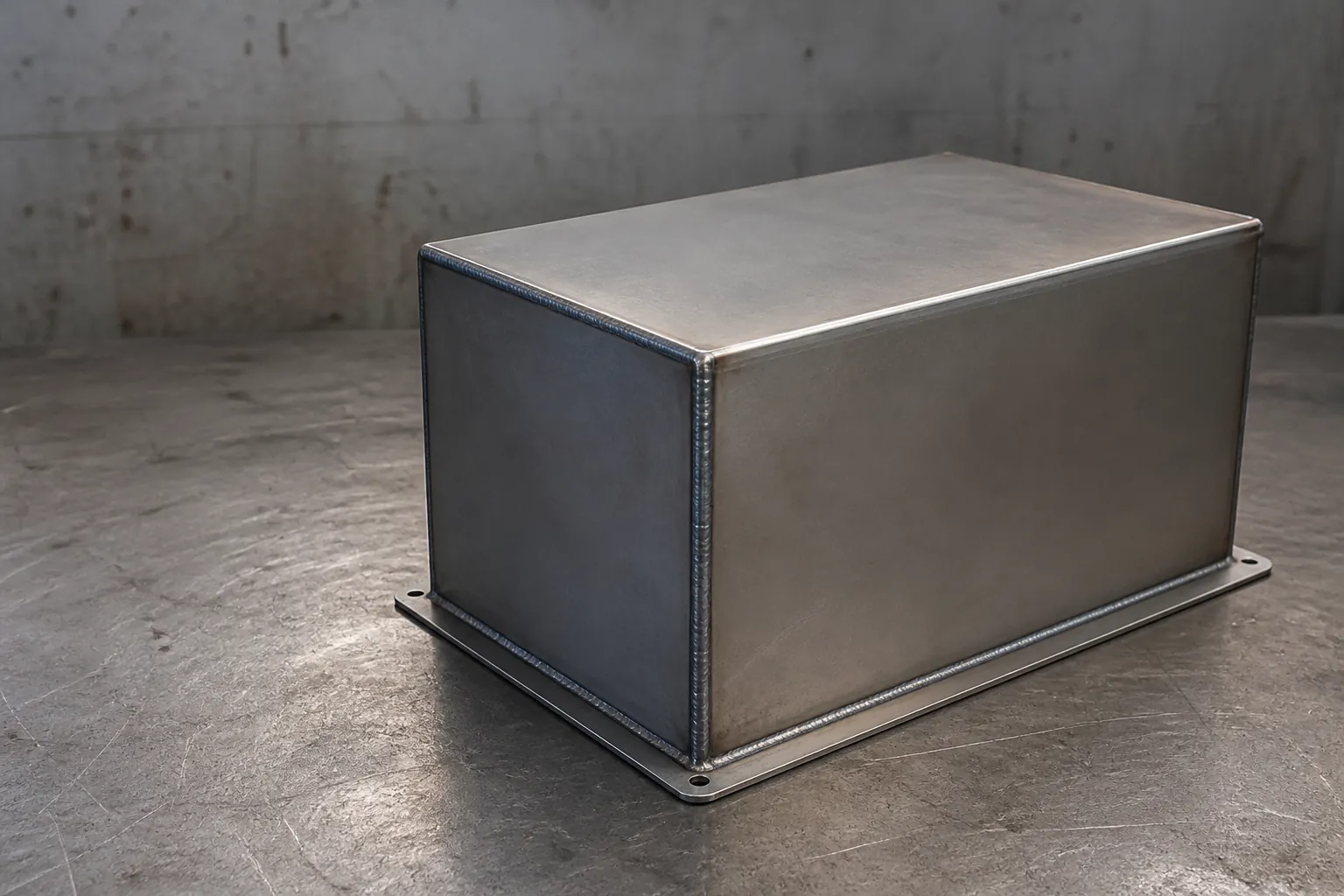
Frames and chassis — Equipment frames, machinery bases, rack structures and EV component chassis. Here the requirement is normally squareness and flatness after welding, not the weld bead itself.
Guards and covers — Machine guards, safety covers and access panels, where welded frames carry mesh or sheet infill.
Reservoirs, tanks and fluid parts — Welded vessels and fluid housings where the joint has to hold. Where a part can be deep drawn instead, drawing removes the seam entirely — our deep drawing capability covers that route.
Structural brackets and sub-assemblies — Bracket assemblies, mounting frames and welded sub-assemblies that ship as one unit rather than as loose components.
Stainless and hygiene applications — Food, medical and laboratory fabrications where the joint has to be smooth, crevice-free and passivated afterwards.
When welding is the wrong answer — where a part can be deep drawn or stamped as one piece, a seam is an unnecessary risk; where the assembly has to be demountable, riveting or fasteners are correct; and where the joint is cosmetic and the material is thin, laser welding or adhesive bonding may give a better finish. We will say so and quote the alternative.
How our welding service works
1. Send the drawing or the assembly model. STEP, SLDPRT, DXF, DWG or PDF, with the joint details, the material of each component and any appearance requirement. Engineering responds within 3 hours on working days.
2. Joint and process review. We choose the process by material, thickness, required penetration and appearance, and check that the joint is accessible to the torch or the electrodes. This is also where distortion is thought about — weld sequence, tacking plan and whether stress relief will be needed.
3. Fixture and component preparation. The formed components come off our own laser and press brake, so the edges that meet are already clean and square. Fixtures hold the assembly during welding rather than relying on clamps and judgement.
4. Welding. MIG, TIG, spot or laser, applied in a sequence chosen to balance heat across the part.
5. Dressing and finishing. Weld dressing where the drawing calls for it, then passivation for stainless or the specified coating, with coating thickness controlled so it does not close out a thread or mating bore.
6. Inspection and shipment. Dimensional inspection against the assembly drawing, first article inspection on new work, and EN 10204 material certificates for the components.
Welding capabilities and specifications
| Parameter | Capability |
|---|---|
| Processes | MIG, TIG, spot and laser welding |
| Assembly methods | Riveting, hardware insertion, mechanical sub-assembly |
| Materials | Carbon steel, stainless steel (301/304/316L), aluminium (5052/6061), galvanised and pre-coated strip |
| Fixturing | Purpose-made fixtures; components formed in the same plant |
| Post-weld operations | Weld dressing, passivation, stress relief where specified, coating |
| Surface finishes | Zinc plating, powder coating, anodising, passivation, deburring |
| Minimum order quantity | None — from 1 piece |
| Engineering response | ≤3 hours on working days |
| Quality system | ISO 9001:2015, registration 34025Q30296R0S |
| Plant | 15,000 m², 6 production lines, 85 employees |
Materials we weld
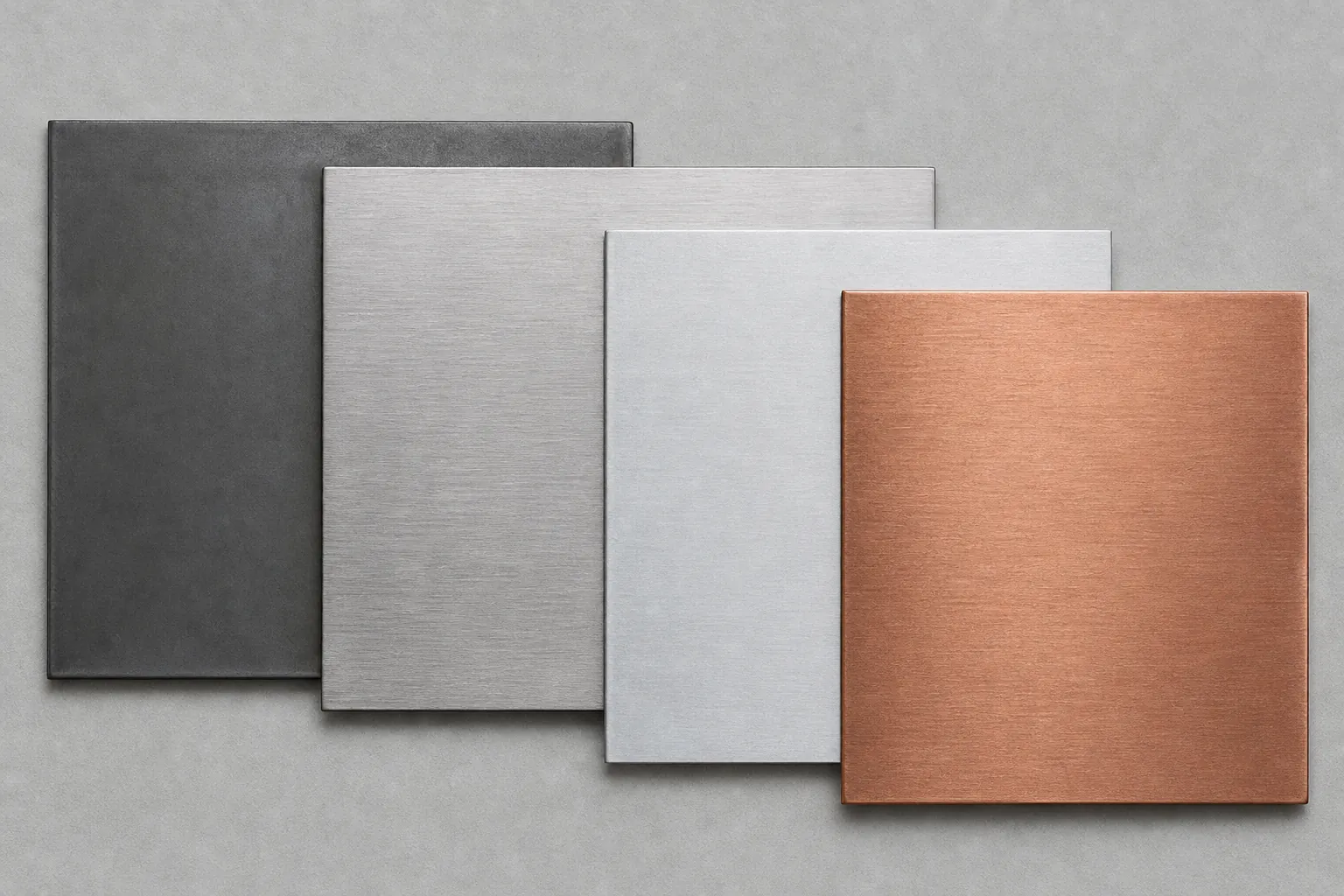
Carbon steel — The most forgiving to weld and the fastest with MIG. Cold-rolled for cosmetic fabrications, hot-rolled for structural work, and pre-galvanised where the coating has to be removed locally at the joint and restored afterwards.
Stainless steel — 304 for general fabrications, 316L where chloride or hygiene requirements apply, 301 rarely welded because spring temper is hard to keep through a heat-affected zone. Stainless needs TIG or laser more often, tighter heat control, and passivation afterwards to remove the free iron and restore the oxide layer.
Aluminium — Welds with MIG or TIG but needs more heat input, correct filler selection and attention to oxide removal; its higher thermal conductivity also means distortion is a bigger risk than on steel. 5052 welds readily, 6061 is more sensitive to heat-affected-zone strength loss.
Copper and brass — Weldable but conduct heat away so rapidly that preheat and matched filler are usually required. More often joined by brazing or mechanical means.
Material and process have to be chosen together. Our materials guide covers the trade-offs.
Surface finishing after welding
Finishing happens after welding, because the heat-affected zone and any weld dressing change the surface. On stainless, passivation and pickling restore corrosion resistance at the seam; without it, a well-made stainless weld can still rust at the joint. On carbon steel, zinc plating or powder coating covers the assembly. Anodising applies to aluminium weldments, with the caveat that weld and parent metal may take colour differently. Deburring and weld dressing set the visible quality of the part. See metal surface treatment.
Quality control on welded assemblies
On a welded assembly the dimensions that matter are the assembly’s, not the weld’s: squareness, flatness, hole positions and overall envelope. Those are what we inspect and what we report.
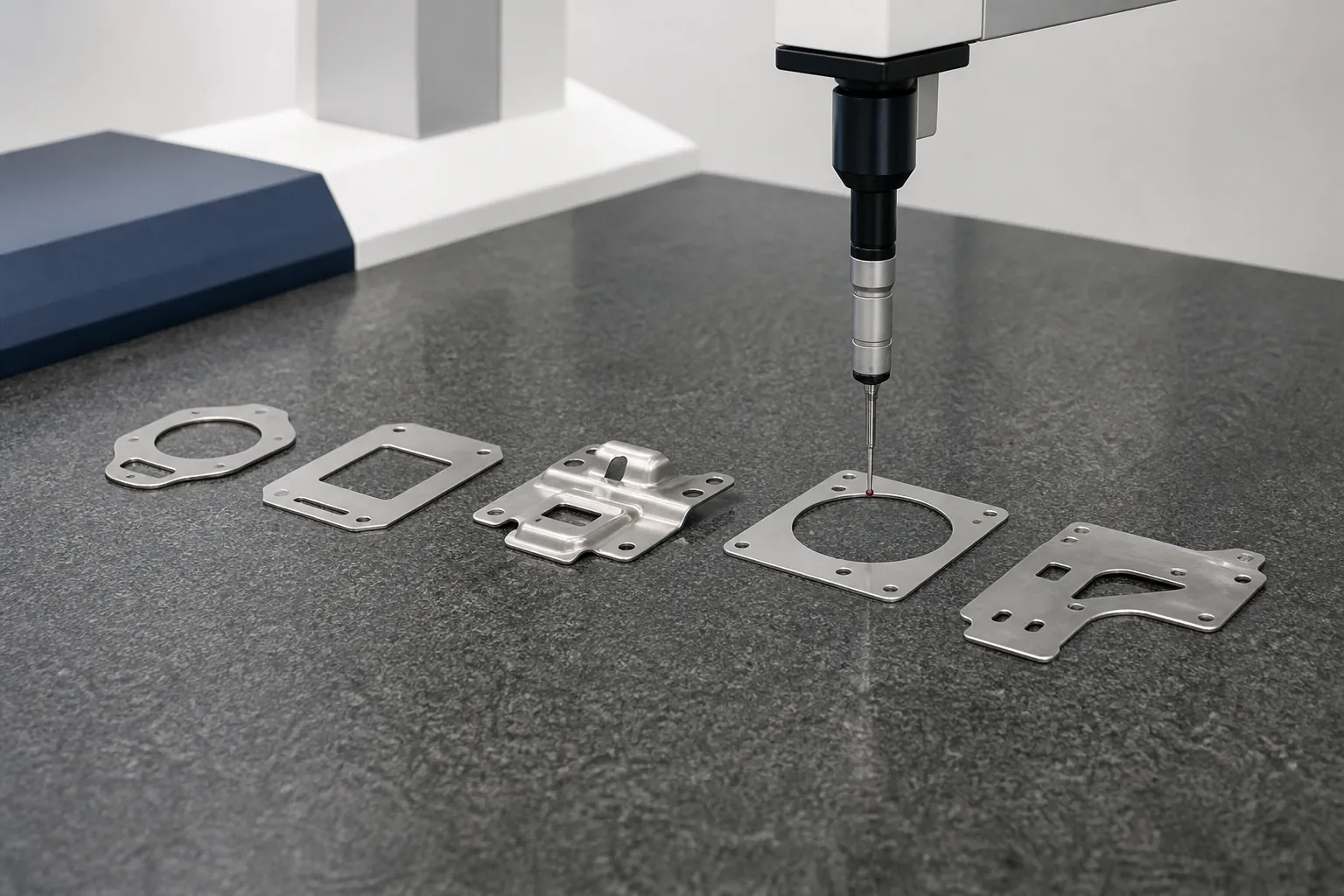
Records available with the order: CMM dimensional report, first article inspection, EN 10204 material certificates for the components, and coating thickness readings after finishing. Where a drawing calls for leak testing, dye penetrant inspection or another non-destructive examination, tell us in the RFQ and we will confirm what can be arranged before quoting. Third-party inspection by SGS, TÜV or BV is welcome at any point.
Frequently asked questions about metal welding
Which welding process is best for my part?
It depends on the material, the thickness, the appearance requirement and the volume. TIG gives the most control and the cleanest bead, so it suits stainless and visible joints. MIG is faster and is the normal choice for heavier carbon steel and long seams. Spot welding is the fastest way to join overlapping thin-gauge sheets with minimal distortion, and laser welding gives a narrow, low-distortion seam on close-tolerance thin work. We select the process from the drawing rather than applying one method to everything.
How do you stop welded assemblies from warping?
By planning the heat, not by welding more slowly. We sequence the welds so heat is balanced across the part, tack the assembly in fixtures before running continuous seams, and keep the heat input low where the material allows it. Where the drawing requires flatness that welding cannot hold on its own, stress relief is specified as a separate operation.
Can you provide welding documentation or qualified welders?
Our quality system is ISO 9001:2015, registration 34025Q30296R0S, and dimensional inspection records ship with the order. If your project requires weld procedure documentation, coded welder qualifications or certification to a specific welding standard, tell us in the RFQ and we will confirm what is available for that specific job before quoting rather than assuming it.
Do you passivate stainless steel after welding?
Yes — and it matters. Welding burns off the passive oxide layer and leaves free iron on the surface of the heat-affected zone, so an unpickled stainless weld will often rust at the seam even when the weld itself is sound. Passivation or pickling after welding restores the corrosion resistance the grade was specified for.
Can you weld aluminium as well as steel?
Yes. Aluminium welds with MIG or TIG, but it needs more heat input than steel, correct filler selection for the alloy, and oxide removal before welding. Its high thermal conductivity also makes distortion a bigger risk, so fixturing and weld sequence matter more. If the part can be formed or drawn as one piece instead, that is often the better route.
Can a welded assembly be machined afterwards?
Yes. Five-axis machining runs in the same plant, so faces, bores and holes can be machined after welding to restore datum accuracy once distortion has happened — which is normally more reliable than machining first and hoping the weld does not move it.
Get a welding quote
Send the assembly drawing or model with the material of each component, the joint details and any appearance or inspection requirement. You will get a process recommendation, a fixture and tooling price where fixtures are needed, and a per-assembly price — normally within one working day. See how we price metal fabrication, or use the RFQ form.
Other capabilities in our plant
- Sheet metal fabrication — cutting, forming, joining and finishing under one work order
- Custom metal stamping — progressive, compound and transfer dies built in-house
- Metal deep drawing — multi-stage hydraulic drawing, and the alternative to a welded seam
- Sheet metal bending — CNC press brake work with material-specific compensation
- CNC machining — post-weld machining to restore datum accuracy
- Welding and riveting parts — worked examples from production
Related solutions and resources
Welding is a joining operation, so the useful comparison is with the other ways of holding parts together:
- Sheet metal fabrication — the forming operations upstream
- Assembly services — welding combined with fastening and fitting
- Metal bending — pre-forming the parts to be joined
- Welding process — process selection detail
- Welding and riveting parts — worked examples
- Energy and machinery — industries we weld for
See a multi-process order reviewed by its buyer: Ukraine case study.
Standards referenced
- American Welding Society (AWS) — welding procedure and qualification reference
- ASTM International — material and test standards
- NIST — measurement and dimensional metrology reference