


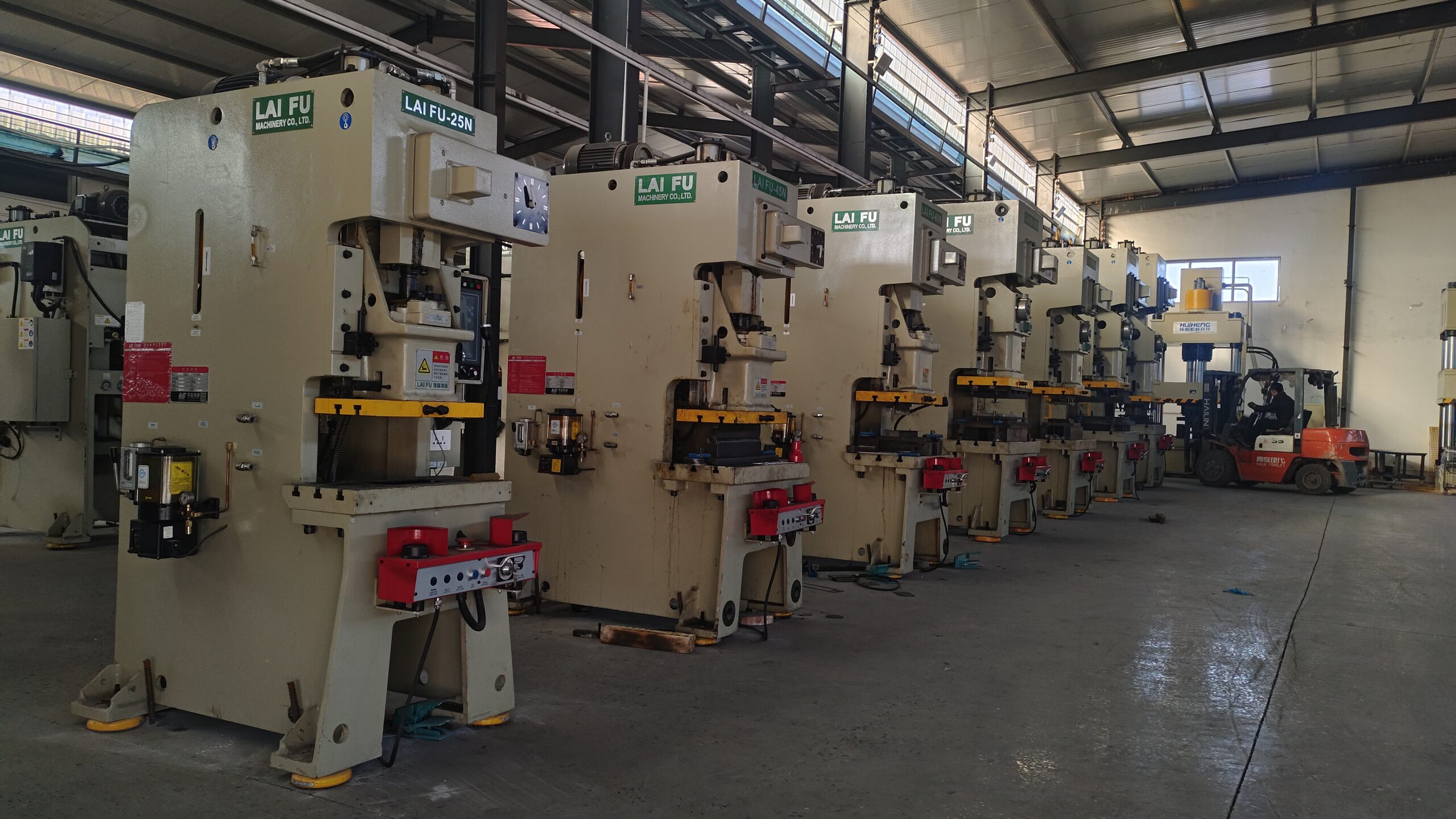
High-volume metal production for parts that repeat in the tens or hundreds of thousands: progressive die stamping on presses from 25 to 400 tonnes, multi-stage deep drawing, and automated inspection, with the dies designed and built in our own tool room. At this volume the process changes shape — the question stops being “how do we make this part” and becomes “how do we keep making it identically for years.” ISO 9001:2015, registration 34025Q30296R0S.
No minimum order quantity. Samples in 7 days. DFM review included with every quotation.
Verify the production partner before volume tooling
Volume tooling deserves a partner you can check first. Our company profile and buyer feedback are published on our Alibaba.com storefront, and the projects behind this page are written up in our case studies. Quotation still follows your drawing, material, quantity and stated requirements.
Read the project notes Company profile and buyer feedback on Alibaba.com
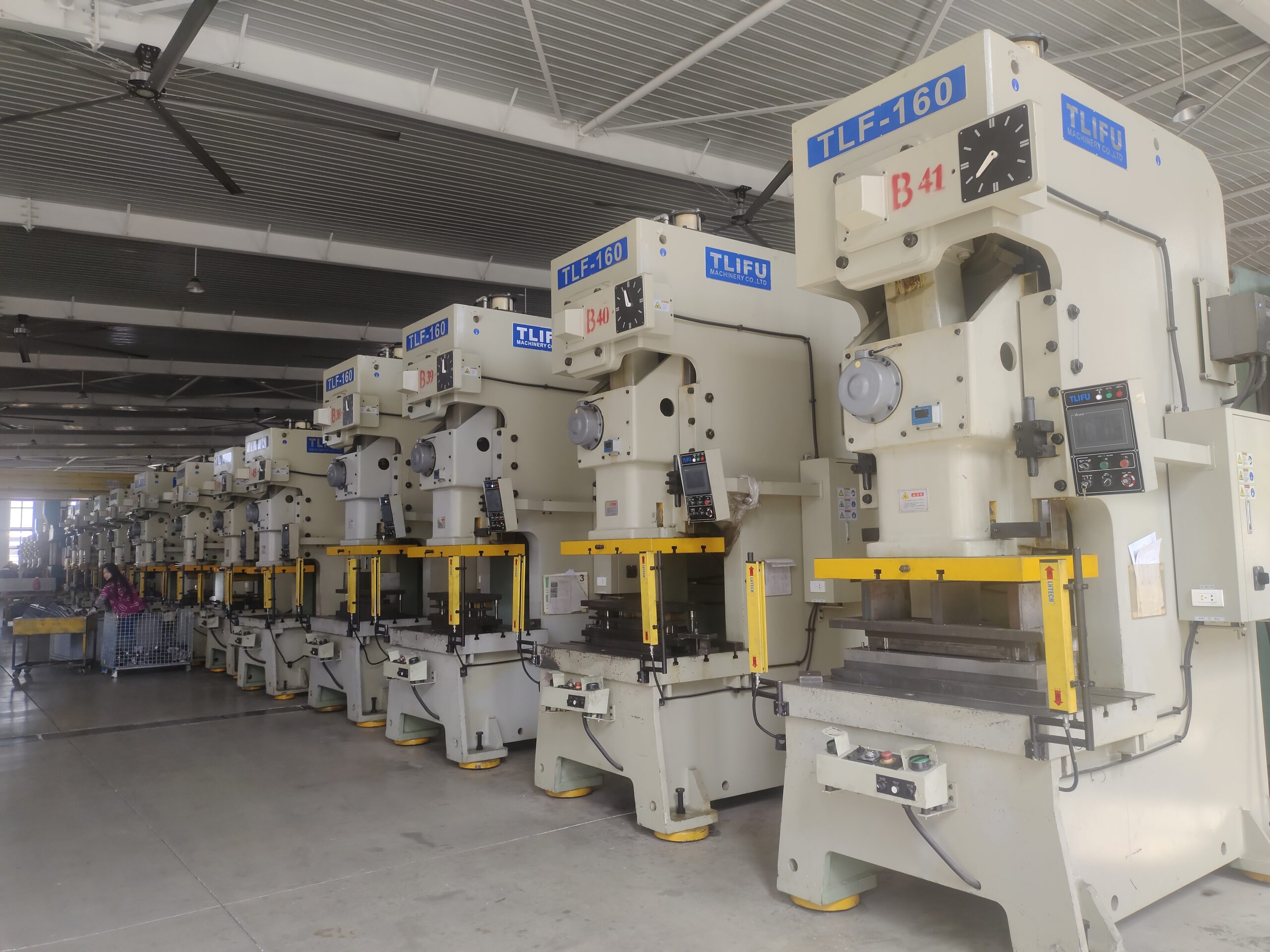
Key facts: high-volume production
| Volume routes | Progressive die stamping, multi-stage deep drawing, and stamping plus assembly where parts ship as units |
| Press range | 25 to 400 tonnes |
| Tooling | In-house tool room — die design, manufacture and maintenance are not subcontracted |
| Production lead time | 20–30 business days after sample approval, with tooling time added before the run |
| Process control | Tool wear monitoring and SPC data collection where the part warrants it |
| Inspection | First article inspection on a CMM, plus 100% verification of critical dimensions before shipment |
| Documentation | CMM dimensional reports, first article inspection reports, EN 10204 material certificates, PPAP documentation where a program requires it and we can provide it |
| Minimum order quantity | None, though tooling economics shift the process route at volume |
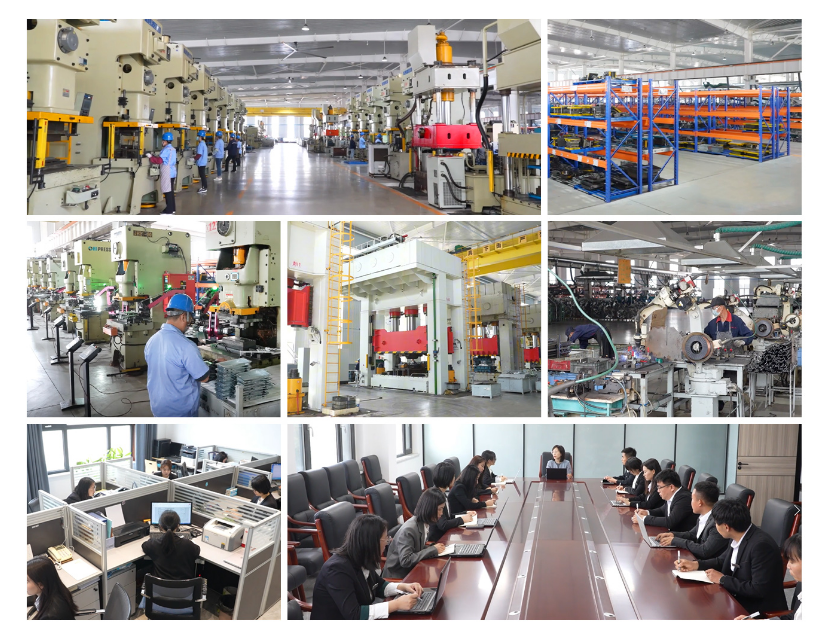
| 25–400 t | stamping press range |
| Progressive / compound / transfer | dies built in-house |
| ±0.02 mm | on critical features |
| In-process checks | tied to critical dimensions |
| EN 10204 + FAI | material and dimensional records |
| ISO 9001:2015 | reg. 34025Q30296R0S |
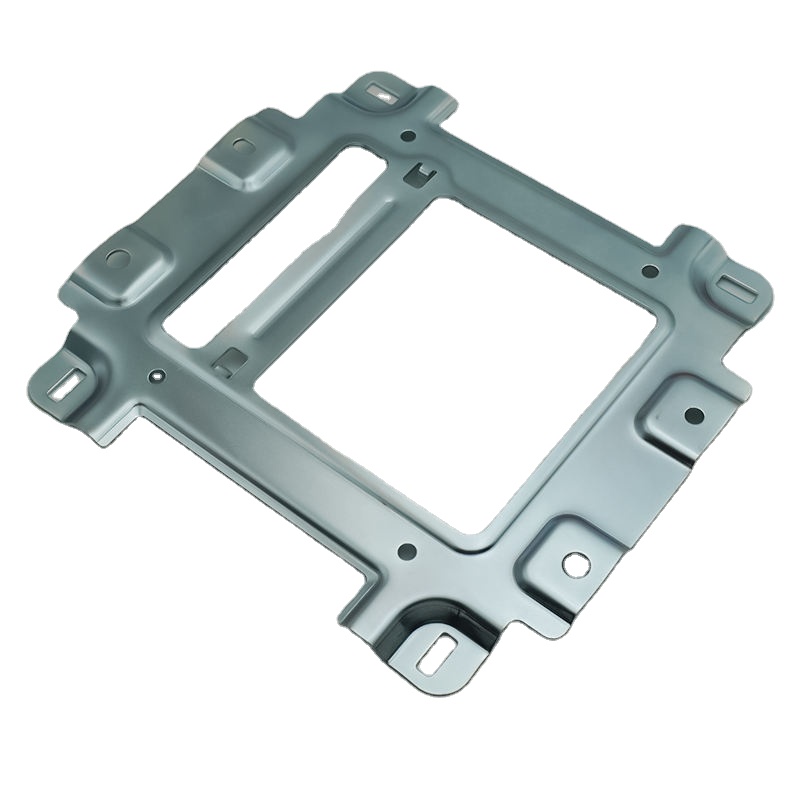
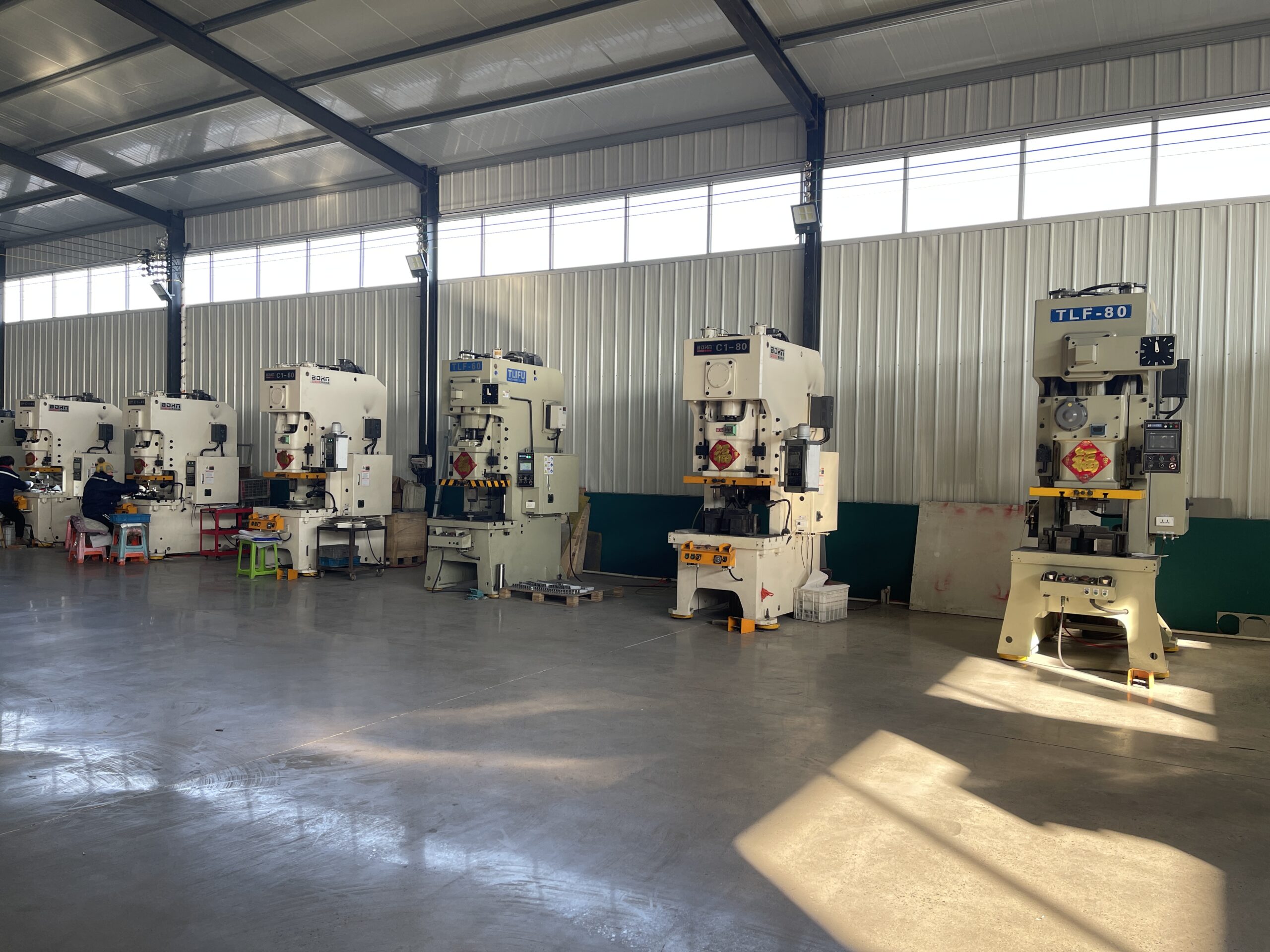
Why high-volume work is different
The cost structure inverts. Below a few thousand pieces the die dominates the price; above that, the die is amortised and the unit cost falls to material plus press time. That is why the tooling decision is really a volume decision, and why we will quote the volume against both stamping and fabrication rather than assuming one.
Consistency becomes the product. At ten thousand pieces a customer accepts parts that fit. At a million, the requirement is that part one and part five hundred thousand are interchangeable — which depends on the die and on die maintenance, not on the operator. Because we build the dies ourselves, tool life and tool maintenance are ours to manage.
Die wear is the real quality variable. A stamped part drifts out of tolerance gradually as the die wears, not suddenly. In-process checks are therefore tied to the critical dimensions across the run rather than to a fixed calendar, so the drift is caught before it produces a bin of out-of-tolerance parts. On long runs, see our note on extending stamping die service life.
Logistics start to matter as much as manufacturing. At volume, packaging, part-to-part protection, pallet configuration and shipping frequency become part of the specification. A cosmetic part that arrives scratched has failed regardless of its dimensions.
What high-volume production means here
High-volume production is not a single process — it is the set of choices that make a part cheap and repeatable once its geometry is fixed. In practice, that means a die rather than a program, a press rather than a machine tool, and inspection tied to the run rather than to the part.
Routes for volume production
Progressive die stamping — The mainstay. Coil feeds through sequential stations performing pierce, form, bend, emboss, trim and separate; the part is finished when it leaves the last station, with no manual handling between operations. This is the lowest per-piece cost route for complex parts at volume. See custom metal stamping.
Compound die stamping — All cutting in a single stroke, which holds blank profile and hole positions in exact relationship. Used at volume where concentricity or hole-to-edge accuracy is the critical dimension.
Transfer die stamping — Separate blanks carried between stations by grippers rather than the strip. For large, deep or heavy parts that cannot be coil-fed.
Multi-stage deep drawing — Volume production of cups, cans and seamless enclosures, where the stage count is engineered from the material’s forming limit. See metal deep drawing.
Volume assembly — At high quantities, assembling a sub-assembly in a fixture rather than shipping loose components reduces handling for the customer and consolidates inspection. See assembly services. If the design is not yet frozen, start with rapid prototyping.
Finishing in line — Plating, coating or passivation applied to the finished batch, with coating thickness controlled so that volume repeatability is not lost at the finishing stage.
Why stamping wins at volume
| Factor | What it means commercially |
|---|---|
| Unit cost falls to material plus press time | Once the die is amortised, cost is driven by the strip and the cycle, not by labour |
| Identical parts across millions | The shape is in the tool, so batch ten matches batch one |
| No per-part labour | Coil feeds and parts exit finished; there is no operation to staff per piece |
| Material efficiency | Strip nesting keeps scrap down, which matters most on the higher-cost grades |
| Integrated features | Bends, ribs, holes and embossing in one die, reducing part count and assembly |
| Predictable capacity | Press time is scheduled, so volume delivery dates can be supported rather than hoped for |
Common high-volume scenarios
Automotive and EV hardware — Battery module brackets, busbar supports, shims and terminals, where a production programme runs for years and every unit must be identical. See automotive and EV.
Connectors, contacts and shielding — Thin-material parts at very high volume, where pitch consistency is what the part is for. See electronics.
Construction and scaffold hardware — Hangers, clips, hinges and couplers where the same part appears tens of thousands of times and consistency is a safety characteristic. See construction and hardware.
Energy infrastructure hardware — Clamps, brackets and laminations at project volume, usually galvanised. See energy and infrastructure.
Containers, cans and housings — Volume deep-drawn components where the seamless wall removes a welding operation from every unit.
When a die is the wrong answer — below roughly 1,000 pieces a year a die rarely pays back; where the design changes every few months a die locks you in; and where the annual quantity is uncertain, fabrication lets you keep the option open until the numbers are real. We will quote the alternative and say so.
How we set up a high-volume programme
1. Send the drawing, the annual volume and the expected life. Volume and expected programme life decide the die design more than the geometry does. The quotation, lead time and initial DFM feedback are returned within 24 hours.
2. Volume and process review, free. We compare stamping against fabrication at your volume and say which is cheaper and by roughly how much, then review strip layout, feature strength, minimum hole-to-edge distances and bend radii for a die.
3. Die design and build in our own tool room. Progressive, compound or transfer die, designed for the annual volume and designed to be maintainable, because a die that cannot be serviced cheaply becomes an expensive die over a long programme.
4. First article approval. Samples and a dimensional report go to you before volume starts. Nothing runs on an unapproved first article.
5. Production with in-process checks. Inspection intervals are tied to the critical dimensions so that die wear is caught as drift, before it becomes a bin of rejects.
6. Finishing, inspection and shipment. Plating or coating applied to the batch, CMM and FAI documentation supplied, and packaging specified for the volume and the cosmetic requirement.
High-volume production capabilities and specifications
| Parameter | Capability |
|---|---|
| Press range | 25–400 tonnes |
| Die types | Progressive, compound, transfer |
| Tooling | Designed and built in-house; maintained in-house |
| Tolerance | ±0.02 mm on critical features |
| Deep drawing | Multi-stage hydraulic presses for volume containers |
| Materials | Carbon steel, stainless steel (301/304/316L), aluminium, copper, brass, galvanised and pre-coated strip |
| Surface finishes | Zinc plating, powder coating, anodising, passivation, deburring, heat treatment |
| Inspection | In-process checks tied to critical dimensions; CMM reports; FAI; EN 10204 certificates |
| Engineering response | Quotation, lead time and DFM feedback within 24 hours |
| Quality system | ISO 9001:2015, registration 34025Q30296R0S |
| Plant | 15,000 m², 6 production lines, 85 employees |
Get a volume production quote
Send the drawing, the annual volume and the expected programme life. You will get a comparison of stamping against fabrication at your volume, a tooling price and a per-piece price — normally within one working day. See how we price metal fabrication, or use the Upload Drawing & Get Quote.
Frequently asked questions about high-volume production
At what volume does stamping beat fabrication?
As a working rule, below about 1,000 pieces a year the tooling rarely pays back and fabrication is cheaper. Above roughly 5,000 to 10,000 pieces progressive die stamping normally wins on total cost, because the unit cost falls to material plus press time once the die is amortised. Between those figures it depends on part complexity and on how long the programme will run. Send the drawing with the annual volume and we will quote both routes so the comparison is on real numbers.
How do you keep quality consistent across a long run?
By treating die wear as the quality variable it is. A stamped part drifts as the die wears rather than failing suddenly, so in-process checks are tied to the critical dimensions across the run instead of to a fixed calendar. Because we build the dies ourselves, we also know where each die wears first and can schedule maintenance against that rather than waiting for a dimension to go out.
What happens if the design changes after the die is built?
It depends on the change. Altering a hole position or a trim line is normally a die modification; changing the material thickness or the fundamental geometry can mean a new die. This is the main commercial risk of committing to tooling early, which is why we recommend proving the geometry with cut and bent prototypes first — see rapid prototyping — and why we will tell you at DFM review which characteristics are expensive to change later.
Can you support a programme that runs for several years?
Yes, and that is what the die investment is for. A long programme is the case where building and maintaining the die in-house matters most: tool life stops being somebody else’s problem to schedule, and a die that cannot be cheaply serviced becomes very expensive over millions of parts. Tell us the expected programme life at RFQ so the die is designed for it rather than for the first order.
Do you provide inspection documentation at volume?
Yes. In-process checks are recorded against the critical dimensions, and CMM dimensional reports, first article inspection and EN 10204 material certificates are available with the shipment. Where a programme needs an agreed inspection frequency, a control plan or a customer-specific report format, raise it at RFQ and we will agree it before the first article rather than after.
Related capabilities
- Custom metal stamping — progressive, compound and transfer dies
- Metal deep drawing — volume containers and enclosures
- Assembly services — volume sub-assembly and inspection
- Rapid prototyping — prove the geometry before the die
- Custom laser cutting — the bridge route below die volume
- Reducing stamping costs — the design choices that move the unit price
Related solutions and resources
Volume changes which process is economic. These pages cover the trade-offs:
- Metal stamping — the process most volume parts move onto
- Assembly services — keeping volume work as one shipment
- Rapid prototyping — where a volume project starts
- Metal fabrication prices — how volume changes unit price
- Automotive and electronics — the volume-driven industries
- Reduce stamping costs — cost levers at volume
See how a repeat European buyer reviewed multi-quantity production work: France case study.
Standards referenced
- IATF — automotive quality management requirements
- ASTM International — material and test standards
- worldsteel Association — steel grade and property reference
How it works
From drawing to volume production in five steps
The sequence is short and each step has a stated time against it, so you always know what happens next and when.
Send the drawing and the volume
An assembly of drawings plus your annual and per-order quantities. Volume is what decides the process route, so the quantity matters as much as the geometry. Large files can go to manager@bjjcen.com.
Quote and DFM review
Within 24 hours you get the price, the lead time and design feedback together, including whether progressive die stamping or multi-stage drawing is the cheaper route at your quantity.
Sample, then tooling
Sample lead time is 7 days typical. Dies are designed and made in our own tool room, so tooling time and the first production run do not depend on an outside supplier.
Production
20–30 business days after sample approval, plus tooling time before the run. Tool wear is monitored and dies are re-ground on schedule, which is what keeps the last piece like the first.
Inspect and dispatch
First article inspection on a CMM, then 100% verification of critical dimensions before shipment. Reports and EN 10204 3.1 material certificates travel with the order.
Choosing the route
One plant, or three suppliers?
This is the decision that shows up late, at assembly, when three sets of tolerances have to agree. Six production lines under one roof is the reason we can answer it without a sales angle.
All processes in one plant
- One set of tolerances, one datum chain and one inspection regime across the whole order
- No shipment between suppliers, so no re-packing, no re-inspection on arrival and no lost parts in transit
- Cutting, forming, machining, finishing and assembly run here, so a schedule slip is one conversation
- Changes reach every process before the next stage starts, rather than after parts have already shipped
- Watch out for a single point of failure — if a plant goes down, the whole order waits, which is why capacity and lead time are stated up front
Split across suppliers
- Possible advantages if one supplier genuinely specialises in one process and is much better at it
- Freight between sites is paid in money, in time and in risk of damage
- Each supplier inspects to its own reading of the drawing, so a non-conformance often appears only at assembly
- Change control is the real cost — a revision has to be pushed to every supplier and confirmed in writing
- Watch out for nobody owning flatness, stack-up or fit, because each supplier can be individually compliant and the assembly still not go together
How die wear is caught before it reaches the packing bin
Critical dimensions are tied to in-process checks, so drift is caught while the die is still running and leads to tooling maintenance and reapproval rather than a rejected lot. Annual demand and the drawing decide the die route, and tooling is built and maintained in-house. PPAP documentation is agreed per customer requirement and quotation, not offered as a certification by default.
What the quote needs from you:
- Annual demand.
- Critical-to-function dimensions.
- Inspection frequency required.
- Lot traceability and documentation.
Quotation and DFM feedback within 24 hours; a sample is typically ready in 7 days.
Case studies
Real projects, in the buyers’ own words
Seven verified reviews from seven countries, covering stamping, bending, laser cutting, machining and export packing. Swipe or scroll to browse.
Bending, laser cutting and stamping in one order
Everything is great, the guys know their job and do it wonderfully
Aluminium and stainless sheet parts, each routed to the process it suited.
Read the case →Repeat orders for laser cut and stamped parts
Very good company and it’s very nice to work with them!
Two orders placed and reviewed the same day — a mixed European order.
Read the case →From a single prototype to mass production
I have received the product and I’m going to get it test fitted
One test-fit part first, then the volume route once the design was frozen.
Read the case →Fabrication, export packing and lead time
Quality: acorde con el precio pagado. Delivery: Cumple con los tiempos y los productos vienen bien embalados
Intercontinental shipment where the packing is part of the specification.
Read the case →CNC machined parts made exactly to drawing
I got my customised product as per my needs. excellent
Drawings read the same way the buyer read them, before metal is cut.
Read the case →Stainless steel 304 and aluminium bending
High quality part that matched the desired specification exactly
First article inspection on a CMM before the run continued.
Read the case →Precision machined and engraved parts
A good price and a high quality result; a rare find
Small, high-finish parts where the surface is the specification.
Read the case →Every order
What ships with your parts
- CMM dimensional report — measured values against the drawing’s nominal dimensions and tolerances
- First article inspection report — on production runs
- EN 10204 3.1 material certificate — ties the material back to its heat
- Surface treatment report — coating thickness readings where a finish has been applied
- Hardness results — Rockwell, Vickers or Brinell where heat treatment is involved
ISO 9001:2015, registration 34025Q30296R0S. Independent inspection by SGS, TÜV or BV can be arranged and built into the quotation.
Send a drawing, get a quote in 24 hours
A price, a lead time and a DFM review come back together. Nothing is charged for quoting, and there is no minimum order quantity — a single prototype is normal work.
- STEP or IGES model, plus a dimensioned DWG, DXF or PDF
- Material and grade, quantity, and the surface finish you need
- Any inspection document your quality system requires