


Metal deep drawing from a plant that runs its own multi-stage hydraulic presses. We draw flat blanks into cups, cans and seamless enclosures — parts that have to contain something, not just be a shape — with the stage count engineered from the material’s forming limit rather than found by trial and error on the press. ISO 9001:2015, registration 34025Q30296R0S. No minimum order quantity.
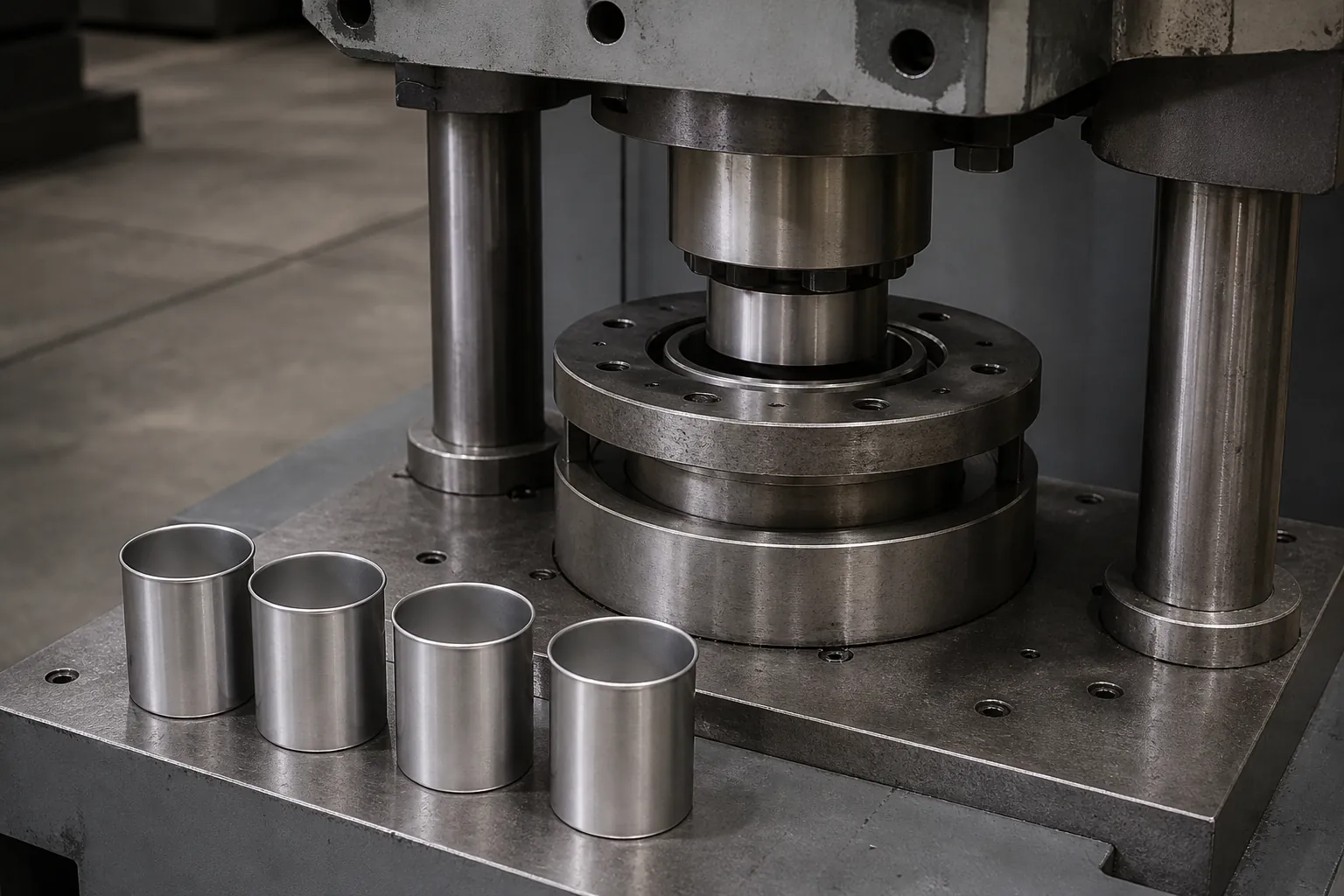
| Multi-stage | hydraulic drawing, in-house |
| Seamless | no weld in the drawn wall |
| 301 / 304 / 316L | stainless grades drawn |
| 15,000 m² | plant, 6 production lines |
| ISO 9001:2015 | reg. 34025Q30296R0S |
| No MOQ | from 1 piece |
Why choose us for metal deep drawing
Drawing and stamping sit in the same plant. Most drawn parts begin as a blanked or pierced blank, and many finish with a trimmed rim, a pierced base or a machined neck. All of that runs under one work order, so the part does not get re-datumed between suppliers.
The stage count is calculated, not discovered. Deep drawing fails in a predictable way: the wall thins, the flange wrinkles, or the base tears. Each material has a limit on how much it can be drawn in one operation, and past that limit the answer is another stage, a different blank, or inter-stage annealing — not more press force. We work that out at quotation, so the tooling is built for the right number of stages the first time.
Seamless walls where they matter. A drawn wall has no seam, which is why drawn parts are chosen for anything pressurised, anything that must not leak, and anything where a weld would be a cosmetic or fatigue problem.
Sheet thickness and material grade are the two decisions that drive cost. A grade that draws easily at one thickness can tear at the next. We will tell you which combination is manufacturable before you commit to tooling.
What is metal deep drawing?
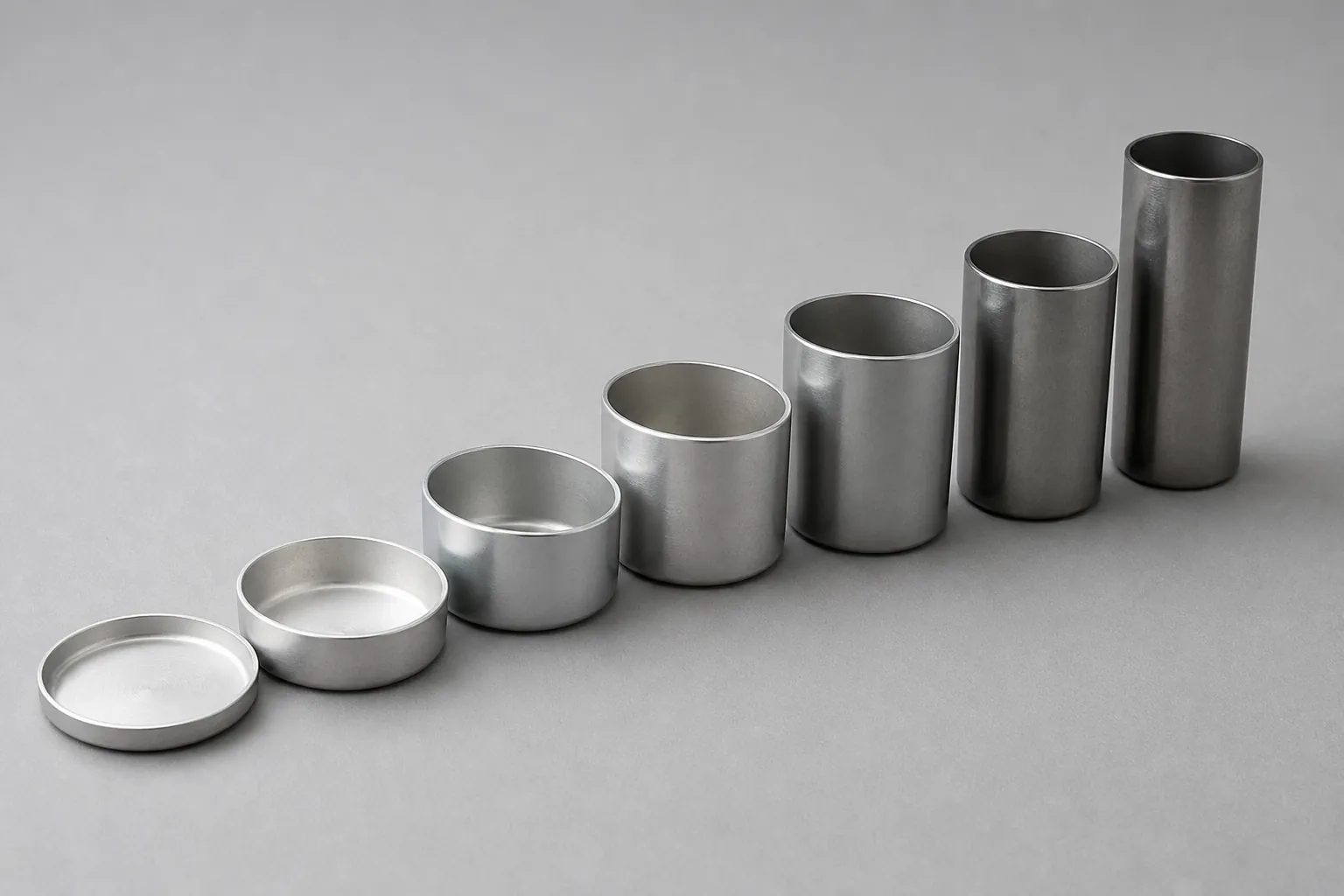
Deep drawing is a forming process in which a punch pushes a flat blank through a die, pulling the material inward and downward so the blank becomes a hollow cup or shell. Unlike bending, the material is not simply folded — it flows. The blank diameter shrinks while the wall height grows, and the wall may thin depending on the process route. Because the shape comes from material flow, the wall is continuous and seamless.
Common deep drawing methods
Single-stage drawing — One draw from blank to finished cup. Used where the depth-to-diameter ratio is within what the material can take in a single operation, and the cheapest route when it applies.
Multi-stage drawing (redrawing) — The cup passes through successive dies, each increasing depth and reducing diameter. This is how a tall narrow can is made. Each stage has to stay inside the material’s forming limit, which is what sets the total stage count.
Reverse drawing — The cup is turned inside out on the next stage, which increases depth without further reducing diameter. Useful for geometries where straight redrawing would exceed the material’s limit.
Ironing — The wall is deliberately thinned by forcing it through a slightly smaller clearance, producing a more uniform wall and a taller part. Typically used on drawn cans where wall thickness must be controlled.
Blanking and drawing in sequence — The blank is cut, often in a compound die, then drawn in the same or the next operation. Keeping blank and draw under one roof is what keeps the blank edge concentric with the drawn wall.
Inter-stage annealing — Materials that work-harden — 301 and 304 stainless in particular — lose ductility as they are drawn. Where the stage count would otherwise exceed the limit, the part is annealed between stages to restore formability.
Key advantages of deep drawn parts
| Advantage | What it means commercially |
|---|---|
| Seamless wall | No weld to leak, crack or dress — the reason drawn parts are chosen for pressure and fluid containment |
| Fewer parts | A drawn shell replaces a tube plus base plate plus weld, removing two joints and their inspection |
| Better strength per kilo | The material is worked, not cut away, so stiffness is retained with thinner stock |
| High material utilisation | Material flows into the part rather than being machined off, which matters most on stainless |
| Consistent geometry | Concentric walls and a flat base come from the tool, not from an operator’s setup |
| Good surface finish | Drawn surfaces are smooth and can be anodised or polished directly, without dressing a weld |
Common applications and scenarios for deep drawn parts
Enclosures and housings — Seamless enclosures for sensors, instruments and small electronics, where a drawn shell with a closed base is both cheaper and tighter than a folded box. Where the enclosure also needs wired or machined features, they are added after drawing.
Filter housings and fluid containment — Filter shells, cups and bowls. The seamless wall is the entire point: there is no weld to leak in service.
Cans, cups and shells — Battery cans, capacitor cases, connector shells, motor housings, LED reflectors and bodies. High volumes where wall control and concentricity decide quality.
Electrical and shielding parts — Drawn shielding cans and covers, where a continuous wall gives better electromagnetic containment than a folded one.
Consumer and commercial hardware — Vessels, liners, cups and covers where the drawn finish is the visible surface.
Automotive and EV — Busbar covers, cell housings, sensor bodies and fluid reservoirs.
When drawing is the wrong answer — for a shallow open part, a folded and welded fabrication is cheaper; for one-off or very low volumes the tooling rarely pays back; and where the geometry is square rather than round, fabrication or stamping will normally beat it. If that describes your part, we will quote the other route.
How our deep drawing service works
1. Send the drawing with the wall thickness. DXF, STEP, STP, SLDPRT, PDF or DWG. Inside diameter, wall thickness, depth and base radius decide the process more than the outside shape does. Engineering responds within 3 hours on working days.
2. Draw ratio and stage calculation. We work out the blank diameter, how much reduction the material can take in one pass, and therefore how many stages the part needs. If the part is not drawable as specified, you hear it here rather than after tooling is cut.
3. Tooling design and build in our own tool room. Punch, die, blank holder and, where needed, an annealing plan between stages.
4. Sample and first article approval. Drawn samples go to you with a dimensional report before production. Wall thickness distribution is measured on the sample, not assumed.
5. Production and finishing. Drawing, then trimming, piercing or machining as the drawing requires, followed by the specified finish.
6. Inspection and shipment. CMM dimensional reports, first article inspection, EN 10204 material certificates and, where relevant, wall thickness readings ship with the order.
Deep drawing capabilities and specifications
| Parameter | Capability |
|---|---|
| Drawing | Multi-stage hydraulic presses, in-house |
| Tooling | Designed and built in our own tool room |
| Materials | Carbon steel, stainless steel (301/304/316L), aluminium (1100/5052), copper and brass |
| Related operations | Blanking, piercing, trimming, ironing, secondary CNC machining |
| Surface finishes | Passivation, zinc plating, powder coating, anodising, deburring |
| Minimum order quantity | None — from 1 piece |
| Engineering response | ≤3 hours on working days |
| Quality system | ISO 9001:2015, registration 34025Q30296R0S |
| Records supplied | CMM reports, FAI, EN 10204 material certificates |
| Plant | 15,000 m², 6 production lines, 85 employees |
Materials for deep drawing
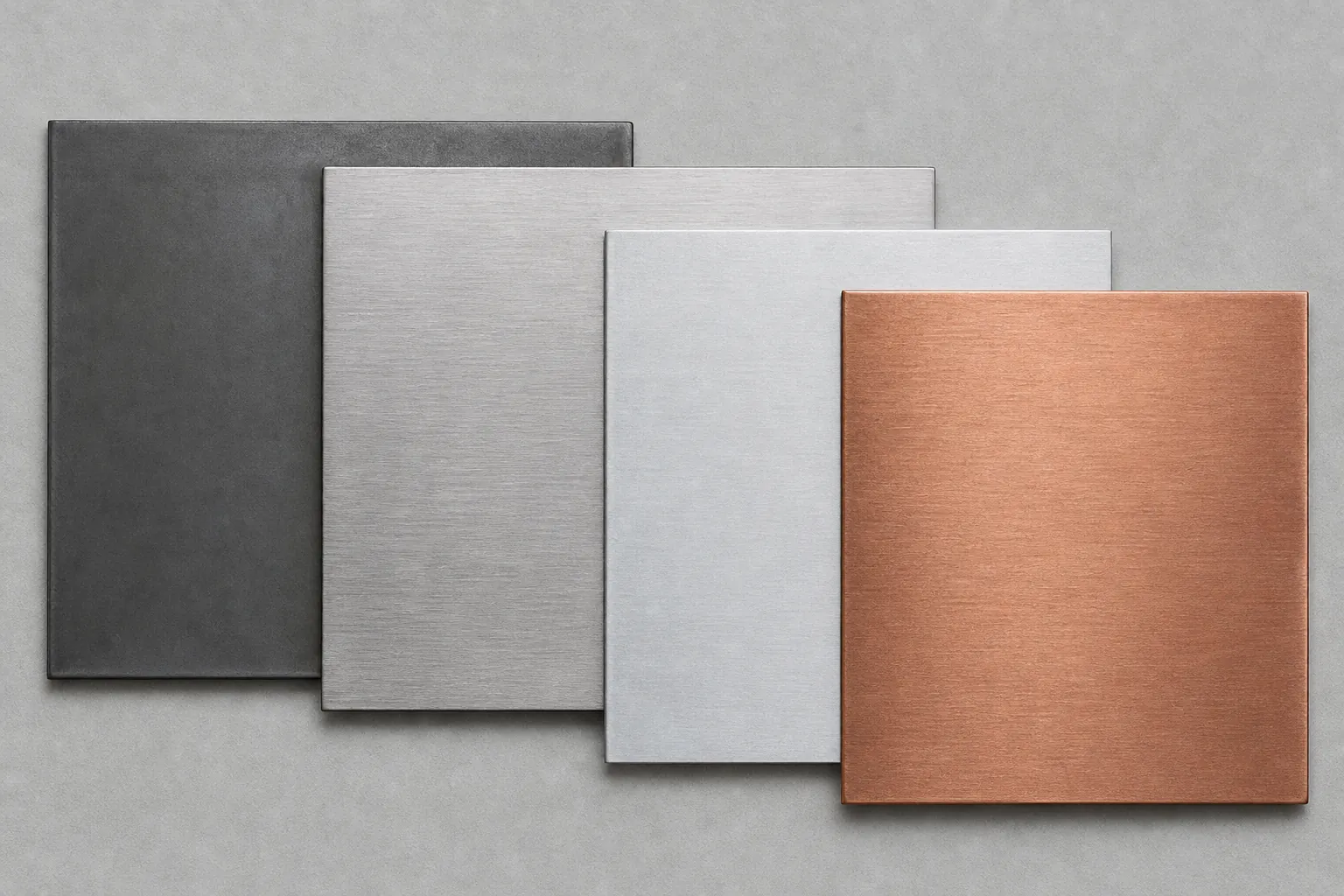
Carbon steel — The easiest of the common grades to draw and the cheapest per kilo. Deep drawing quality grades are specified by their forming behaviour rather than by strength alone, because a grade that is strong but not ductile will tear at the base radius.
Stainless steel — 304 is the general-purpose drawing grade; 316L where chloride resistance is needed; 301 where the finished part needs spring temper. Stainless work-hardens quickly, so the stage count is higher and inter-stage annealing is more often required than on carbon steel.
Aluminium — 1100 draws most easily and is used for cosmetic and lightly loaded shells; 5052 is the practical compromise between formability and strength. Please note that aluminium and stainless are not interchangeable on the same tooling without recalculating clearances and springback.
Copper and brass — C110 and C260 draw well and are chosen where conductivity or appearance is the reason for the material.
Our sheet metal fabrication materials guide covers grade selection, and the sheet metal thickness chart lists gauge equivalents.
Surface finishing for drawn parts
Passivation and deburring — Standard on stainless draws, removing free iron left by tooling contact and giving a clean rim. See metal surface treatment.
Anodising — Aluminium draws only. Type II for appearance and general protection, Type III where the surface has to resist wear.
Zinc plating and powder coating — For carbon steel shells used outdoors or in machinery, with the coating thickness range specified so it does not close out a thread or a mating bore.
Polishing — Where the drawn surface is the visible surface, as on covers and vessels.
Quality control on drawn parts
The two measurements that decide whether a drawn part is good are wall thickness distribution and concentricity, so those are what we measure. A draw that looks correct can still be thin at the base radius, which is where failure happens in service.
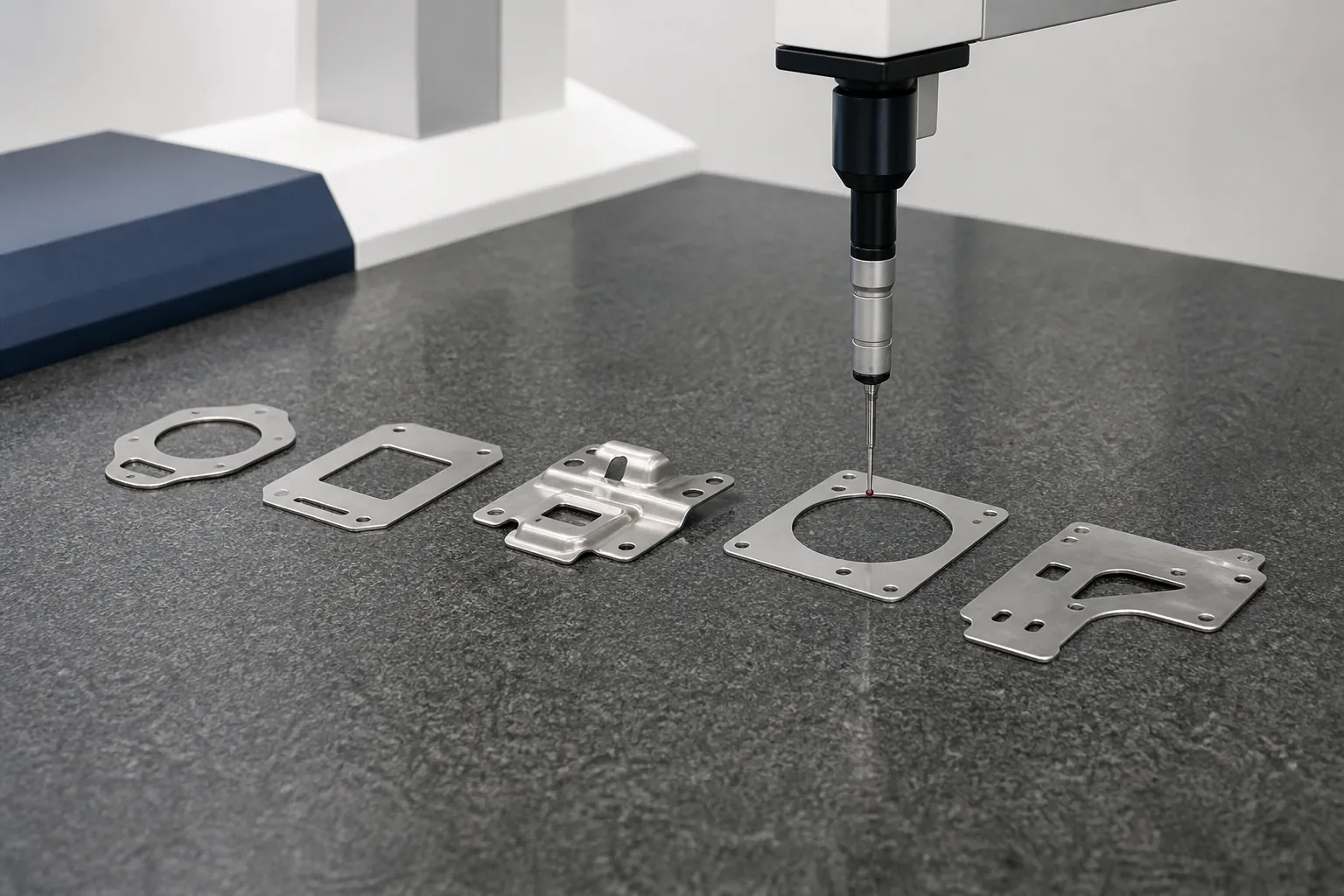
Records available with the order: CMM dimensional report, first article inspection, EN 10204 material certificate, and wall thickness measurements where the drawing specifies them. Third-party inspection by SGS, TÜV or BV can be arranged at any point in the run.
Frequently asked questions about deep drawing
What is the difference between deep drawing and metal stamping?
Stamping cuts and forms a flat part with a die; deep drawing pulls the material into a hollow shell. A drawn part is routinely made in a stamping press — the difference is the tooling and what happens to the material, which flows rather than folds. High-volume drawn parts are often blanked in the same press, which is why the two capabilities usually sit together.
How many stages will my part need?
It depends on the depth-to-diameter ratio, the material and the wall thickness you need, because each material has a limit on how much it can be reduced in one operation. Send the inside diameter, depth and wall thickness and we will work out the blank and the stage count before any tooling is committed.
Why does my part tear or wrinkle at the base?
Tearing and wrinkling are the two standard failure modes. Tearing comes from exceeding the material’s forming limit at the base radius, which is solved with more stages or inter-stage annealing rather than more press force. Wrinkling comes from insufficient blank holder pressure, or from drawing a flange that is too wide for the material thickness. Both are designed out at the tooling stage.
Do you anneal between stages?
Where the material requires it. Stainless grades in particular work-harden as they are drawn, so a tall or heavily reduced part may need annealing between stages to restore ductility. That is planned into the process route rather than discovered on the press.
What minimum order quantity applies to drawn parts?
There is no minimum order quantity, and we will draw a single piece for validation. The practical threshold is tooling: at very low volumes a welded fabrication is usually cheaper, and we will quote that instead.
Can a drawn part also be machined or welded afterwards?
Yes. Piercing, trimming and secondary five-axis machining all run in the same plant, and a drawn shell can be welded to a flange or a fitting as a sub-assembly, with one dimensional report covering the finished unit.
Get a deep drawing quote
Send the drawing with inside diameter, wall thickness, depth and any base radius requirement, plus the annual volume. You will get a stage calculation, a tooling price and a per-piece price, normally within one working day. See how we price metal fabrication for what drives the number, or use the RFQ form.
Other capabilities in our plant
- Custom metal stamping — progressive, compound and transfer dies built in-house
- Sheet metal fabrication — cutting, forming, joining and finishing under one work order
- Sheet metal bending — CNC press brake work with material-specific compensation
- Metal welding — MIG, TIG, spot and laser welding for sub-assemblies
- CNC machining — five-axis milling and turning to ±0.005 mm
- Deep drawn parts — worked examples of drawn components we produce
Related solutions and resources
Deep drawing is a forming route, so it is usually compared against the other ways of making a shaped part:
- Metal stamping — where the part is flat rather than a shell
- Rapid prototyping — proving drawability before tooling
- High-volume production — multi-stage draw at volume
- Deep drawing parts — worked examples from production
- Automotive — the industry that drives most deep drawn volume
- Standard sheet metal thicknesses chart — blank thickness reference
See how a buyer evaluated formed parts against their own drawing: United States case study.
Standards referenced
- ASTM International — material and test standards
- worldsteel Association — steel grade and property reference
- NIST — measurement and dimensional metrology reference