


Custom laser cutting service on a 12,000 W fibre laser, for flat blanks, brackets, panels and profile parts in carbon steel, stainless and aluminium. Laser cutting is the process that needs no tooling, which makes it the correct first step from a single prototype to the volume where stamping tooling starts to pay — and it is the operation that establishes the edge every later bend and weld is measured from. ISO 9001:2015, registration 34025Q30296R0S. No minimum order quantity.
No minimum order quantity. Samples in 7 days. DFM review included with every quotation.
Review cut-part projects before releasing the order
Cut parts are easy to compare; the supplier is not. Our company profile and buyer feedback are published on our Alibaba.com storefront, and the projects behind this page are written up in our case studies. Quotation still follows your drawing, material, quantity and stated requirements.
Read the project notes Company profile and buyer feedback on Alibaba.com
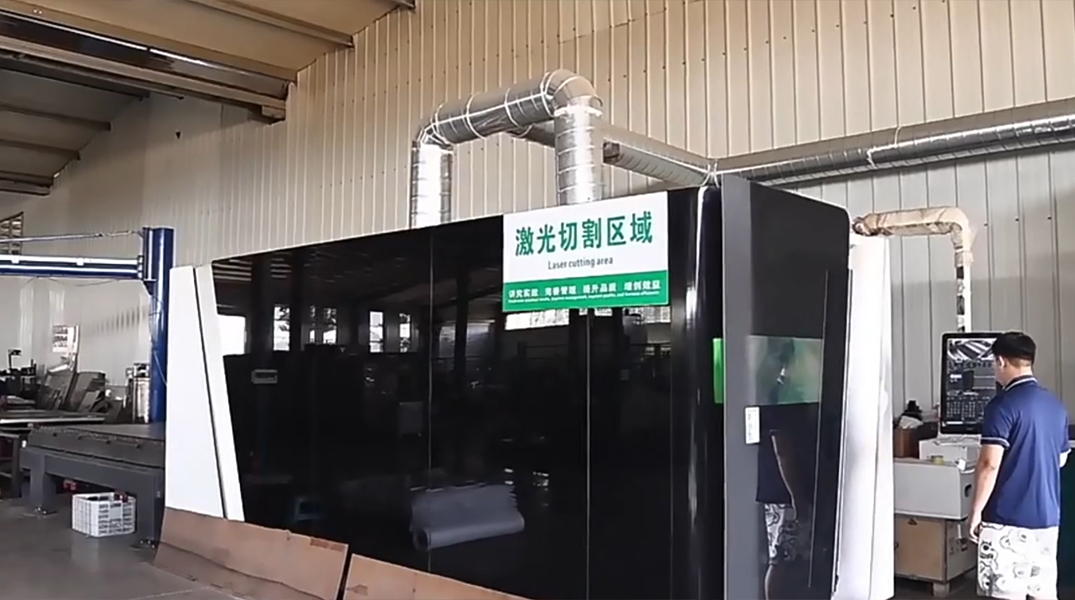
Key facts: laser cutting capability
| Laser source | 12,000 W fibre laser |
| Materials cut | Cold rolled and hot rolled steel, stainless steel 304 and 316, aluminium 5052 and 6061, copper, brass |
| Thickness | From 0.5 mm upward; heavier plate quoted on request |
| Positional accuracy | Approximately ±0.05 mm on a cut profile |
| Edge condition | Square cut edge with a narrow heat-affected zone; deburring and dross removal as standard |
| No tooling | No die and no setup cost per design change — the reason this route suits prototypes |
| Inspection | First article inspection on a CMM with a stated measuring accuracy of ±0.002 mm |
| Minimum order quantity | None |
| 12,000 W | fibre laser source |
| No tooling | from 1 piece to mid volume |
| Carbon / stainless / aluminium | plus copper and brass |
| 3,200 mm | CNC press brake for downstream forming |
| ISO 9001:2015 | reg. 34025Q30296R0S |
| No MOQ | from 1 piece |
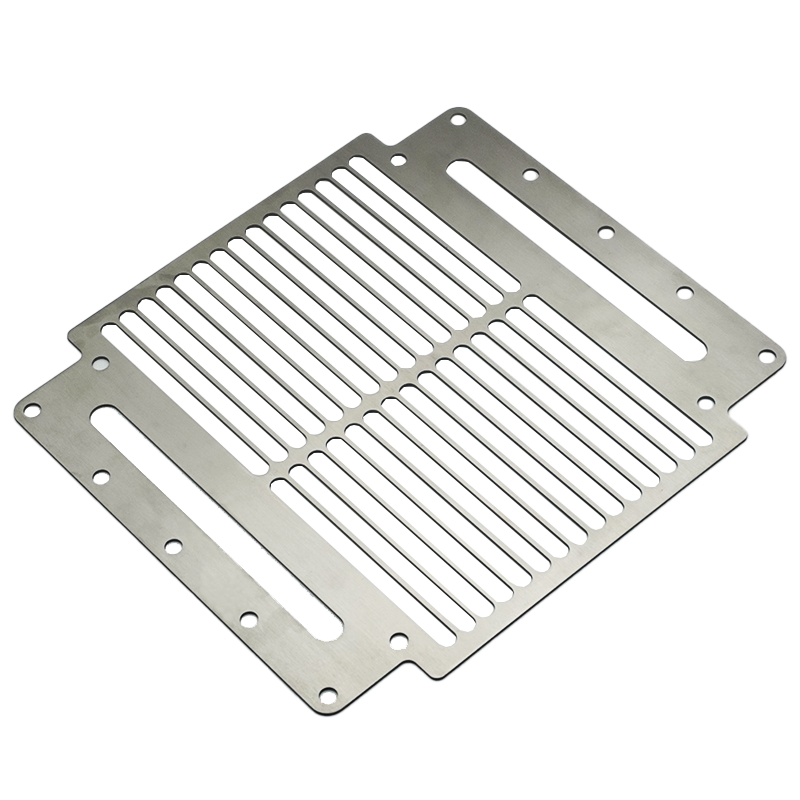
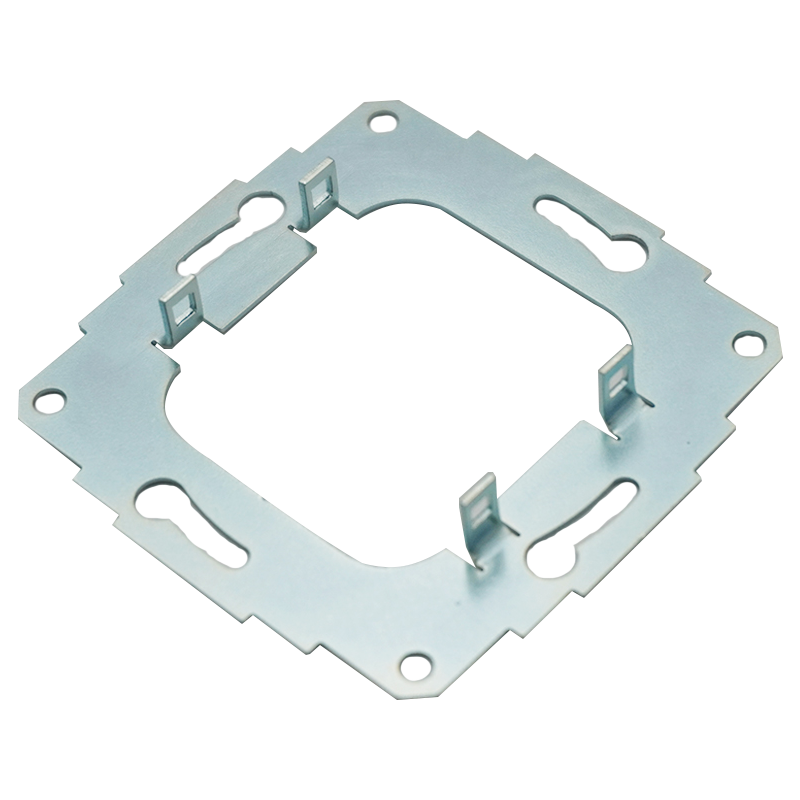
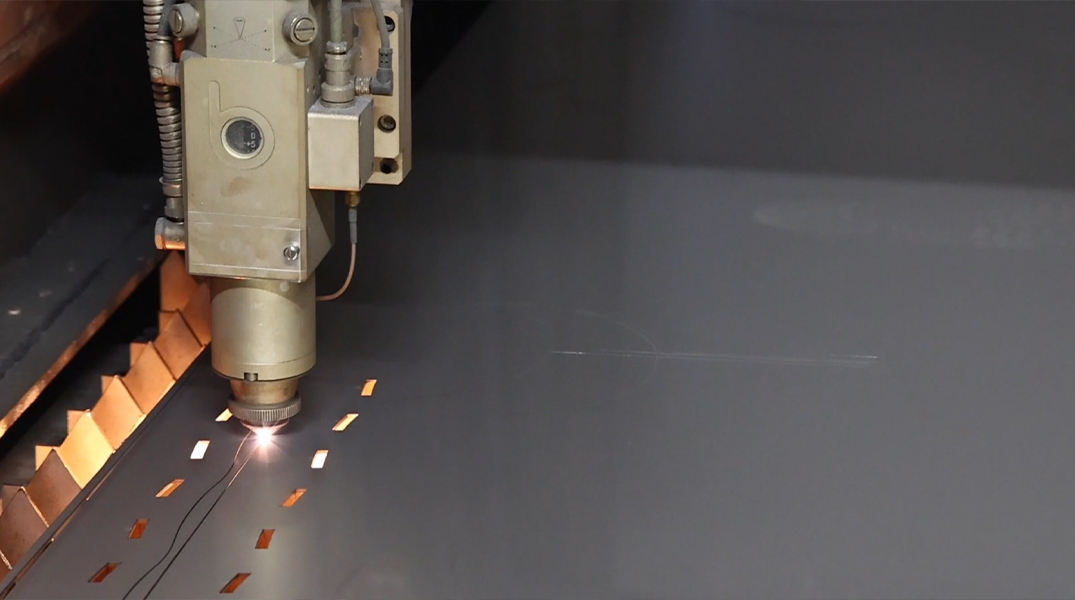
Why choose us for laser cutting
No tooling means no minimum. A laser does not care whether it is cutting one part or two thousand — there is no die to justify. That is why laser cutting is the right answer for prototypes, for one-offs and for any part whose design is still moving, and why we will quote it instead of stamping whenever the volume does not support a die.
The edge is the datum for everything after it. A bent part is only as accurate as the blank it came from, and a welded assembly is only as square as the plates that were cut for it. Cutting and forming run in the same plant, so the edge established on the laser is the edge the press brake works to.
12,000 W is about speed and thickness, not just power. A higher-power source cuts production gauges faster and handles heavier plate without the heat input that distorts thin material. It also means nitrogen or air cutting can be used where an oxide-free edge matters for a later weld or a cosmetic face.
Heat input is managed, not ignored. Laser cutting puts heat into a narrow band at the cut. On thin material that can mean a hard edge or a slight bow. We set the process parameters for the material and thickness rather than running one recipe for everything.
What is laser cutting?
Laser cutting uses a focused beam of light to melt and eject material along a programmed path, producing a finished edge without physical contact between tool and workpiece. Because the beam is positioned by a motion system rather than shaped by a die, the geometry is changed by editing the program — which is why a design can be revised and re-cut in hours rather than weeks.
Common laser cutting methods and considerations
Fusion cutting with nitrogen — An inert assist gas blows the molten material clear without oxidising the cut face. Slower than oxygen cutting but leaves a clean, oxide-free edge, which matters on stainless and aluminium where an oxidised edge would need cleaning before welding or painting.
Oxygen-assisted cutting — The oxygen reacts with the material, adding heat and increasing speed on carbon steel. It leaves a slightly oxidised edge, which is normally acceptable on steel that will be painted or galvanised but is not the right choice where the edge will be welded without cleaning.
Air and compressed-air cutting — A practical middle ground on thinner material, giving a reasonable edge at lower gas cost. Suited to parts where the edge will be mechanically finished or coated anyway.
Nesting — Parts are arranged on the sheet to minimise scrap, with the grain direction and any cosmetic requirement respected. On stainless, where the sheet is often the dominant cost of the part, nesting is a real cost lever rather than a detail.
Piercing and lead-ins — Where the beam enters and how it approaches the profile leaves a mark. On visible parts we place the pierce away from the cosmetic face or use a lead-in that runs off the part.
Cut quality and kerf — The kerf has a width, and it is not perfectly parallel: the entry is slightly wider than the exit. On a part with a tolerance that matters, the kerf and the taper are allowed for in the program rather than discovered on the finished part.
Key advantages of laser cutting
| Advantage | What it means commercially |
|---|---|
| No tooling cost | The right process from one part upward, and the reason design changes stay cheap |
| Fast from file to part | A drawing can become finished parts in days, with nothing to cut in the tool room first |
| Complex profiles at no extra cost | Cut-outs, slots and curved outlines cost the same as a straight edge |
| Clean edge on stainless | Nitrogen cutting avoids the oxide layer that would need removing before welding |
| Tight profile tolerance | The beam follows the program, so hole position is held by the machine rather than by a die |
| Low heat input | Distortion stays local, unlike a thermal process applied across the whole sheet |
Common applications and scenarios for laser cut parts
Prototypes and first articles — The first version of almost every part we make is laser cut, because it validates the design without committing to tooling. See rapid prototyping.
Brackets, plates and panels — Mounting plates, reinforcement plates, gussets, front panels and access covers. Our custom metal brackets guide covers the design side.
Enclosure and chassis blanks — The flat pattern for a folded enclosure, including ventilation slots, connector cut-outs and cable entries. See sheet metal bending for what happens next.
Welded fabrication components — Plates and profiles for welded frames and structures, where the cut edge and hole position set the squareness of the finished assembly. See metal welding.
Machine guards and mesh frames — Guard frames, infill panels and mounting brackets, including heavier gauge than a press brake alone could form. See industrial machinery.
Bridge quantities before tooling — Where a part will eventually be stamped but the design is not frozen, laser cutting carries production until the numbers are confirmed. That is often the cheapest way to reach the point where a die makes sense.
When laser cutting is the wrong answer — above a few thousand identical pieces a die will normally beat it on unit cost, and where a part needs a formed 3D shape rather than a flat profile, cutting is only the first operation. We will quote the better route and say why.
How our laser cutting service works
1. Send the drawing or the flat pattern. DXF or DWG is ideal; STEP and SLDPRT also work because the flat pattern can be unfolded from the model. Include the material and thickness, and the quantity. The quotation, lead time and initial DFM feedback are returned within 24 hours.
2. Cutability and nesting review, free. We check the kerf allowance, minimum feature sizes, whether the pierce point lands somewhere visible, and how the parts nest to keep scrap down. On stainless this is where material cost is usually reduced.
3. Material verification. The sheet is checked against the mill certificate before it is cut, so the certificate that ships with your parts corresponds to the material actually used.
4. Cutting. 12,000 W fibre laser with process parameters set for the material and thickness, and nitrogen assist gas wherever an oxide-free edge is needed for welding or appearance.
5. Deburring and forming. Edges are deburred before the parts move on, then bent on the 3,200 mm CNC press brake where the drawing requires it. Doing both in one plant keeps the cut edge as the datum for the bend.
6. Inspection and shipment. CMM dimensional reports, first article inspection and EN 10204 material certificates ship with the order.
Laser cutting capabilities and specifications
| Parameter | Capability |
|---|---|
| Laser source | 12,000 W fibre laser |
| Assist gases | Nitrogen, oxygen, compressed air |
| Materials | Carbon steel, stainless steel (301/304/316L), aluminium (1100/5052/6061), copper, brass, galvanised and pre-coated strip |
| Downstream forming | 3,200 mm CNC press brake, in the same plant |
| Related operations | Deburring, bending, welding, hardware insertion, finishing |
| Minimum order quantity | None — from 1 piece |
| Engineering response | Quotation, lead time and DFM feedback within 24 hours |
| Quality system | ISO 9001:2015, registration 34025Q30296R0S |
| Records supplied | CMM reports, FAI, EN 10204 material certificates |
| Plant | 15,000 m², 6 production lines, 85 employees |
Materials we cut
Carbon steel — CR4 and SPCC cold-rolled for clean edges and tight features, hot-rolled for heavier plate. Oxygen cutting is normally fastest here; where the edge will be welded without cleaning, nitrogen is used instead. See the materials guide.
Stainless steel — 301, 304 and 316L, cut with nitrogen so the edge stays oxide-free and weldable. Stainless absorbs heat differently from carbon steel, so parameters are set per grade rather than reused.
Aluminium — 5052 and 6061 for panels, brackets and enclosures, plus 1100 where conductivity or cost dominates. Aluminium reflects and conducts heat away quickly, so the cut settings and the assist gas both differ from steel work.
Copper and brass — C110 and C260 for busbars, contacts and shielding parts, where conductivity is the reason the part exists.
Galvanised and pre-coated strip — Where the coating is already on the sheet. The laser removes the coating locally at the cut, so the exposed edge is unprotected — acceptable indoors, and a reason to choose a different finish where the part is exposed.
Thickness is the variable that changes cut settings most, and the same nominal gauge behaves differently across these materials. Our sheet metal thickness chart lists the gauge equivalents.
Quality control on laser cut parts
The tolerances that matter on a cut part are hole position, profile size and edge condition. Hole position is held by the machine following the program, which is why laser cutting is often chosen over a die for a part whose hole pattern must be correct on the first attempt.
Records available with the order: CMM dimensional report, first article inspection and EN 10204 material certificate. Where a part will be welded, the edge condition can be inspected and reported. Third-party inspection by SGS, TÜV or BV can be arranged at any point.
Get a laser cutting quote
Send the DXF, DWG or 3D model with the material, thickness and quantity. You will get a cutability review, a nesting suggestion where it reduces cost, and a price — normally within one working day. See how we price metal fabrication, or use the Upload Drawing & Get Quote.
Frequently asked questions about laser cutting
When is laser cutting cheaper than stamping?
Below roughly 1,000 pieces a year, almost always — there is no die to pay for. Above about 5,000 to 10,000 pieces, progressive die stamping normally wins on total cost because the unit cost drops to material plus press time. Between those figures it depends on part complexity. Send the drawing and the annual volume and we will quote both routes so the comparison is on real numbers rather than a rule of thumb.
Why does my stainless part have a brown edge after laser cutting?
Because it was cut with oxygen, which oxidises the cut face and leaves a discoloured, hardened edge. That edge then has to be cleaned or ground before welding, or the weld will not be clean. Cutting stainless with nitrogen avoids the oxide altogether, which is why we use nitrogen assist gas on stainless that will be welded or left visible.
How accurate is laser cutting compared with a die?
Hole position and profile size are held by the machine following a programmed path, so accuracy is consistent from the first part. A die can hold tighter tolerances on a specific dimension once it is proven, and it is faster per piece, but it has to be cut, tried and corrected first. For prototypes and low volume, laser cutting is usually both faster to first part and cheaper overall.
What thickness can you cut?
The practical limit depends on material as well as thickness — stainless and aluminium absorb heat differently from carbon steel, and copper reflects the beam. Rather than quote a single maximum figure, tell us the material, thickness and part size and we will confirm directly whether it suits our 12,000 W fibre laser and what the realistic cut quality will be.
Can you cut and then bend the same part in one order?
Yes. Cutting and forming run in the same plant on a 3,200 mm CNC press brake, so the blank is cut, deburred and bent under one work order. That matters for accuracy: the bend is measured from the edge the laser produced, rather than from an edge produced by another supplier to a different tolerance.
Related capabilities
- Sheet metal fabrication — cutting, forming, joining and finishing under one work order
- Sheet metal bending — 3,200 mm CNC press brake, same plant
- Custom metal stamping — for the volumes where a die beats the laser
- Rapid prototyping — laser cut prototypes and first articles
- CNC machining — machined features forming cannot produce
- Laser cutting detail — worked examples from production
Related solutions and resources
Laser cutting is normally the first operation in a longer route:
- Sheet metal fabrication — the complete cut, form and finish route
- Metal bending — what happens to the cut blank next
- Metal stamping — when volume makes a tool cheaper than the laser
- Laser cutting service — worked examples from production
- Standard sheet metal thicknesses chart — what our 12,000 W source can cut
- Electronics and automotive — industries we cut for
See a multi-process order reviewed by its buyer: Ukraine case study.
Standards referenced
- Laser Institute of America (LIA) — laser processing reference
- ASTM International — material and test standards
- worldsteel Association — steel grade and property reference
How it works
From drawing to laser cut parts in five steps
The sequence is short and each step has a stated time against it, so you always know what happens next and when.
Send the drawing
A DXF plus a dimensioned PDF is the ideal pair for laser cutting, or a STEP file if you have one. Tell us the material, thickness, quantity and finish. Large files can go to manager@bjjcen.com.
Quote and DFM review
Within 24 hours you get the price, the lead time and design feedback together — including whether a tight corner radius or an under-thickness hole will cause problems on the cut.
Sample and first article
Sample lead time is 7 days typical. The first part is measured on a CMM and the first article inspection report ships with it.
Production
20–30 business days after sample approval. No die and no setup cost per design change, so a revision costs reprogramming rather than new tooling.
Deburr, inspect and dispatch
Dross removal and deburring as standard, 100% of critical dimensions verified, and the CMM report plus EN 10204 3.1 material certificate travel with the order.
Choosing the route
Laser cutting or stamping? The honest answer depends on volume
Neither is cheaper in the abstract. Because both routes run in the same plant, we can price the same drawing both ways and tell you where the crossover sits.
Fibre laser cutting
- Best from one piece up to low thousands
- No tooling cost — a design change costs reprogramming, not a new die
- Unit price stays flat with volume, which is the limit of this route
- Edge quality from a 12,000 W source, approximately ±0.05 mm on a cut profile
- Watch out for heat input on thin material — kerf and heat-affected zone are managed, not ignored
Metal stamping
- Best above tens of thousands of pieces per year
- Needs a die — designed and made in our own tool room, one-off tooling cost
- Unit price falls sharply as quantity rises
- Repeatable to the die, which is what holds a high-volume batch uniform
- Watch out for tool cost that cannot be recovered at low volume
From DXF to nested sheet: what changes the cut quote
A 12,000 W fibre laser cuts the blanks. The price follows the material grade, thickness, part size, edge requirement and how the parts nest on the sheet, plus any downstream bending or welding.
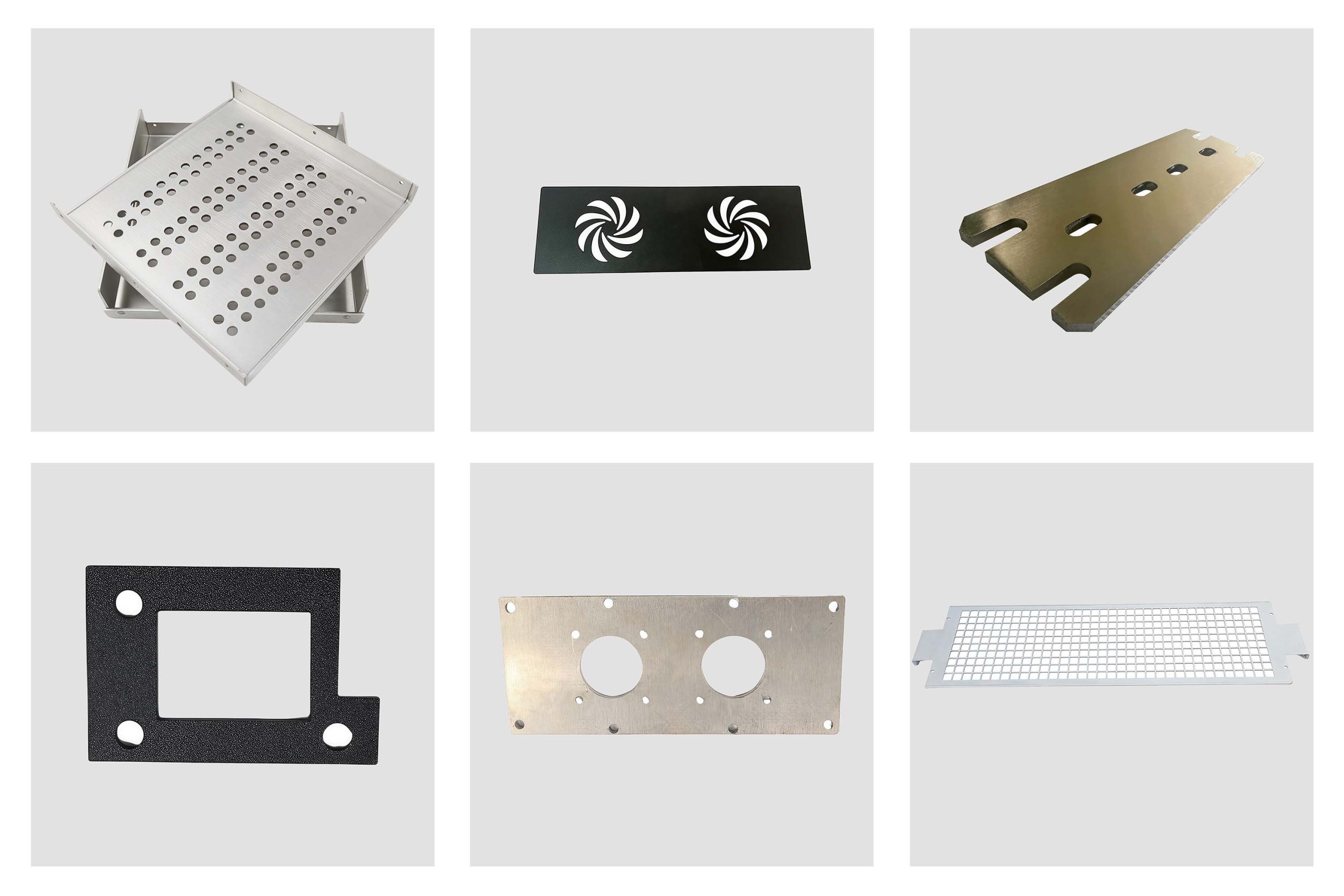
What to send with the enquiry:
- DXF or STEP file.
- Material grade and thickness.
- Edge condition: deburred, and which face must stay unmarked.
- Quantity, including any repeat schedule.
Quotation and DFM feedback within 24 hours; a sample is typically ready in 7 days.
Case studies
Real projects, in the buyers’ own words
Seven verified reviews from seven countries, covering stamping, bending, laser cutting, machining and export packing. Swipe or scroll to browse.
Bending, laser cutting and stamping in one order
Everything is great, the guys know their job and do it wonderfully
Aluminium and stainless sheet parts, each routed to the process it suited.
Read the case →Repeat orders for laser cut and stamped parts
Very good company and it’s very nice to work with them!
Two orders placed and reviewed the same day — a mixed European order.
Read the case →From a single prototype to mass production
I have received the product and I’m going to get it test fitted
One test-fit part first, then the volume route once the design was frozen.
Read the case →Fabrication, export packing and lead time
Quality: acorde con el precio pagado. Delivery: Cumple con los tiempos y los productos vienen bien embalados
Intercontinental shipment where the packing is part of the specification.
Read the case →CNC machined parts made exactly to drawing
I got my customised product as per my needs. excellent
Drawings read the same way the buyer read them, before metal is cut.
Read the case →Stainless steel 304 and aluminium bending
High quality part that matched the desired specification exactly
First article inspection on a CMM before the run continued.
Read the case →Precision machined and engraved parts
A good price and a high quality result; a rare find
Small, high-finish parts where the surface is the specification.
Read the case →Every order
What ships with your parts
- CMM dimensional report — measured values against the drawing’s nominal dimensions and tolerances
- First article inspection report — on production runs
- EN 10204 3.1 material certificate — ties the material back to its heat
- Surface treatment report — coating thickness readings where a finish has been applied
- Hardness results — Rockwell, Vickers or Brinell where heat treatment is involved
ISO 9001:2015, registration 34025Q30296R0S. Independent inspection by SGS, TÜV or BV can be arranged and built into the quotation.
Send a drawing, get a quote in 24 hours
A price, a lead time and a DFM review come back together. Nothing is charged for quoting, and there is no minimum order quantity — a single prototype is normal work.
- STEP or IGES model, plus a dimensioned DWG, DXF or PDF
- Material and grade, quantity, and the surface finish you need
- Any inspection document your quality system requires