


We work in cold rolled and hot rolled steel, stainless steel 304 and 316, aluminium 5052 and 6061, copper and brass, supplied as sheet, plate and bar. Choosing metal fabrication materials is a cost decision as much as a technical one, because grade changes both the material price and how fast the part can be cut, formed and machined.
Key facts: metal fabrication materials
| Steel | Cold rolled and hot rolled steel; automotive-grade carbon steel where a program specifies it |
| Stainless | 304 and 316 (including 316L for welded parts in corrosive service) |
| Aluminium | 5052 and 6061 |
| Other | Copper and brass, in sheet, plate and bar |
| Thickness | From 0.5 mm upward; heavier plate quoted on request |
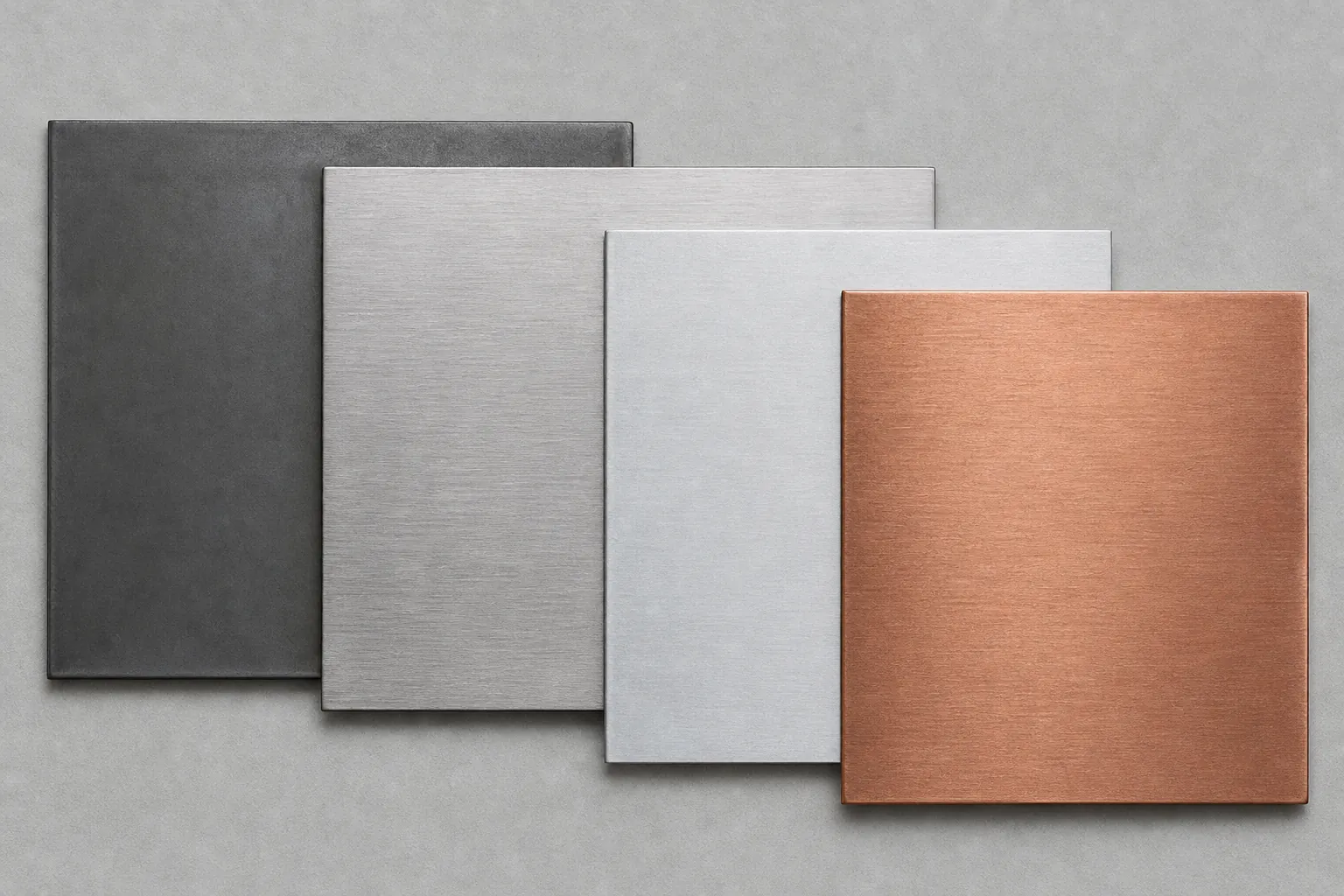
How to choose between the grades you are most likely to need
Cold rolled versus hot rolled steel. Cold rolled gives a better surface finish and tighter thickness consistency, which matters for visible parts and for accurate forming. Hot rolled is cheaper and available in heavier sections, and it is usually the right answer for structural brackets where appearance is not a requirement.
Stainless 304 versus 316. Choose 316 where chlorides are present — coastal air, de-icing salt, or process chemicals containing chloride. Otherwise 304 is usually the better trade, because 316 cuts more slowly and produces more underside dross, so specifying it without a corrosion reason adds cost without benefit. For welded parts in corrosive service, 316L reduces carbide precipitation in the heat-affected zone.
Aluminium 5052 versus 6061. 5052 forms more readily and is the better choice for bent and drawn parts. 6061 machines more cleanly and is stiffer, which suits milled components. Choosing the wrong one is a common and avoidable cost.
Grade also changes fabricability, not only price. Our sheet metal fabrication materials guide explains how each grade behaves under cutting, forming and welding, and machinability comparisons set out the same question for machining.
Availability and stock
What we hold varies with market conditions, so we confirm availability against your drawing rather than publishing a static stock list. Copper and brass are the grades most likely to need a lead-time check, since they are bought less frequently than steel and aluminium. If you are working to a schedule, state the deadline at enquiry stage and we will confirm material availability alongside the price.
Thickness is worth agreeing early: gauge and millimetre are not interchangeable, and a part drawn in one unit but quoted in the other can end up outside tolerance. Our standard sheet metal thicknesses chart converts between them, and materials we work with lists the grades in more detail. worldsteel publishes the steel grade and property references we work from.
Frequently asked questions
What metals do you work with?
Cold rolled and hot rolled steel, stainless steel 304 and 316, aluminium 5052 and 6061, and copper and brass, supplied as sheet, plate and bar.
Should I choose stainless steel 304 or 316?
Choose 316 where chlorides are present, such as coastal air, de-icing salt or chloride-bearing process chemicals. Otherwise 304 is usually the better trade, because 316 cuts more slowly and produces more underside dross.
Should I choose aluminium 5052 or 6061?
5052 forms more readily and suits bent and drawn parts, while 6061 machines more cleanly and is stiffer, which suits milled components.