


Introduction to Metal Stamping
Metal stamping, also known as cold stamping or sheet metal stamping, is a high-efficiency manufacturing process that transforms flat metal sheets into precise components using specialized dies and presses.Widely utilized in industries like automotive, aerospace, and consumer electronics, this technique combines speed, accuracy, and cost-effectiveness for mass production.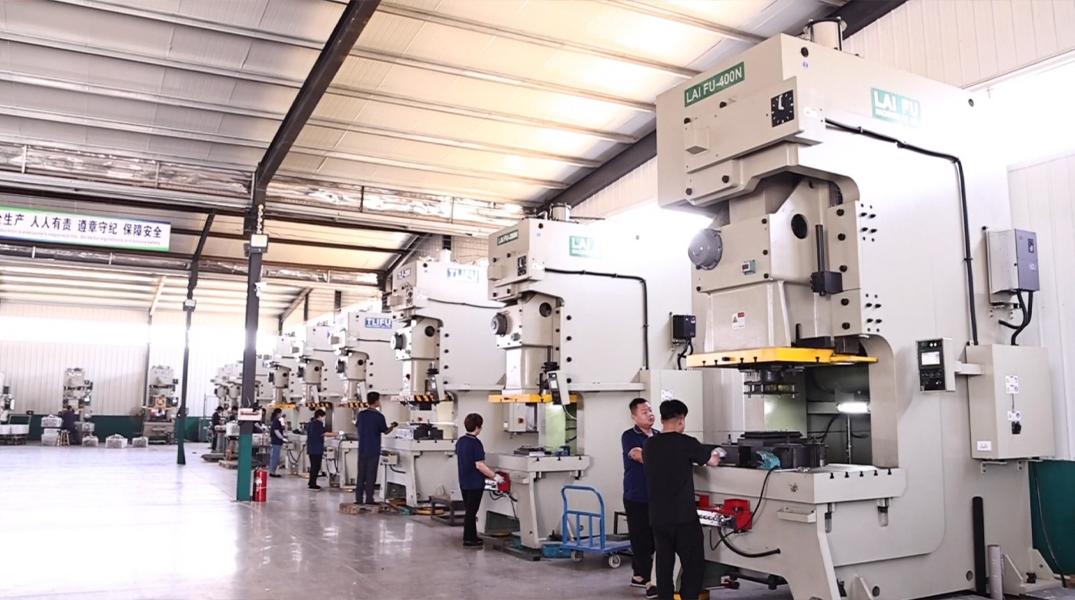
How Does Metal Stamping Work?
- Material Placement: A metal sheet (typically 0.4mm–2mm thick) is positioned on a die surface.
- Forming or Cutting: A hydraulic or mechanical press drives a punch downward, shaping or cutting the metal into the desired form within seconds.
- Post-Processing: Secondary operations like trimming, deburring, or coating enhance the component’s finish.
Applications
- Automotive: Engine parts, brackets, and structural elements.
- Electronics: Connectors, shielding casings, and heat sinks.
- Appliances: Cookware, sinks, and HVAC components.
- Industrial Machinery: Gears, valves, and flanges.
Advantages
- High Precision: Tolerances up to IT7-IT9 grades ensure consistency, critical for complex geometries.
- Cost Efficiency: Low per-unit costs offset initial die investments, ideal for large batches.
- Speed: Cycle times range from 1 second to 1 minute per part.
- Material Flexibility: Compatible with ductile metals, including magnesium and titanium alloys.
Key Factors in Stamping Die Design
Die quality directly impacts product accuracy and longevity. Critical considerations include:- Die Material: High-performance alloys (e.g., tungsten carbide) resist wear and reduce maintenance.
- Clearance Control: Optimal gap between punch and die minimizes burrs and extends tool life.
- Surface Finish: Precision grinding or CNC machining ensures Ra values below 0.4µm for smooth edges.
Future Trends in Metal Stamping
- Automation: AI-driven presses and robotic part handling reduce labor costs.
- Sustainability: Recycling scrap metal and adopting energy-efficient presses align with green manufacturing goals.
- Advanced Materials: Lightweight alloys (e.g., aluminum-magnesium) meet automotive electrification demands.
Key facts
| Process | Metal stamping of flat sheet into precise components |
| Sheet thickness | Typically 0.4 mm to 2 mm |
| Tolerance | IT7 to IT9 grades |
| Cycle time | About 1 second to 1 minute per part |
| Materials | Carbon steel, stainless steel, aluminium, copper, magnesium and titanium alloys |
| Tooling | Progressive and compound dies for multi-stage forming |
Frequently asked questions
What is metal stamping used for?
Metal stamping forms flat sheet into precise components using dies and presses, and it is used for high-volume production where speed and repeatability matter. Typical parts include automotive brackets and engine parts, electronic connectors and heat sinks, appliance components, and industrial gears, valves and flanges. Carbon steel, stainless steel, aluminium and copper can all be stamped.
How thick can the sheet be for stamping?
For the stamping work covered here the sheet is typically 0.4 mm to 2 mm thick. Thickness matters because it affects the clearance between punch and die, and the die design is set to suit the material and thickness you specify. Send the drawing and we will confirm that the part suits the stamping process.
What tolerances can stamping hold?
Metal stamping holds tolerances in the IT7 to IT9 range, which is tight enough for most complex geometries. Cycle times run from about one second to one minute per part, so the cost per unit falls as the batch grows. A new die is an upfront investment that the volume then pays back.
Related capabilities
We produce parts of this type with custom metal stamping. We also manufacture for Electronics and electrical and Automotive and EV programmes.
Related pages


