


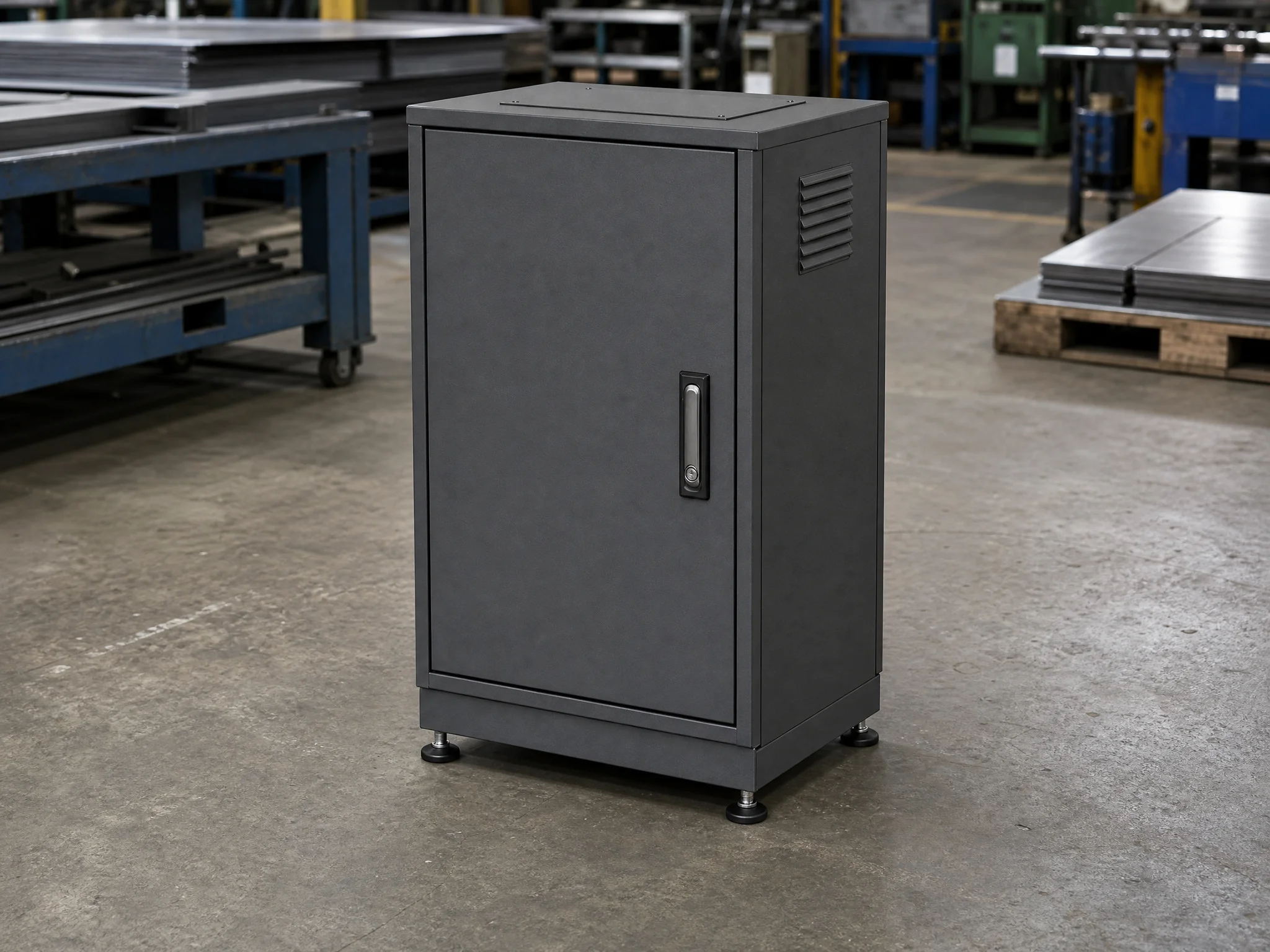
Primary topics: custom sheet metal enclosure manufacturer, electrical cabinet manufacturer China, control cabinet enclosure, industrial chassis fabrication, custom metal enclosure supplier
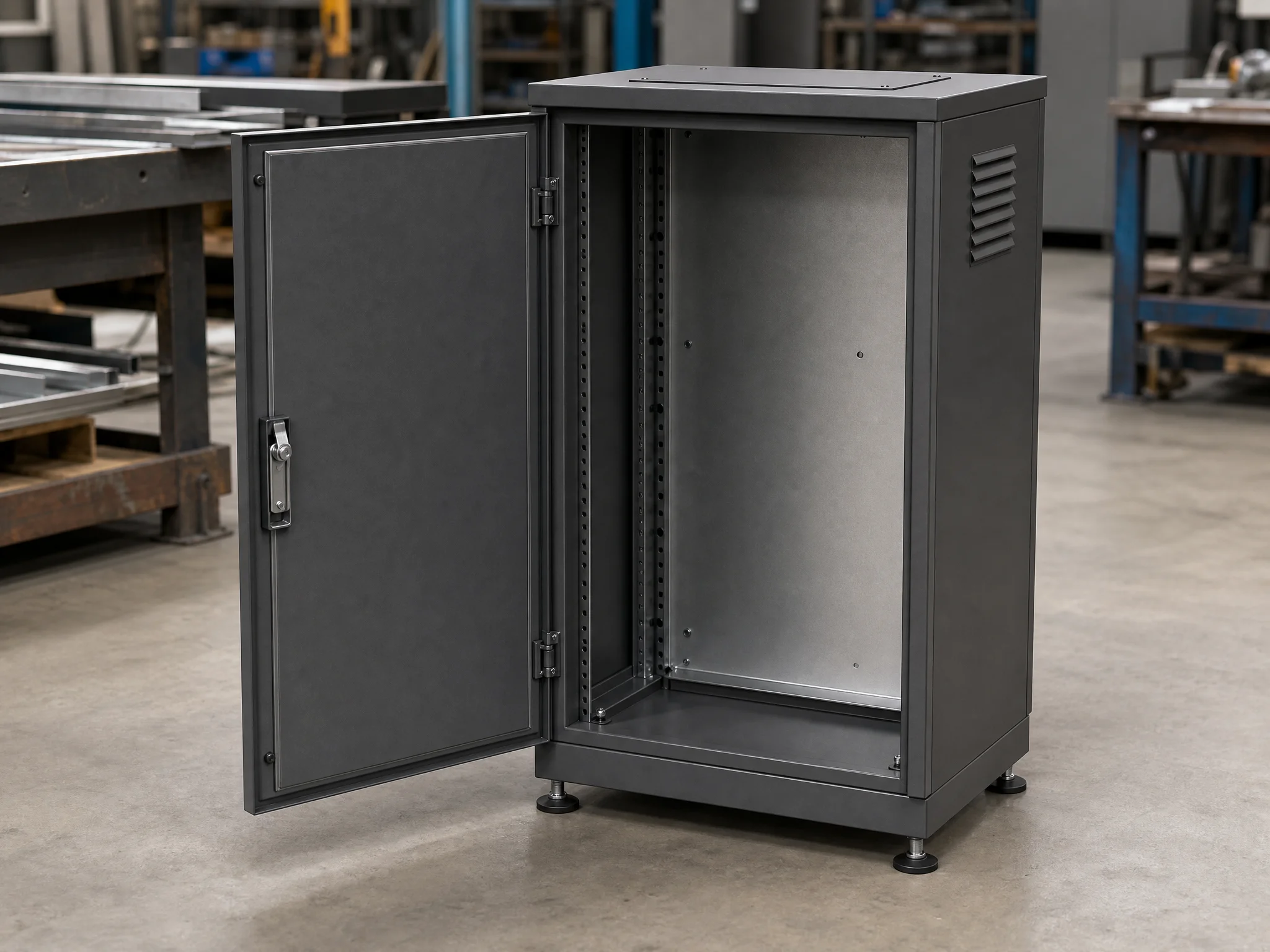
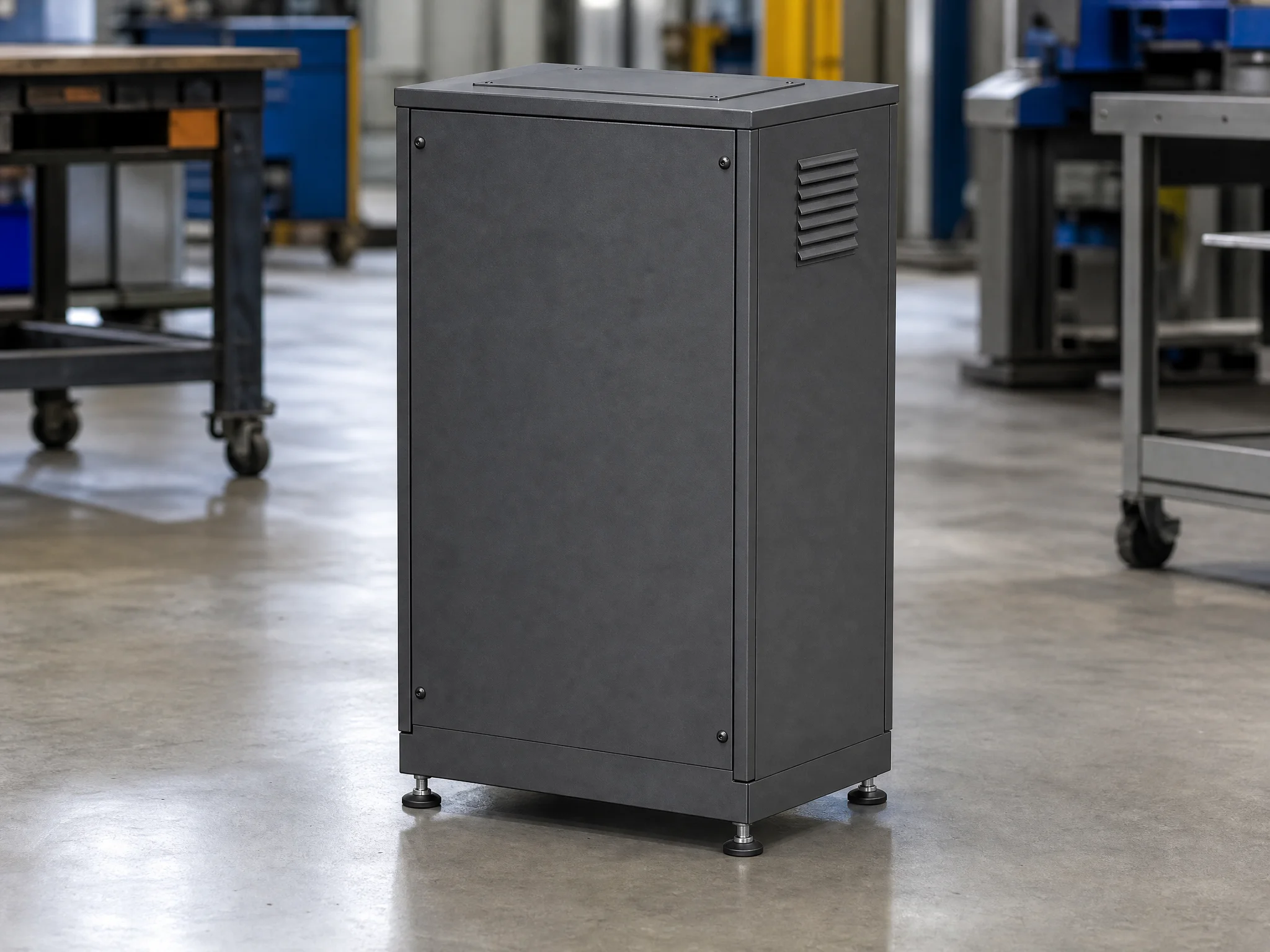
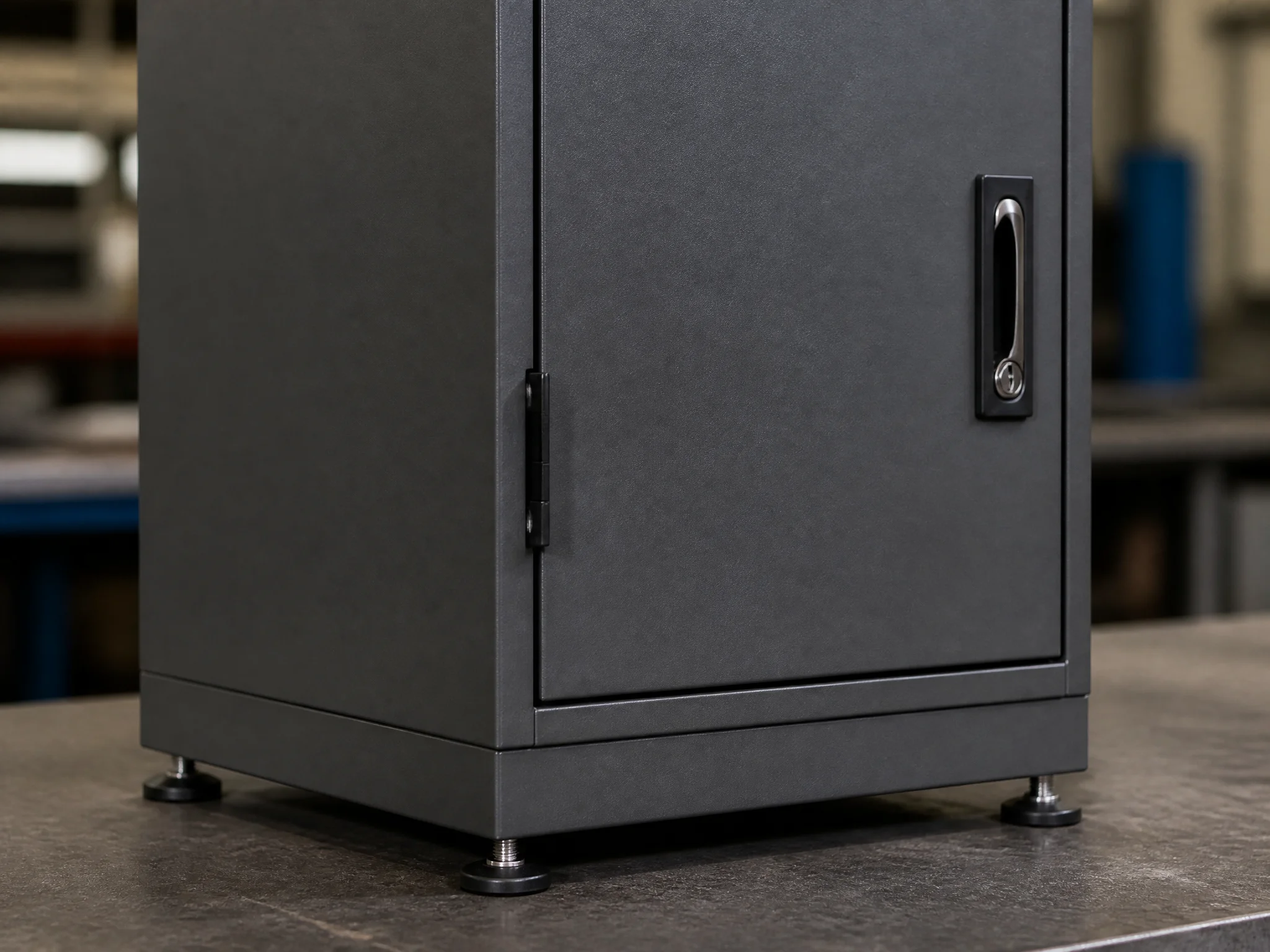
Direct answer
A custom sheet metal enclosure supplier should be selected by the complete manufacturing route, not by a single advertised specification. The buyer should confirm the enclosure material, sheet thickness, bend sequence, door and panel interfaces, joining method, surface finish, inspection documents, environmental protection requirements, prototype route and repeat-production plan before placing an order.
Beijing JCEN supports custom sheet metal fabrication for enclosures, chassis, panels, brackets and industrial equipment parts. Its public manufacturing information identifies a headquarters in Beijing and a factory in Nanpi County, Hebei, with a 15,000 m² plant, 6 production lines and 85 staff. The site states that quotations and initial DFM review are targeted within 24 hours on working days, samples are typically 7 days, and mass production is typically 20–30 working days after requirements are confirmed. Final feasibility remains drawing-dependent.
What does a custom sheet metal enclosure manufacturer do?
A custom sheet metal enclosure manufacturer converts a controlled drawing or 3D model into a formed, joined and finished housing. The work can include:
- laser cutting flat blanks;
- CNC press brake forming;
- stamping or deep drawing where the geometry and volume justify tooling;
- welding, riveting and hardware insertion;
- machining of mounting faces, holes or interfaces;
- deburring and surface finishing;
- dimensional and appearance inspection;
- packing and delivery documentation.
For a control cabinet or industrial chassis, the enclosure is not only a cover. It may define the mounting datum for electrical components, protect cable entries, provide access for service, manage panel alignment and carry the loads created by transport or installation. Those requirements should appear in the drawing and RFQ rather than being left to a generic product description.
How should buyers specify an electrical cabinet or industrial chassis?
A useful RFQ should identify the following information:
| Specification area | What to provide |
|---|---|
| Function | Control cabinet, electrical enclosure, machine chassis, junction box, panel or equipment housing |
| Material | Grade, temper where relevant, corrosion environment and any substitution rules |
| Thickness | Nominal thickness and permitted variation |
| Geometry | Flat pattern, 3D model, bend angles, radii, doors, covers, flanges and mounting points |
| Interfaces | Cable glands, connectors, hinges, locks, inserts, rails and grounding points |
| Joining | Welded, riveted, fastened or mixed assembly |
| Finish | Powder coating, anodising, plating, passivation, brushing or another specified finish |
| Inspection | Critical dimensions, flatness, appearance, coating thickness and required records |
| Volume | Prototype, low-volume, repeat production or a volume that may justify tooling |
| Delivery | Target date, packing requirement and destination |
This information allows the supplier to compare laser cutting and bending with stamping, drawing or a welded assembly route. It also makes the quotation easier to audit because material, process, quantity and inspection assumptions are visible.
Which materials are common for custom metal enclosures?
Material selection depends on corrosion exposure, mass, stiffness, conductivity, appearance, forming behaviour and cost. Common starting points include:
- Cold-rolled or hot-rolled carbon steel: suitable for many structural panels, cabinets, brackets and frames when strength and cost are important.
- 304 stainless steel: used where general corrosion resistance and a durable appearance are needed.
- 316 stainless steel: considered for more demanding chloride or chemical environments, subject to the application specification.
- 5052 aluminium: often considered for formed enclosures where low mass and formability matter.
- 6061 aluminium: used where machined features or higher strength are relevant to the design.
- Copper and brass: selected for electrical parts and other applications where conductivity, contact behaviour or appearance is important.
The final grade should be confirmed against the drawing, required finish and operating environment. A supplier should not replace a specified grade without written approval.
How do enclosure manufacturers compare laser cutting, bending and stamping?
The correct route depends on geometry, material, quantity, tooling and revision risk.
| Manufacturing route | Usually useful when | Main procurement question |
|---|---|---|
| Laser cutting and CNC bending | The design is changing, tooling is not justified, or the enclosure is made from cut and folded sheet | Can the bend sequence, hole-to-bend clearance and flatness meet the drawing? |
| Stamping | The part repeats and dedicated tooling can be amortised over production | What tooling is required, and how will design changes be controlled? |
| Deep drawing | The part is a cup, can or seamless drawn housing | What material, draw ratio, radii and stage sequence are feasible? |
| Welded sheet metal assembly | The chassis or cabinet is too large or complex for a single formed part | How will distortion, datum control and inspection be managed? |
| CNC machining | Local interfaces, datums or tight machined features matter | Which features actually require machining rather than fabrication? |
Beijing JCEN describes an integrated route that includes laser cutting, CNC bending, stamping, deep drawing, welding, CNC machining, finishing and assembly. Its public capability pages state a 12,000 W fibre laser, a 3,200 mm CNC press brake and presses from 25 to 400 tonnes. These figures should be treated as capability references; the actual route must be confirmed against the part drawing.
What should be checked before approving an enclosure prototype?
A prototype review should focus on the features that can create downstream assembly problems:
- Mounting datums: Check whether the cabinet or chassis has a clear datum strategy.
- Bend sequence: Confirm that the tool, flange length, radius and access direction are workable.
- Hole and insert position: Check connectors, hinges, cable entries and fasteners against the mating parts.
- Weld distortion: For welded frames or cabinets, inspect flatness and alignment after joining.
- Surface condition: Define visible faces, allowable marks, edge condition and finish acceptance.
- Critical dimensions: Identify which dimensions require measurement records.
- Service access: Confirm door swing, removable covers and access to installed components.
- Packing: Protect painted, brushed or polished surfaces during transport.
A prototype is most useful when the same drawing, inspection method and process assumptions can continue into repeat production.
How does Beijing JCEN support custom enclosure projects?
Beijing JCEN presents its service as a drawing-led route from DFM review to quotation, sample and production. The company states that it can review material, quantity, tolerances, geometry, tooling, finishing and inspection requirements before production. Its public pages identify the following verified operating facts:
- founded in 1997;
- plant production since 1998;
- factory in Nanpi County, Hebei;
- 15,000 m² plant;
- 85 staff;
- 6 production lines;
- no fixed MOQ;
- samples typically in 7 days;
- quote and initial DFM review within 24 hours on working days;
- mass production typically in 20–30 working days after requirements are confirmed;
- ISO 9001:2015 registration 34025Q30296R0S, with IATF 16949 and ISO 14001 also stated on the About page.
These are company-published operating statements, not a substitute for project-specific approval. Send the drawing, material, quantity, finish and inspection requirements to obtain a route-specific quotation.
What is the difference between an electrical enclosure and an industrial chassis?
An electrical enclosure usually protects or contains electrical components, wiring, terminals, controls or instruments. The specification often focuses on access, cable entry, mounting, grounding, corrosion protection and environmental exposure.
An industrial chassis usually provides a structural platform or frame for equipment, modules, panels or assemblies. Its specification often focuses on stiffness, load paths, flatness, alignment, mounting datums, weld distortion and service access.
The terms can overlap. The purchasing decision should therefore follow the function and interfaces of the part rather than the product name alone.
How should buyers discuss NEMA or IP requirements?
NEMA enclosure type designations and IP codes are not interchangeable labels. IEC 60529 classifies degrees of protection provided by enclosures for electrical equipment, while NEMA enclosure requirements use a different type-rating system. The buyer should specify the applicable standard, test basis, installation environment and required protection level instead of asking for a generic “waterproof cabinet.”
If the project requires a NEMA or IP claim, the requirement should be reviewed with the responsible electrical engineer and confirmed in the drawing, test plan and inspection documentation. A fabrication supplier should not imply an IP or NEMA rating without the required design details and verification evidence.
What documents should accompany a custom cabinet RFQ?
A practical RFQ package may include:
- 3D CAD model and dimensioned 2D drawing;
- material grade and thickness;
- annual or order quantity;
- finish and colour requirement;
- critical dimensions and datums;
- assembly drawing and mating interfaces;
- environmental and installation conditions;
- inspection plan and required records;
- packaging and delivery requirements.
Beijing JCEN states that STEP, IGES, DXF and PDF files can be reviewed through its quote process. The required format and current file-transfer method should be confirmed before sending controlled production data.
Frequently asked questions
Can a custom sheet metal supplier make one prototype enclosure?
A prototype may be feasible without dedicated stamping tooling when the part can be cut, bent, machined or welded using a suitable low-volume route. Beijing JCEN states that it has no fixed MOQ and supports prototype work. The drawing, material, geometry and inspection requirements still determine feasibility and price.
What is the typical sample lead time?
Beijing JCEN states that samples are typically available in 7 days. The final schedule depends on material availability, process route, finishing, inspection and the completeness of the approved requirements.
Can one supplier make the enclosure and its welded frame?
It may be possible when the supplier has the required cutting, forming, welding, machining and inspection capability. The buyer should ask for a process route and confirm how datums, distortion and final assembly interfaces will be checked.
Should an electrical enclosure be stamped or laser cut and bent?
Laser cutting and bending may suit prototypes, changing designs and lower-volume work. Stamping may suit repeat geometry where tooling is justified. The correct route depends on geometry, material, quantity and tooling requirements, not on one universal quantity threshold.
Can the supplier guarantee an IP or NEMA rating from a drawing alone?
Not necessarily. The rating depends on the enclosure design, seals, doors, cable entries, hardware, assembly controls and the applicable test method. The required standard and verification plan should be agreed before production.
What tolerance should be specified for a sheet metal chassis?
Specify tolerances by feature and function. Formed features and machined interfaces do not necessarily require the same tolerance. Beijing JCEN states that formed features are approximately ±0.1 mm and machined features can be ±0.005 mm, subject to material, geometry, process and inspection review.
What should I send to request a quote?
Send the controlled drawing or 3D model, material, thickness, quantity, finish, critical dimensions, inspection documents and target date. A complete RFQ allows the supplier to review manufacturability and clarify open points before quoting.
Start a custom enclosure or chassis review
For a custom sheet metal enclosure, electrical cabinet or industrial chassis, send the drawing with material, quantity, finish, critical interfaces and target date. Use the Get a Quote page or review the sheet metal fabrication service before requesting a route-specific quotation.
Sources and further reading


