


Introduction: Why Industry Type Changes Everything in Sheet Metal Fabrication
Walk into two factories — one making automotive body panels, one producing medical device enclosures — and you’ll find the same laser cutters and press brakes. But ask a procurement engineer at each company what they need from their sheet metal supplier, and you’ll get completely different answers.Automotive buyers want volume, speed, and cost efficiency. Medical device manufacturers need traceability, biocompatibility, and documentation. Electronics OEMs prioritize tight tolerances and cosmetic finishes. Construction and HVAC buyers want corrosion resistance and structural integrity.Understanding how industry requirements shape sheet metal fabrication specifications is the difference between sourcing a part that works and sourcing a part that passes validation.This guide breaks down sheet metal fabrication requirements across seven major industries, covering:- Recommended materials per industry
- Typical tolerance requirements
- Surface finish standards
- Certification and documentation needs
- Cost factors unique to each application
- How to evaluate a supplier for your specific industry
1. Automotive & Transportation
What Makes Automotive Sheet Metal Fabrication Different
Automotive is the highest-volume application for sheet metal fabrication globally. When a buyer from a Tier 1 automotive supplier comes to us, the conversation quickly moves to three things: consistency across high volumes, dimensional control across production runs, and documentation that satisfies PPAP requirements.Recommended Materials
| Application | Preferred Material | Why |
|---|---|---|
| Body panels, brackets | Cold Rolled Steel (SPCC, DC01) | Cost-effective, formable, accepts paint/coating |
| Structural chassis parts | Hot Rolled Steel (Q235, S235JR) | Higher load capacity |
| Interior trim brackets | Aluminum 5052-H32 | Weight reduction |
| Underhood components | Stainless Steel 304 | Heat and corrosion resistance |
| EV battery enclosures | Aluminum 6061-T6 | Strength-to-weight ratio |
Tolerance Expectations
Automotive sheet metal tolerances follow ISO 2768-m (medium class) for general fabricated parts:- Bending tolerance: ±0.5° on CNC press brake
- Hole position: ±0.15 mm for punched holes
- Edge straightness: ±0.3 mm per 300 mm
- Assembly mating features: ±0.1 mm
Surface Finishing
- E-coat (electrophoretic paint) for underbody structural parts
- Powder coat for interior brackets (RAL colors to OEM spec)
- Zinc phosphate pre-treatment before paint
- Clear anodize for aluminum trim components
Documentation You’ll Need
- PPAP Level 1–5 (most common: Level 3)
- First Article Inspection (FAI) report
- Material test certificates with heat number traceability
- Dimensional inspection report per 100% or AQL 1.5
2. Electronics & Telecommunications
What Makes Electronics Sheet Metal Fabrication Different
Electronics enclosures are one of the most precision-demanding sheet metal applications despite their relatively thin gauge. The challenge isn’t structural strength — it’s dimensional consistency for PCB mounting, electrical continuity, and cosmetic finish standards that reflect the product’s brand positioning.Recommended Materials
| Application | Preferred Material | Why |
|---|---|---|
| Server rack enclosures | Cold Rolled Steel + zinc plate | Electrical continuity, grounding |
| Desktop computer cases | Cold Rolled Steel 0.8–1.2 mm | Cost, formability |
| Outdoor telecom housings | Stainless Steel 304 or Aluminum 5052 | Corrosion resistance |
| High-end consumer electronics | Aluminum 6061, brushed finish | Premium aesthetics |
| RF shielding cans | Copper C110 or tinned steel | Conductivity |
Tolerance Expectations
- PCB standoff hole position: ±0.1 mm
- Panel flatness: ≤0.3 mm across 300 mm
- Cutout dimensions (connector openings): ±0.1 mm
- Overall enclosure dimensions: ±0.2 mm
3. Medical Devices & Healthcare Equipment
What Makes Medical Sheet Metal Fabrication Different
Medical device fabrication has the most demanding documentation requirements of any industry. The parts themselves often aren’t mechanically complex — it’s the traceability, material compliance, and biocompatibility documentation that separates qualified suppliers from the rest.Recommended Materials
| Application | Preferred Material | Why |
|---|---|---|
| Surgical instrument trays | Stainless Steel 316L | Biocompatibility, autoclave resistance |
| Hospital cart frames | Stainless Steel 304 | Cleanability, corrosion resistance |
| Medical imaging equipment | Aluminum 5052 or 6061 | Weight, non-magnetic |
| Diagnostic device enclosures | Cold Rolled Steel + powder coat | Cost, aesthetics |
Surface Finishing for Medical
- Electropolishing (for 316L stainless): reduces surface roughness to Ra < 0.4 µm
- Passivation per ASTM A967: restores corrosion resistance after machining
- Powder coat for external non-contact surfaces
4. Aerospace & Defense
What Makes Aerospace Sheet Metal Fabrication Different
Aerospace applications require the highest combination of strength-to-weight performance, tight dimensional tolerances, and complete material traceability. Even commercial aerospace work involves documentation requirements that most general fabricators cannot satisfy.Recommended Materials
| Application | Preferred Material | Spec Reference |
|---|---|---|
| Aircraft interior panels | Aluminum 5052-H32 | AMS 2014 |
| Structural brackets | Aluminum 6061-T6 | AMS 2770 |
| Engine adjacent parts | Titanium Grade 2 or Grade 5 | AMS 4928 |
| Ground support equipment | 304 Stainless | ASTM A240 |
5. Industrial Equipment & Machinery
What Makes Industrial Equipment Sheet Metal Different
Industrial enclosures, machine guards, control panels, and structural frames represent the largest volume of general sheet metal fabrication globally. Buyers in this category optimize primarily for cost, lead time, and structural integrity.IP Rating Considerations
| IP Rating | Protection Level | Sheet Metal Design Requirement |
|---|---|---|
| IP54 | Dust partial / splash | Overlap flanges, neoprene gaskets |
| IP65 | Dust tight / water jet | Compression gaskets, captive screws |
| IP67 | Submersion (1 m / 30 min) | Precision-machined gasket grooves |
| IP68 | Submersion (specified) | Die-cast or deep-drawn housing |
6. Renewable Energy (Solar, Wind, EV Infrastructure)
Renewable energy installations operate outdoors for 20–25 years with minimal maintenance. Sheet metal fabrication for this sector must prioritize corrosion resistance, UV stability, and structural performance in extreme temperatures.| Application | Preferred Material | Why |
|---|---|---|
| Solar panel mounting frames | Aluminum 6061-T6, anodized | Lightweight, 25-year corrosion resistance |
| EV charging station enclosures | 304 Stainless or Aluminum 5052 | Weathering resistance |
| Wind turbine components | S355 structural steel, hot-dip galvanized | High load, outdoor |
7. Construction & Architecture
Architectural sheet metal fabrication is unique because aesthetic requirements are as important as structural ones. Visible surfaces require consistent surface finish, sharp bend radii, and no handling marks.| Application | Preferred Material |
|---|---|
| Decorative panels, cladding | Aluminum 5052 (brushed, anodized) |
| Structural brackets, supports | Hot Rolled Steel or Stainless 304 |
| Interior trim, column covers | Stainless Steel 304 (mirror or brushed) |
_08.jpg)
Custom OEM metal parts detail 09 – Beijing JCEN China
How to Match Your Industry to a Sheet Metal Supplier: 10 Questions
| Question | Automotive | Medical | Electronics | Industrial |
|---|---|---|---|---|
| Do you hold ISO 9001? | Required | Required | Required | Required |
| Can you provide PPAP documentation? | PPAP is documentation, not a certification. Tell us what your programme requires and we will confirm what can be provided. | N/A | N/A | N/A |
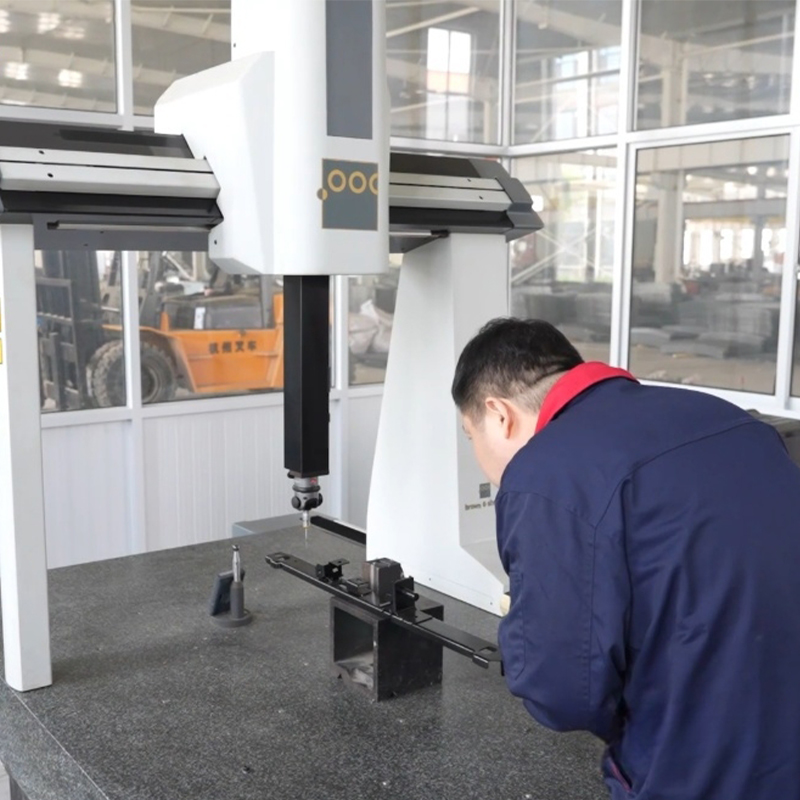
| What is your CMM capability? | 0.005 mm | 0.01 mm | 0.01 mm | 0.05 mm |
| Lead time for prototypes? | 7 days | 7 days | 7 days | 7 days |
| Material traceability? | Lot level | Heat number | Lot level | Lot level |
Beijing JCEN: Cross-Industry Sheet Metal Capability
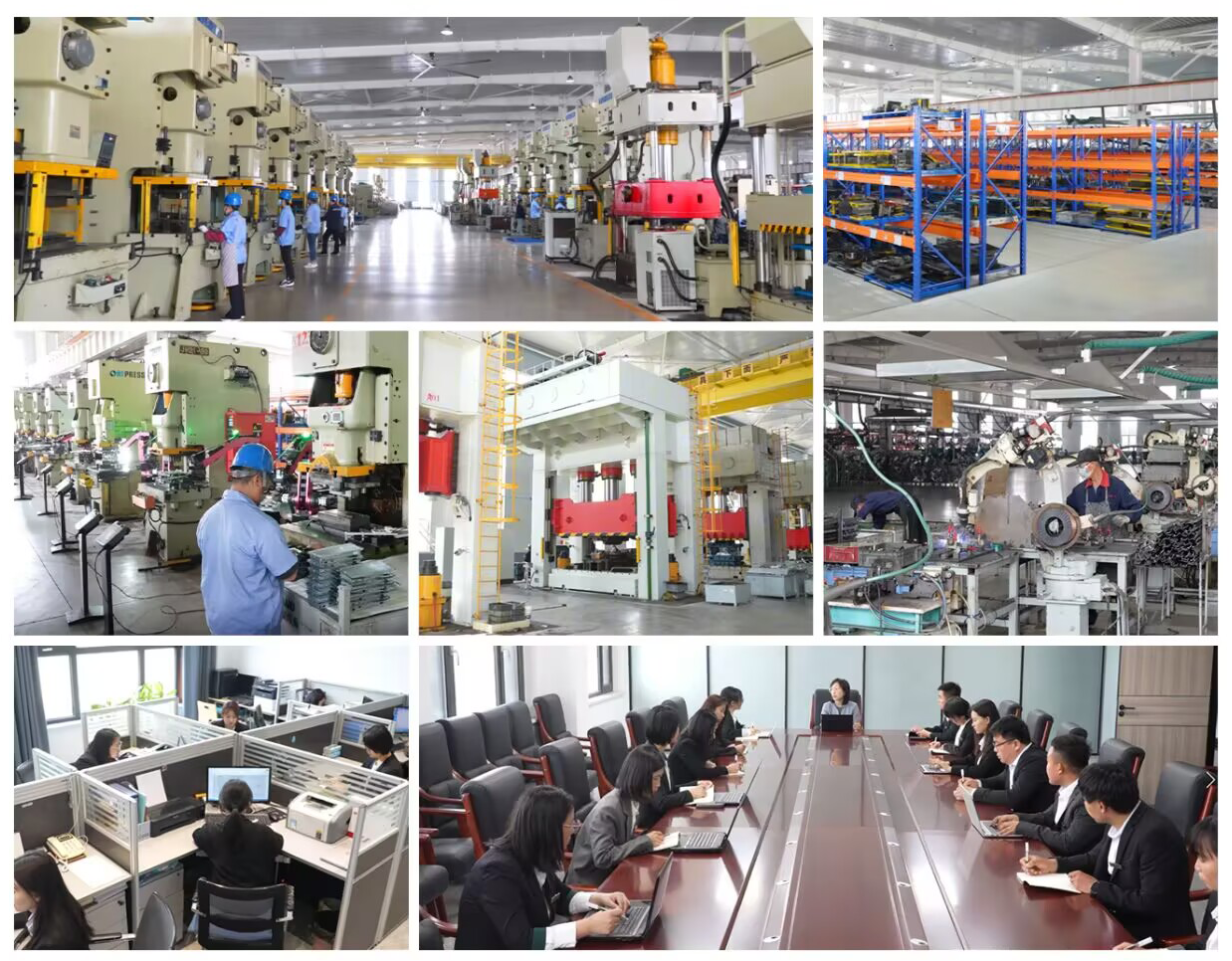
Since 1997, Beijing JCEN has delivered precision sheet metal fabricated parts to OEM customers across all seven industries described in this guide.- Materials: Stainless Steel (304, 316), Aluminum (5052, 6061), Cold/Hot Rolled Steel, Galvanized Steel, Copper, Brass, Titanium
- Processes: Laser cutting, CNC press brake bending, stamping (60–450 ton), deep drawing, welding (MIG/TIG/spot), CNC machining (±0.005 mm)
- Certifications: ISO 9001:2015, IATF 16949, ISO 14001, RoHS, REACH, CE-compliant documentation
- Export markets: United States, Germany, United Kingdom, Netherlands, Canada, Australia
Related Guides on This Site
- Sheet Metal Fabrication Materials: 304 vs 316, 5052 vs 6061
- Custom Metal Brackets Manufacturing Guide
Frequently Asked Questions
What is the typical lead time for sheet metal fabrication parts from China?
Prototypes (1–50 pieces): 7 days. Small batch (100–1,000 pieces): 14–21 days. Mass production (5,000+ pieces): 25–35 days depending on complexity and finishing.What tolerances can a China sheet metal fabrication factory achieve?
Standard bending tolerances: ±0.5° angle, ±0.2 mm on formed dimensions. Laser cut holes: ±0.1 mm diameter. CNC machining achieves ±0.005 mm on critical features.What is the minimum order quantity for custom sheet metal fabrication?
From Beijing JCEN: 1 piece for prototypes. No high MOQ on prototype orders. Production run minimums depend on tooling amortization — typically 50–200 pieces for stamped parts, 1 piece for laser cut and bent parts.Get an Industry-Specific Quote
Share your drawings and requirements with our engineering team. We will review for DFM issues, identify the optimal material and process, and provide a detailed quotation within 24 hours.📩 Submit your drawings for a free quote →📞 +86 13832709345 | manager@bjjcen.comRelated capabilities
We produce parts of this type with sheet metal fabrication. We also manufacture for Electronics and electrical and Automotive and EV programmes.


