


Sheet Metal Fabrication Materials: Introduction
In practice, choosing the right sheet metal fabrication materials is one of the most critical decisions in industrial procurement.
Specify 304 stainless when 316 is required, and the part corrodes in a coastal environment within 6 months. If you choose aluminum where structural steel is needed, it fails under load. Moreover, specifying overly thick material means you overpay by 40% for parts that could have been half the weight.
Specifically, this guide is written for engineers, procurement teams, and OEM buyers sourcing sheet metal fabrication from Beijing JCEN or any overseas manufacturer. It covers:
- The 6 primary sheet metal categories and their real-world applications
- 304 vs 316 stainless steel — However, the most common material mistake in B2B sourcing
- 5052 vs 6061 aluminum — when to bend versus when to machine
- Cold rolled vs hot rolled steel — why the surface finish choice matters
- Sheet metal thickness chart with weight and cost implications
- Application-matching decision matrix for 12 common use cases
- Cost comparison across all major materials
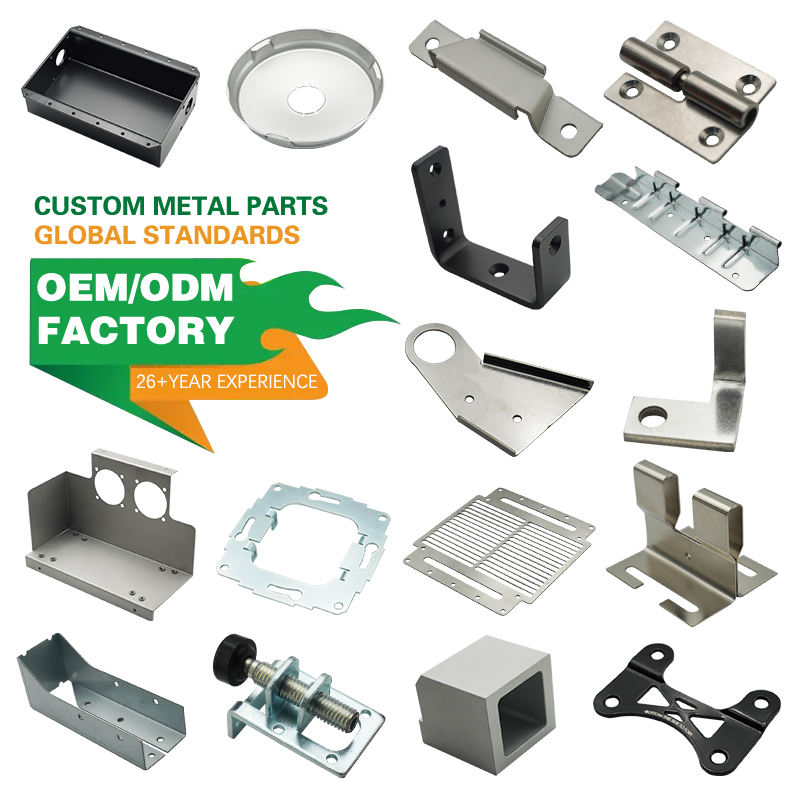
Notably, Beijing JCEN has been fabricating sheet metal parts since 1997, processing 8,000+ tonnes of steel and aluminum every year.
Specifically, this guide condenses what our engineering team recommends to first-time buyers.
1. The 6 Primary Sheet Metal Fabrication Categories
In practice, at an industrial fabrication level, 95% of sheet metal orders use one of these six materials. We’ll cover each in depth below, but here’s the quick landscape:
Now let’s break each down.
2. Stainless Steel — 304 vs 316 (The Most Important Choice)
First and foremost, stainless steel is the most frequently specified material in precision sheet metal fabrication. However, the choice between 304 and 316 is critical.Stainless steel is the go-to material for corrosion-critical applications. Choosing between 304 and 316 costs mistakes the industry billions per year.
2.1 Stainless Steel 304 — The Workhorse
Composition: 18% chromium + 8% nickel (also called 18/8)
Key properties:
- Excellent corrosion resistance in most environments
- Good formability (can bend, deep-draw, weld easily)
- Non-magnetic when annealed
- Cost baseline for stainless
Best applications:
- Kitchen equipment, food processing
- Indoor architectural panels
- General-purpose enclosures
- Medical carts, non-implant devices
- Chemical containers (non-chloride)
Thickness range in fabrication: 0.4–6.0 mm
When to Choose 316 Over 304
2.2 Stainless Steel 316 — The Marine Grade
Composition: 16% chromium + 10% nickel + 2–3% molybdenum
Key properties:
- Superior corrosion resistance in chloride environments (salt water, chlorine, seawater spray)
- Molybdenum resists pitting corrosion
- Higher creep strength at elevated temperatures
- ~30% more expensive than 304
Best applications:
- Marine hardware (boats, offshore platforms)
- Pharmaceutical and biotech equipment
- Chemical plants handling chlorides
- Medical implants and surgical instruments
- Food processing with high-salt exposure
- Outdoor telecom in coastal regions
Thickness range in fabrication: 0.5–6.0 mm
2.3 The 304 vs 316 Decision Matrix
Bottom line: Therefore, default to 304 unless your part will see chlorides, seawater, or long-term outdoor coastal exposure. The 30% price premium of 316 is worth it only when justified.
Learn more about our Custom Deep Drawing Parts in SS 304 & 316.
3. Aluminum — 5052 vs 6061 (Formability vs Strength)
Furthermore, aluminum is the second-most-requested material after steel. Choose the wrong grade and you either can’t bend the part (6061 cracks) or can’t machine it well (5052 gums up cutters).
3.1 Aluminum 5052 — The Formable Grade
Composition: Aluminum + ~2.5% magnesium
Key properties:
- Excellent formability — bends, deep-draws without cracking
- Good weldability
- Superior corrosion resistance (magnesium doesn’t gall in salt)
- Cannot be heat treated (strength from cold work only)
- Common tempers: H32 (formable) and H34 (harder)
Best applications:
- Marine fuel tanks, hulls, cabin panels
- Enclosures requiring bends
- Snow guards, ductwork
- Fuel and chemical tanks
- Sheet metal formed brackets
Thickness range: 0.5–6.0 mm
5052 vs 6061: Which to Choose
3.2 Aluminum 6061 — The Structural Grade
Composition: Aluminum + ~1% magnesium + ~0.6% silicon
Key properties:
- Higher yield strength than 5052 (T6 temper: 276 MPa vs 5052’s 193 MPa)
- Machinable (can be CNC turned and milled precisely)
- Weldable (though heat-affected zone loses ~50% strength)
- Corrosion resistant, but slightly less than 5052 in salt environments
- Common tempers: T4, T6, T651
Best applications:
- Aerospace structural parts
- Truck and trailer frames
- Bicycle frames
- CNC-machined brackets and plates
- Bolted structural connections
Thickness range: 0.8–25 mm (yes, aluminum “sheet” goes thick)
3.3 The 5052 vs 6061 Decision Matrix
Bottom line: If you’re bending or forming → 5052. If you’re machining or building structure → 6061. Some assemblies use both (formed panels of 5052 bolted to a 6061 frame).
Explore our OEM CNC Machining Service in 6061 Aluminum.
4. Cold Rolled vs Hot Rolled Steel — Surface, Thickness, and Cost
Next, understanding the difference between cold rolled and hot rolled steel will save significant cost and prevent surface finish issues.Both are carbon steel, but the manufacturing process changes everything about how they perform in fabrication.
4.1 Cold Rolled Steel (CRS)
Manufacturing: Steel rolled to final dimensions at room temperature after annealing.
Key properties:
- Smooth, oiled surface (light gray)
- Tight thickness tolerance (±0.05 mm typical)
- Higher tensile strength than HRS (work-hardened)
- Ready for painting and plating without heavy prep
- Common grades: SPCC (Chinese/Japanese), 1008, 1010 (US)
Best applications:
- Precision brackets, enclosures
- Consumer appliance panels
- Automotive interior parts
- Sheet metal parts requiring paint/surface treatment
Thickness range: 0.4–3.2 mm
Hot Rolled vs Cold Rolled: Key Differences
4.2 Hot Rolled Steel (HRS)
Manufacturing: Steel rolled at 1,700°F+ then cooled — result is scale on the surface.
Key properties:
- Rough, scaled surface (dark gray to black)
- Looser thickness tolerance (±0.3 mm on 6 mm sheet)
- Cheaper per kg than CRS
- Requires surface prep before painting (grit blasting, pickling)
- Common grades: Q235 (China), A36 (US), S235JR (EU)
Best applications:
- Structural brackets, frames
- Heavy machinery bases
- Construction elements
- Anything painted heavily or hidden
Thickness range: 2.0–25 mm
4.3 CRS vs HRS Quick Decision
5. Galvanized Steel — The Outdoor Workhorse
Additionally, galvanized steel deserves special attention for any outdoor or high-humidity application.Essentially, Galvanized steel is cold rolled or hot rolled steel with a zinc coating that provides corrosion protection.
5.1 Two Coating Methods
Hot-Dip Galvanized (HDG):
- Steel dipped in molten zinc bath
- Thick coating (20–150 microns) — very durable
- Rough surface finish
- Common on structural, HVAC, agricultural parts
Electro-Galvanized (EG):
- Zinc deposited electrolytically
- Thinner coating (5–20 microns) — smoother finish
- Better for painting over
- Common on appliances, automotive panels
5.2 Fabrication Considerations
- Bending galvanized: The zinc layer can crack at tight bend radii. Use minimum 2x thickness bend radius.
- Welding galvanized: Zinc fumes are toxic — requires ventilation and often costs 30% more in labor time. Consider using bare steel and galvanizing after fabrication.
- Cutting galvanized: Laser cutting works but generates zinc oxide dust — filtration is essential.
Best applications:
- Outdoor equipment
- HVAC ductwork
- Solar panel frames
- Fencing hardware
- Agricultural machinery
6. Brass, Copper & Specialty Metals
Additionally, these make up under 5% of our order volume but are essential for specific niches.
6.1 Brass (C260 Cartridge Brass, C360 Free-Machining Brass)
- Advantages: Corrosion resistant, decorative gold color, easy to machine, non-sparking
- Cost: 5–8x carbon steel
- Best for: Marine hardware, decorative brackets, plumbing components, electrical connectors
6.2 Copper (C110 Electrolytic Tough Pitch)
- Advantages: Best electrical conductivity, thermal conductivity, corrosion resistance
- Cost: 7–10x carbon steel
- Best for: Bus bars, grounding straps, heat sinks, RF shielding
6.3 Titanium (Grade 2, Grade 5)
- Advantages: Highest strength-to-weight ratio, biocompatible, extreme corrosion resistance
- Cost: 20–30x carbon steel
- Best for: Aerospace, medical implants, marine (military spec)
- Warning: Difficult to weld and machine — specialised tooling required
7. Sheet Metal Thickness Chart & Weight Reference
Correct thickness callouts prevent overordering (waste of money) and underordering (structural failure).
7.1 Common Sheet Metal Thicknesses
7.2 Thickness Selection Guidelines
- 0.5–1.0 mm: Light enclosures, electronic shielding, cosmetic panels
- 1.2–1.5 mm: Standard brackets, small equipment covers
- 2.0–3.0 mm: Heavy-duty brackets, machinery guards, structural panels
- 4.0–6.0 mm: Load-bearing brackets, industrial mounting plates
- > 6.0 mm: Structural plate (typically waterjet cut, not sheet fabrication)
7.3 The Weight-Cost Trap
Buyers often over-specify thickness thinking “thicker = safer.” Reality:
- A 3 mm CRS panel is 50% more expensive than 2 mm
- A 4 mm panel weighs 100% more than 2 mm — doubles freight cost
- Use FEA analysis or ask our engineering team to right-size
8. Sheet Metal Fabrication Cost Comparison Table (Approximate 2026 China Manufacturing Prices)
For a 2 mm thick × 200 mm × 300 mm sheet metal bracket at 500 pcs volume:
Prices exclude tooling, surface finish, and export freight. Get a real quote for your specific part: contact our engineering team.
9. Sheet Metal Fabrication Material Selection Matrix
For reference, here is a quick summary for common B2B applications:
10. Sheet Metal Fabrication: Frequently Asked Questions
Q1: Can you source non-standard materials I specify?
A: Yes. If you have a specific grade like Hastelloy, Inconel, Monel, or a custom aluminum alloy, send us the spec and we’ll source it. Lead time is typically 2–4 weeks for special orders.
Q2: How do I know if the material you shipped matches the spec?
A: Every material shipment includes a Mill Test Certificate (MTC) stating chemical composition and mechanical properties, traceable by heat number. On request, we can also provide third-party lab verification (SGS, Bureau Veritas).
Sourcing and Lead Time Questions
Q3: What is the difference between “gauge” and “mm” thickness?
A: Gauge is a legacy US system where higher gauge number = thinner sheet. For example, 20 gauge = 0.9 mm, 14 gauge = 1.9 mm. Therefore, we recommend always specifying in mm to avoid gauge conversion errors.
Additionally, the gauge system varies by material (the US “manufacturer’s standard gauge” and US “steel gauge” differ).
Q4: Do you offer material samples before I order?
A: Yes. Additionally, we ship material coupons (100 × 100 mm swatches) via DHL for verification. Small charge for shipping only; material samples are free.
Q5: What’s the minimum order for stainless steel?
A: 1 piece for prototyping. Fortunately, our stainless inventory is stocked in 304 and 316, so lead time for standard thicknesses (0.5–3.0 mm) is 3–5 days.
Q6: Can I mix materials in one order?
A: Absolutely. Indeed, many customers order a bracket in mild steel + a decorative cover in stainless + a mounting plate in aluminum, all consolidated into one shipment. Reduces freight cost significantly.
Q7: How long can you store our tooling / dies?
A: Typically, we maintain progressive stamping dies indefinitely for repeat customers with active programs. However, dies without orders for 2+ years are archived; a 30-day re-activation notice is required.
Q8: Do you provide material substitution recommendations?
A: Yes. However, if you spec a material that’s overkill or unavailable, our engineering team will propose 1–2 equivalent alternatives with cost and property comparisons before quoting.
Therefore, use this sheet metal fabrication materials guide as your RFQ reference.
Notably, Beijing JCEN stocks and processes all major sheet metal fabrication materials — stainless, aluminum, cold-rolled and galvanized steel — ISO 9001 certified, 7-day sample lead time.
>Ready to Source Your Sheet Metal Parts?Therefore, if you have a drawing and material requirement — or you’re not sure which material is right — send it to our team and get a free consultation + quote within 24 hours.
📩 Request a free material recommendation: Contact Beijing JCEN
🏭 See our full sheet metal capability: OEM Sheet Metal Fabrication Service
📚 Related resources:
- Custom Metal Brackets Manufacturing Guide (companion article)
- Custom Metal Brackets Manufacturer
- OEM Metal Stamping Parts
- Deep Drawing Parts (SS, Aluminum)
- OEM Metal Laser Cutting Service
- CNC Machining Service ±0.005 mm
In summary, Beijing JCEN is a China-based sheet metal fabrication manufacturer serving OEM customers worldwide since 1997.
ISO 9001:2015, IATF 16949 and ISO 14001 certified. 15,000 m² facility. 85 in-house engineers. Materials in stock: SS 304, SS 316, Aluminum 5052, Aluminum 6061, Cold Rolled Steel, Hot Rolled Steel, Galvanized Steel, Brass, Copper.
Beijing JCEN provides full-service custom sheet metal fabrication with material guidance. Get your free quote →
Related capabilities
We produce parts of this type with sheet metal fabrication. We also manufacture for Electronics and electrical and Medical and laboratory programmes.
Standards referenced
- ASTM International — material and test standards
- worldsteel Association — steel grade and property reference
- The Aluminum Association — aluminium alloy designation system (5052, 6061)


