


Mass production lead time is 20–30 business days after sample approval, depending on order quantity, tooling and complexity. The mass production lead time starts from approval, not from enquiry, because the design has to be fixed before a production date means anything.
Key facts: mass production lead time
| Mass production | 20–30 business days after sample approval |
| New tooling | Added to the schedule before the production run begins |
| Quotation turnaround | Within 24 hours of receiving the drawing |
| Shipping | Air express 3–7 days; sea freight 15–30 days |
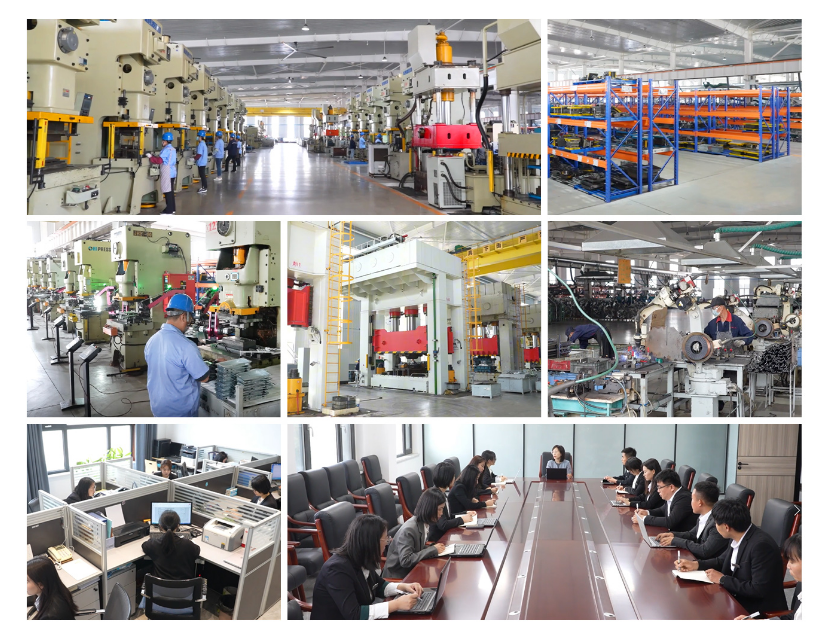
What determines the production date
Tooling. If the part moves to stamping for volume, a die has to be designed, made and proved before the run starts. Our tool room is in house, which is what makes a first stamping order practical rather than a five-figure gamble — but tooling time is still real time and belongs in the schedule rather than alongside it.
Material. Steel and aluminium are bought at volume and normally available. Copper, brass and stainless 316 can carry a longer material lead time, and it is worth confirming at enquiry stage if the deadline is fixed.
Finishing. Plating, coating and passivation are separate operations and each has its own queue. Where a large batch needs a finish, the finishing stage can be the longest single step, so it is worth agreeing early rather than treating as a detail.
Inspection volume. First article inspection applies to the run, and 100% verification of critical dimensions applies per part. A high-volume order with many critical features carries more inspection time than the same order with a few.
How to hold the date you were given
Two habits keep a schedule honest. First, freeze the drawing before the production date is set — a change after tooling is cut is a re-quote, not an adjustment. Second, raise design problems before production rather than after: a bend radius that will crack is cheap to fix on a drawing and expensive to fix on a batch.
We hold lead times partly by declining work we cannot schedule. If a deadline is genuinely tight, say so in the first message, because the answer may be to split the order or to run the first batch by a route that needs no tooling. Our high-volume production page covers the volume stage in detail, and case studies include a Canadian buyer’s prototype-to-production project.
For the lead times that apply to one-off and small-batch work, see how long samples take. Material and test standards we refer to are published by ASTM International.
Frequently asked questions
How long does mass production take?
Mass production lead time is 20 to 30 business days after sample approval, depending on order quantity, tooling and complexity. The clock starts from approval rather than enquiry, because the design has to be fixed before a production date means anything. New tooling is added to the schedule before the run begins.
What affects the production date?
Tooling, material and finishing are the main factors. A part that moves to stamping for volume needs a die designed, made and proved before the run starts. Copper, brass and stainless 316 can carry a longer material lead time, and plating, coating and passivation each run on their own queue, so finishing can be the longest single step.
How quickly will I get a quotation?
Quotation turnaround is within 24 hours of receiving the drawing. A clear drawing, with the quantity and any critical features marked, is what allows an accurate figure rather than an estimate that has to be revised. Air express shipping then takes 3 to 7 days once parts are ready, and sea freight takes 15 to 30 days.