


We offer deburring, zinc plating, powder coating, anodising, passivation, brushing and laser marking. In practice, metal surface finishes should follow the environment the part will work in. However, appearance alone is not the test.
Key facts: metal surface finishes
| Applied as standard | Deburring on cut and formed work |
| Corrosion protection | Zinc plating, powder coating, passivation for stainless |
| Appearance | Powder coating in a specified colour, anodising for aluminium, brushing for stainless |
| Traceability | Laser marking and engraving of part numbers, batch codes or logos |
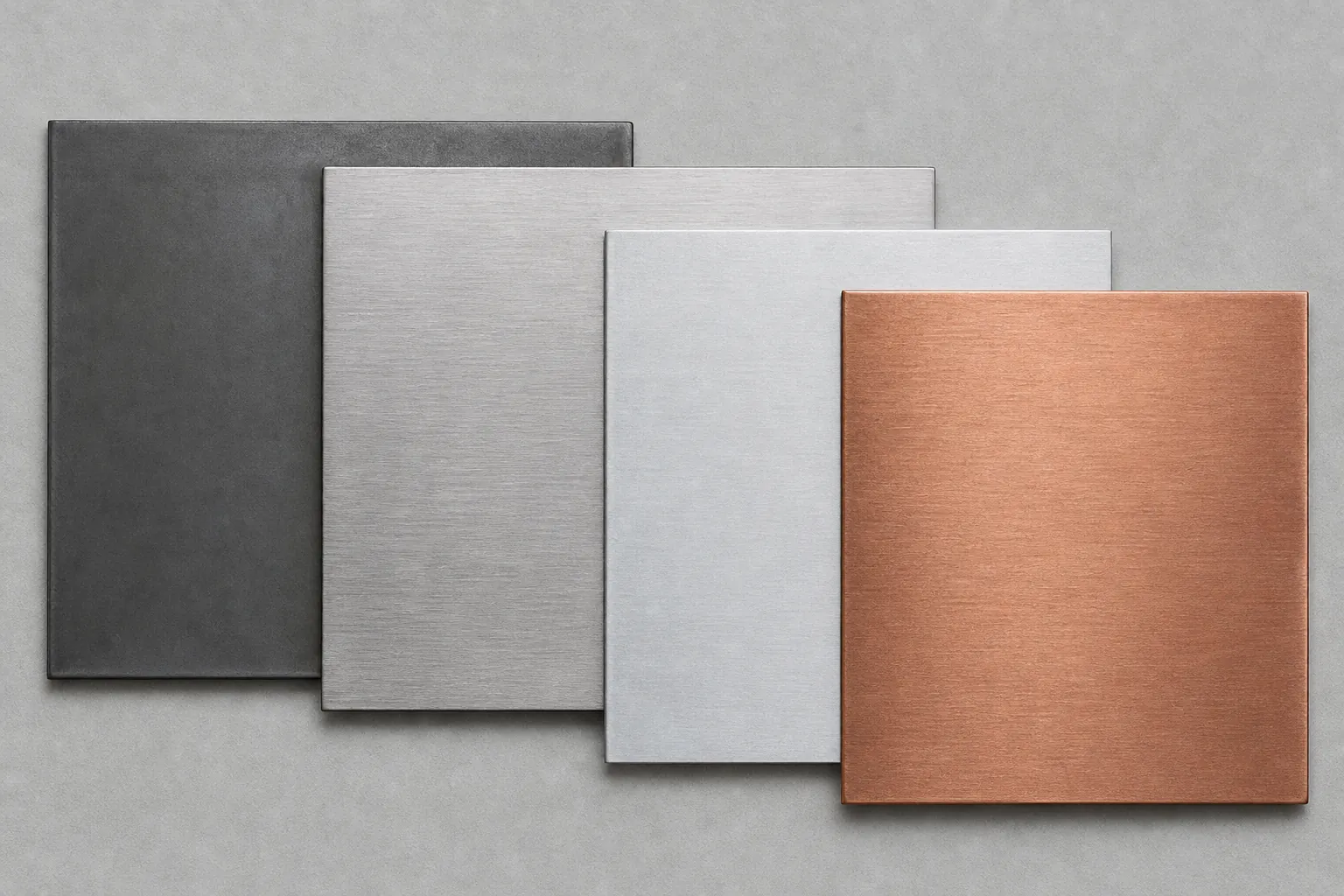
Choosing a finish by function
For ordinary indoor exposure. A deburred, as-cut or as-machined part is usually enough, and it is the cheapest correct answer. For example, adding a coating to a part that never sees moisture buys nothing.
For wet or outdoor conditions on steel. Zinc plating gives a thin, low-cost barrier, but it protects a cut edge only as far as the coating reaches — which is the first place corrosion appears. Because cut edges are where corrosion starts, we arrange hot dip galvanising through our finishing partners where exposure is continuous or the part is structural, since the coating is thicker and sacrificial at cut edges.
For visible steel parts. Powder coating gives the most durable colour finish and hides forming marks well, which is why we usually powder coat machine guards and covers rather than plate them. As a result, we measure coating thickness and report it, and readings ship with the order.
For stainless in service. Passivation removes free iron from the surface so the passive chromium oxide layer can form properly. Where a drawing specifies it, we arrange electropolishing, since it also removes a thin layer of material and improves surface finish. In addition, both are functional treatments, not cosmetic ones.
For aluminium. Anodising hardens the surface and preserves the metal appearance rather than painting over it. That said, it is the usual choice where a visible aluminium part must resist handling marks.
For traceability. Laser marking and engraving add part numbers, batch codes or customer logos without a label to fall off. In practice, this is common on assembled units and on parts that enter a customer’s own traceability system.
What to specify on the drawing
State the finish, and where appearance matters, state which faces are visible. If you need powder coating, state a colour by reference, and say whether cut edges need protection — that single question decides between plating and galvanising. However, if you are unsure, describe the environment and the cleaning regime instead, and we will recommend a finish rather than quoting several.
We measure surface roughness in Ra values from 0.4 to 12.5 where a drawing calls for it, and results ship with the inspection documentation. Our metal surface treatment page covers each process in more detail, and quality and inspection explains what we measure and report. Meanwhile, ASTM International publishes the coating and corrosion test standards we work from.
Frequently asked questions
Which surface finishes can you apply?
We offer deburring, zinc plating, powder coating, anodising, passivation, brushing and laser marking. Deburring is applied as standard on cut and formed work, while the others are selected by function: corrosion protection, appearance, or traceability of part numbers, batch codes or logos.
How do you choose a finish for a part?
The finish should follow the environment the part will work in, not appearance alone. For ordinary indoor exposure a deburred, as-cut or as-machined part is usually enough. Wet or outdoor steel work calls for zinc plating or, where exposure is continuous or the part is structural, hot dip galvanising arranged through our finishing partners.
Can you finish aluminium and stainless steel parts?
Yes. For aluminium, anodising hardens the surface and preserves the metal appearance rather than painting over it, and it suits visible parts that must resist handling marks. For stainless steel in service, passivation removes free iron so the passive chromium oxide layer can form properly, and where a drawing specifies it we arrange electropolishing.