

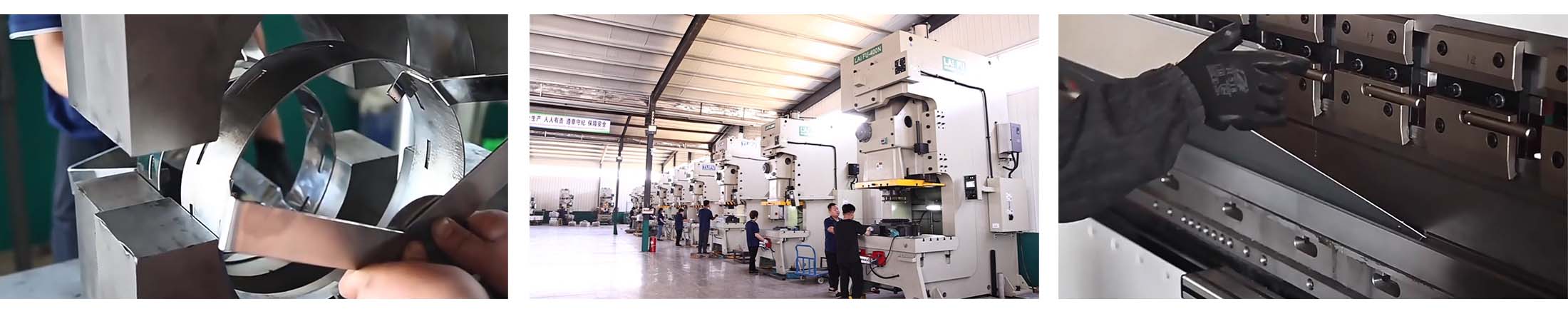
Challenges in Processing High-Hardness and High-Toughness Materials with Traditional Sheet Metal Fabrication Techniques

In the modern manufacturing landscape, the demand for components made from high-hardness and high-toughness materials—such as titanium alloys, Inconel, and advanced stainless steel—is rapidly increasing. Industries like aerospace, automotive, and energy rely on these superalloys for their superior strength and durability.

However, when applying sheet metal fabrication techniques to these challenging materials, manufacturers often hit a wall. Traditional methods that work seamlessly on mild steel often fall short, leading to increased costs and production delays. At Beijing Jiacheng, with 30 years of experience in the metal fabrication industry, we have refined our processes to tackle these exact challenges, ensuring precision and efficiency where others struggle.

Here is an in-depth look at the primary challenges of using traditional sheet metal manufacturing techniques on high-performance alloys.

1. Excessive Tool Wear and Breakage

The most immediate challenge when working with hard metals is the impact on tooling. High-hardness materials like hardened steel or nickel-based alloys are abrasive. During operations such as punchingblanking, or bending, the extreme pressure accelerates the wear on punches and dies.

In traditional press brake forming, the stress required to bend high-strength materials can lead to a phenomenon known as “springback,” where the metal attempts to return to its original shape. This not only requires more tonnage but also causes rapid degradation of tool coatings. Beijing Jiacheng mitigates this through advanced tooling selection and precise calculation of bend allowances, leveraging three decades of metal forming knowledge to extend tool life.

2. Heat Generation and Thermal Distortion

High-toughness materials typically exhibit poor thermal conductivity. When using cutting techniques like sawing or traditional machining, heat becomes trapped in the workpiece. This can lead to work hardening, making the material even harder to cut as you progress.

For sheet metal processes, excessive heat during laser cutting or plasma cutting can create a Heat Affected Zone (HAZ). This alters the material properties along the cut edge, potentially causing cracking or weakness. Unlike traditional shops, Beijing Jiacheng utilizes modern CNC equipment calibrated to manage heat input, ensuring clean cuts on everything from thin-gauge aluminum to thick titanium plates.

3. Work Hardening During Cutting

Nickel-based superalloys and austenitic stainless steel are notorious for work hardening. If the cutting tool rubs instead of shears during operations like shearing or notching, the surface hardens immediately. This ruins the edge quality and destroys the tool on subsequent passes.

Achieving a burr-free finish on these materials requires extreme rigidity and sharpness. Through decades of experience in precision sheet metal fabrication, Beijing Jiacheng has developed protocols for maintaining consistent penetration speeds, preventing the glazing and hardening that plagues less experienced fabricators.

4. Springback in Forming Operations

Achieving accurate angles in bending high-toughness materials is a significant hurdle. The high yield strength of these alloys causes severe springback. A part that is bent to 90° on the press brake may spring back to 93° or 94° when released.

Compensating for this requires not just force, but a deep understanding of material grain direction and metal forming physics. Our 30-year history in the fabrication industry allows us to predict this behavior accurately. Whether we are creating enclosureschassis, or brackets, we ensure that the final assembly fits perfectly without needing excessive secondary grinding or shimming.

5. Material Cracking and Splitting

Ductility decreases as hardness increases. When subjected to severe forming operations—such as deep drawingstamping, or hemming—high-hardness materials are prone to cracking along the bend radius. This is particularly true in welding applications where the heat-affected zone becomes brittle.

To combat this, Beijing Jiacheng employs advanced welding techniques, including TIG welding and MIG welding, with precise filler material selection to match the parent metal’s properties. Our experience ensures that fabricated parts maintain structural integrity even in high-stress applications.

6. Dimensional Tolerancing and Fixturing

High-strength materials store a tremendous amount of residual stress. When material is removed during machining or cutting, these stresses release unevenly, causing the part to warp. Holding tight tolerances on a warping workpiece is nearly impossible with traditional clamping methods.

In our shop, we combine advanced fixturing with stress-relief techniques. As a full-service sheet metal fabricator, we understand that deburring and finishing must also account for these stresses to ensure the final product meets specifications.

7. Slow Production Speeds

Traditional methods often require slowing down feed rates drastically to preserve tool life when processing hard metals. This creates a bottleneck in production. In high-mix, low-volume runs, this can make projects economically unviable.

By integrating automation and modern CAD/CAM software into our workflow, Beijing Jiacheng optimizes tool paths and cutting sequences. We balance speed with the delicate handling required for tough alloys, ensuring rapid turnaround without sacrificing the quality Beijing Jiacheng is known for.

Why Experience Matters: The Beijing Jiacheng Advantage

After 30 years in the sheet metal fabrication industry, Beijing Jiacheng has moved beyond “traditional” limitations. We have invested in hybrid manufacturing solutions that combine the best of traditional techniques with modern technology.

  • Expertise in Material Science: We don’t just bend metal; we understand its metallurgy. This allows us to select the correct lubrication, tool speed, and forming pressure.

  • Advanced Machinery: Our facility features state-of-the-art laser cutters, press brakes, and welding stations capable of handling the toughest alloys.

  • Comprehensive Services: From prototyping to full-scale assembly, including powder coating and finishing, we manage the entire lifecycle of your project.

Conclusion

Processing high-hardness and high-toughness materials will always present challenges, from tool wear to springback. However, these challenges are not insurmountable. They require the skill that only comes with decades of hands-on experience.

When you partner with Beijing Jiacheng, you are partnering with a team that has spent 30 years mastering the art and science of metal fabrication. Whether you need complex welding, precision bending, or durable enclosures, we have the expertise to deliver high-quality parts on time, every time.

Contact Beijing Jiacheng today to discuss your next project. Let our three decades of experience work for you.

sheet metal fabrication
1V1 engineering support, competitive pricing, on-time deliveries and high quality control. Please feel free to contact with us to get quotation.