


The integrity of any manufactured component relies heavily on the stability of its materials and the precision of its forming processes. In the realms of welding and casting, two persistent adversaries constantly threaten part quality: thermal deformation and residual stress. These phenomena are not merely theoretical concerns for metallurgists; they are practical challenges that can lead to dimensional inaccuracies, premature failure, and increased production costs.
Understanding how heat affects material behavior is crucial for anyone involved in custom sheet metal fabrication. Whether you are designing an enclosure or a structural bracket, the way metal responds to thermal cycles determines the success of the final product. At Beijing Jiacheng, we have spent the years since 1997 mastering these dynamics, leveraging our deep experience in sheet metal manufacturing to deliver parts that maintain their integrity from the first cut to the final assembly.
The Science of Distortion: What Happens to Metal?
When localized heat is applied during welding or during the cooling phase of casting, the metal expands. Upon cooling, it contracts. However, this expansion and contraction are rarely uniform. The heated zone (the weld pool or the molten cast) wants to expand, but it is surrounded by cooler, rigid parent metal that restricts this movement.
This restriction creates plastic deformation. As the material cools, it tries to shrink back to its original volume, but the surrounding material has already set. This results in residual stress—stress that remains locked inside the component even after it has returned to room temperature. These stresses often manifest visibly as warpage, twisting, or bending.
In precision sheet metal fabrication, even a millimeter of warpage can render a part useless for tight-assembly applications. This is why controlling the thermal input during processes like TIG welding or MIG welding is not just about creating a strong joint, but about preserving the geometry of the entire workpiece.
How Residual Stress Compromises Part Quality
Residual stress is often called the “hidden killer” of part quality because it is invisible to the naked eye. Here is how it specifically impacts components coming out of welding and casting processes:
1. Dimensional Instability and Machining Distortion
When a part with high internal stress is placed into a CNC machining center, the removal of material can release those stresses unevenly. Imagine machining a flat plate that has residual tension on the surface and compression underneath. As you cut away the surface layer, the part can instantly warp or “spring” into a new shape. For industries relying on high-precision parts, this level of unpredictability is unacceptable.
2. Reduced Fatigue Life
Tensile residual stresses on the surface of a part are particularly dangerous. In applications involving cyclic loading (vibration or reciprocating motion), these stresses add to the applied load, effectively lowering the threshold for crack initiation. A component that should theoretically last for millions of cycles might fail after only thousands due to unmanaged residual stress from the forming process.
3. Stress Corrosion Cracking (SCC)
In corrosive environments, tensile residual stresses provide the driving force for stress corrosion cracking. This is a critical concern in aerospace and chemical processing equipment, where part failure can have catastrophic consequences.
Common Defects in Thermal Processing
Our experience since 1997 in sheet metal fabricating has taught us to recognize and rectify the common defects arising from thermal stress:
Angular Distortion: Common in corner bending and welded joints, where the shrinkage pulls the joint out of alignment.
Buckling: Thin materials, when subjected to excessive heat, can buckle similarly to a compressed column.
Lamellar Tearing: Occurs in base metals during welding due to high through-thickness strains combined with inclusions in the steel.
Hot Cracking: Occurs during solidification in casting or welding when the material cannot withstand the contraction strains at high temperatures.
Mitigation Strategies in Modern Sheet Metal Fabrication
At Beijing Jiacheng, we don’t just react to these issues; we anticipate and prevent them through advanced engineering and process control. With experience in sheet metal processing since 1997, our approach combines traditional know-how with modern technology.
1. Simulation and Finite Element Analysis (FEA)
Before a single piece of metal is cut, we utilize advanced software to simulate thermal modeling . By predicting how heat will flow through a part during welding, we can anticipate where residual stress will accumulate and adjust our welding sequence or fixture design accordingly . This digital twin approach ensures that our design for manufacturing process is optimized from day one.
2. Fixturing and Restraint
Proper fixturing is essential to manage thermal expansion. Our shop floor utilizes modular fixturing systems that apply consistent pressure, forcing the expanding metal to move in a controlled manner rather than warping freely. This is particularly vital during assembly welding of complex enclosures.
3. Stress Relieving Techniques
Post-process treatment is often necessary to unlock the stresses locked inside the metal.
Heat Treatment: Uniformly reheating the part to a sub-critical temperature allows the internal grain structure to relax.
Vibratory Stress Relieving: For large fabrications where furnace treatment is impractical, we use controlled vibration to settle the molecular structure.
Shot Blasting / Peening: This cold-working process introduces compressive stress on the surface, which actively counteracts the harmful tensile residual stress caused by welding .
4. Strategic Welding Practices
Our certified welders employ techniques like back-stepping and staggered welding to distribute heat evenly. By managing the heat input and controlling inter-pass temperatures in multi-pass welds, we minimize the thermal gradient between the weld zone and the base metal .
Beijing Jiacheng: Precision and Experience Since 1997
Since 1997, Beijing Jiacheng has stood at the forefront of the sheet metal industry. Our longevity is a testament to our ability to adapt and overcome complex manufacturing challenges, including the management of thermal deformation.
We specialize in a comprehensive range of services that address every stage of production:
Cutting: We utilize state-of-the-art laser cutting, waterjet cutting, and plasma cutting to ensure precise blanks with minimal heat-affected zones .
Forming: Our press brakes and stamping equipment handle everything from simple bends to complex deep drawing, accounting for springback and material behavior .
Joining: From spot welding to robotic MIG welding, our processes are calibrated to maintain structural integrity without inducing distortion.
Finishing: We offer powder coating, anodizing, and plating to protect parts from the environmental factors that can exacerbate stress-related failures .
Whether you require rapid prototyping or high-volume production runs, our team treats every project with the precision required for aerospace, automotive, and electronics applications.
Conclusion
Thermal deformation and residual stress are unavoidable byproducts of welding and casting, but their negative impact on part quality is entirely manageable. By understanding the physics of heat transfer and employing modern mitigation techniques—from simulation software to controlled atmosphere furnaces—manufacturers can produce components that are dimensionally accurate and structurally sound.
When you partner with Beijing Jiacheng, you are leveraging 28 years of institutional knowledge. We combine time-tested craftsmanship with cutting-edge automation to ensure your sheet metal parts are free from distortion and built to last. Contact us today to discuss your next project and see how our expertise in sheet metal fabrication can bring your designs to life with uncompromising quality.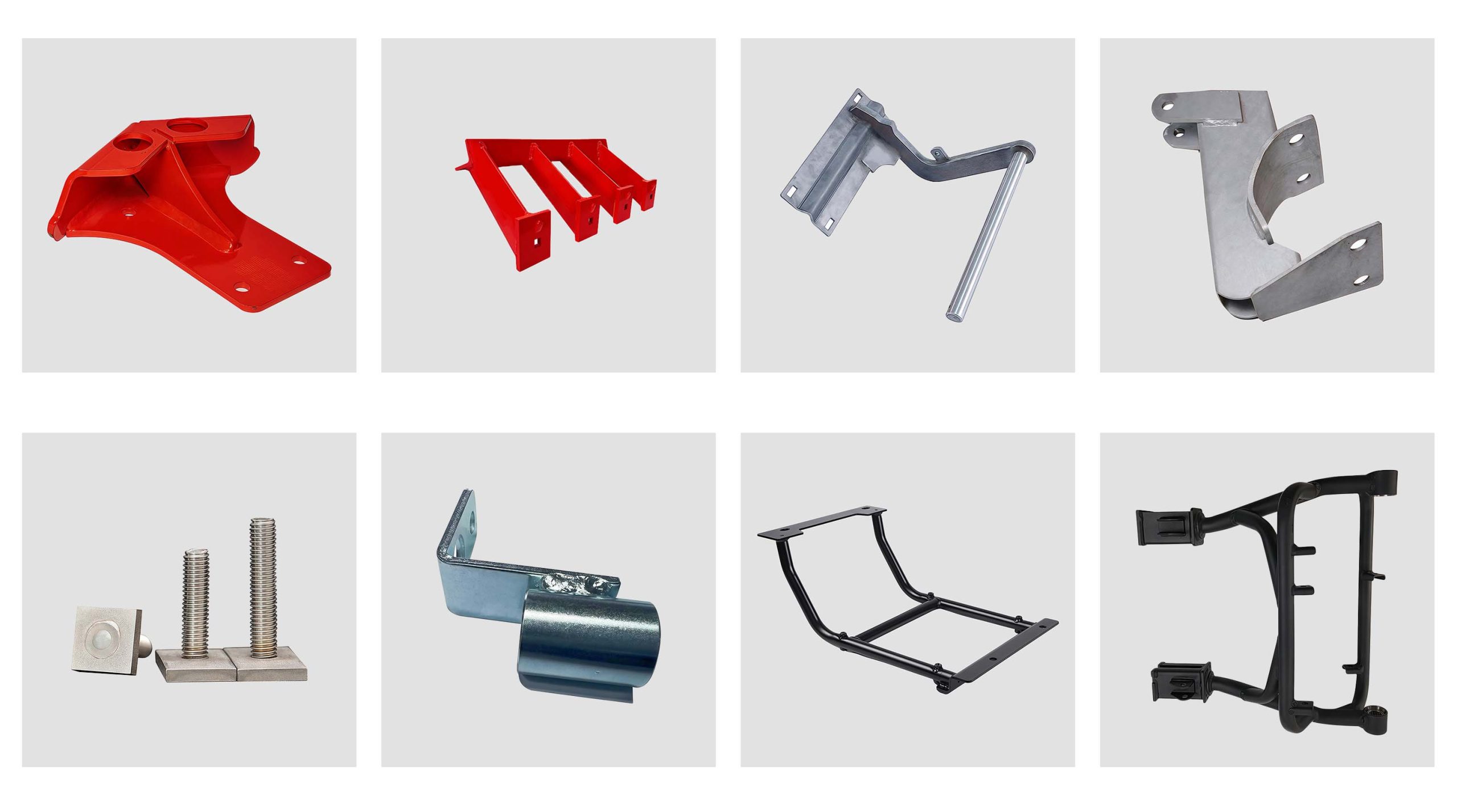
Related capabilities
We produce parts of this type with metal welding. We also manufacture for Electronics and electrical and Automotive and EV programmes.
Frequently asked questions
What causes thermal deformation and residual stress during welding and casting?
Non-uniform heating and cooling cause the trouble. The heated zone wants to expand but is restricted by cooler, rigid parent metal, which creates plastic deformation. As the metal cools it tries to shrink back, but the surrounding material has already set, leaving residual stress locked inside the part.
How does residual stress reduce part quality?
Residual stress can release unevenly when material is removed during CNC machining, causing a flat plate to warp or spring into a new shape. Tensile stresses on the surface add to applied loads and lower the threshold for crack initiation, so a part expected to last millions of cycles may fail after thousands. In corrosive environments, tensile stresses drive stress corrosion cracking.
How does Beijing Jiacheng reduce thermal deformation in fabricated parts?
Before cutting, advanced software simulates thermal modelling to predict where residual stress will accumulate and adjust the welding sequence or fixture design. Modular fixturing applies consistent pressure so expanding metal moves in a controlled way. Post-process stress relieving uses heat treatment, vibratory stress relieving, or shot blasting and peening, and certified welders use back-stepping and staggered welding to spread heat evenly.


